



Medical & Pharmaceutical
Close-tolerance components for medical devices, diagnostic instruments, lab automation, and pharmaceutical equipment, with the inspection record delivered alongside the parts.
A Machining Partner for Regulated Precision
Medical and pharmaceutical manufacturers buy machining the way they run their own operations: documented, repeatable, and verified. A supplier who can hit the tolerance but cannot produce the record has solved half the problem.
Steelcrest Precision machines close-tolerance components for medical devices, diagnostic instruments, lab automation, and pharmaceutical processing and packaging equipment from Wauseon, Ohio. Swiss-machined small parts through equipment-scale components, inspected on Hexagon CMMs and vision systems, with first article documentation standard on every job.

What Is Medical CNC Machining?
Medical CNC machining is the production of components for devices, instruments, and the equipment that manufactures them, typically small feature-dense parts in stainless steels and engineering plastics held to tight tolerances with full dimensional documentation. Its defining demands are precision in small envelopes, material traceability, and quality records a regulated buyer can audit.
The distinction that matters is between measuring a part and proving it. Both happen here, and the proof ships with the parts rather than being reconstructed later on request.
The People Behind the Parts
Small parts concentrate difficulty. Fine features, tight concentricity, and finishes that leave no room for tool marks or judgment calls. There is nowhere to hide a mistake on a part you need a comparator to inspect.
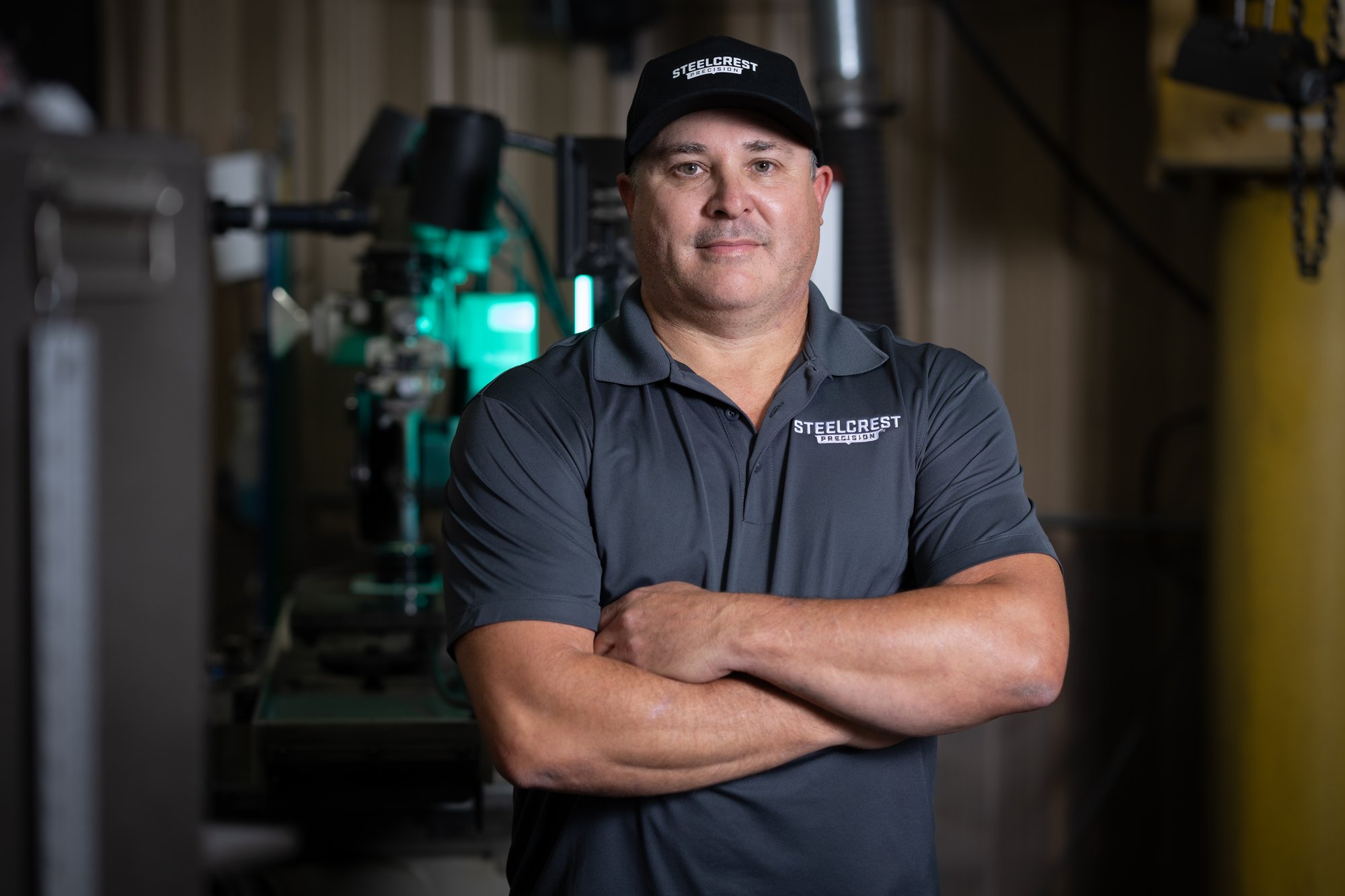
Our Swiss machinists and grinding specialists do this work daily, and our quality team documents it the way regulated industries expect: measured, recorded, and shipped with the parts. When a print calls for something we cannot hold, you hear it at quote rather than at first article.

Your Next Breakthrough Starts with Precision.
Materials We Machine for Medical & Pharmaceutical Parts
Regulated buyers need the material as documented as the dimension. Steelcrest Precision machines the stainless grades, titanium, and engineering plastics that devices, diagnostic instruments, and pharmaceutical equipment call for, with material certifications delivered alongside the parts. Select a material to see the grades we run and where they are used.
Stainless Steels
| Grade | Typical Application |
| 303 | Free-machining instrument details and fittings |
| 304 | Equipment frames, housings, general hardware |
| 316 | Fluid path, sterilization, and corrosion-critical components |
| 410 | Hardenable stainless for wear components |
| 440C | Precision-ground pins and hardened wear details |

Precipitation-Hardening Stainless
| Grade | Typical Application |
| 17-4 PH | High-strength shafts, drive components, housings |
| 15-5 PH | Cleaner-microstructure alternative for critical details |

Titanium
| Grade | Typical Application |
| Grade 2, commercially pure | Corrosion-resistant instrument components |
| Ti-6Al-4V (Grade 5) | High-strength device and instrument components |

High-Performance Alloys
| Grade | Typical Application |
| Inconel 625 | High-temperature and corrosion-critical equipment parts |
| Nickel 200 | Chemical and process handling components |

Engineering Plastics
| Grade | Typical Application |
| PEEK | Sterilizable instrument and fluid path components |
| Delrin / acetal | Bushings, gears, precision instrument details |
| PTFE | Seals, low-friction bearings, fluid handling |
| Polycarbonate | Guards, housings, viewing components |
| Nylon 6 and 6/6 | Rollers, bushings, low-load components |
Aluminum
| Grade | Typical Application |
| 6061 | Housings, brackets, instrument mounting plates |
Medical Machining Tolerances and Capabilities
Medical machining begins with a clear understanding of the print, material, finish, and inspection requirements. Steelcrest reviews each component upfront to match its geometry with the appropriate machining process and inspection method. Achievable tolerances depend on the material, feature location, and part geometry, so every project is evaluated individually before production begins.
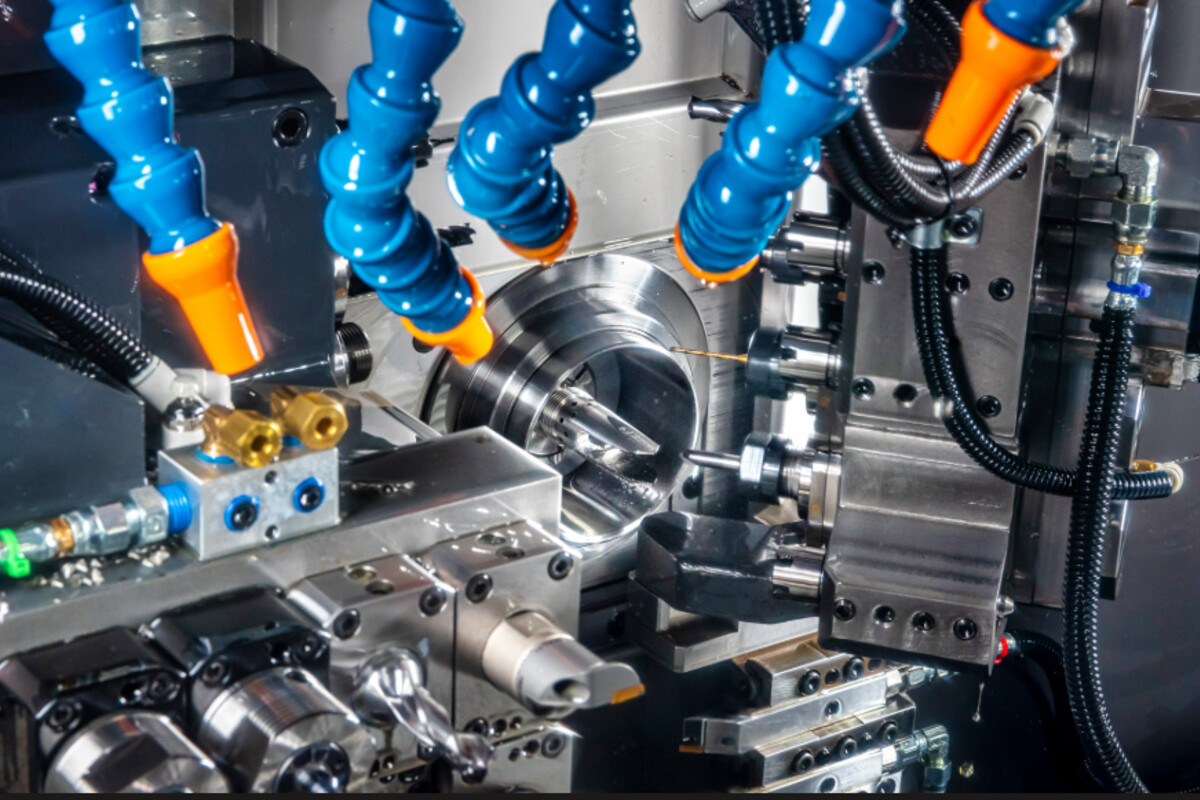
✓ Swiss Machining for Small, Feature-Dense Components: Swiss machining supports small-diameter, long, and slender components with multiple precision features completed efficiently in one setup.
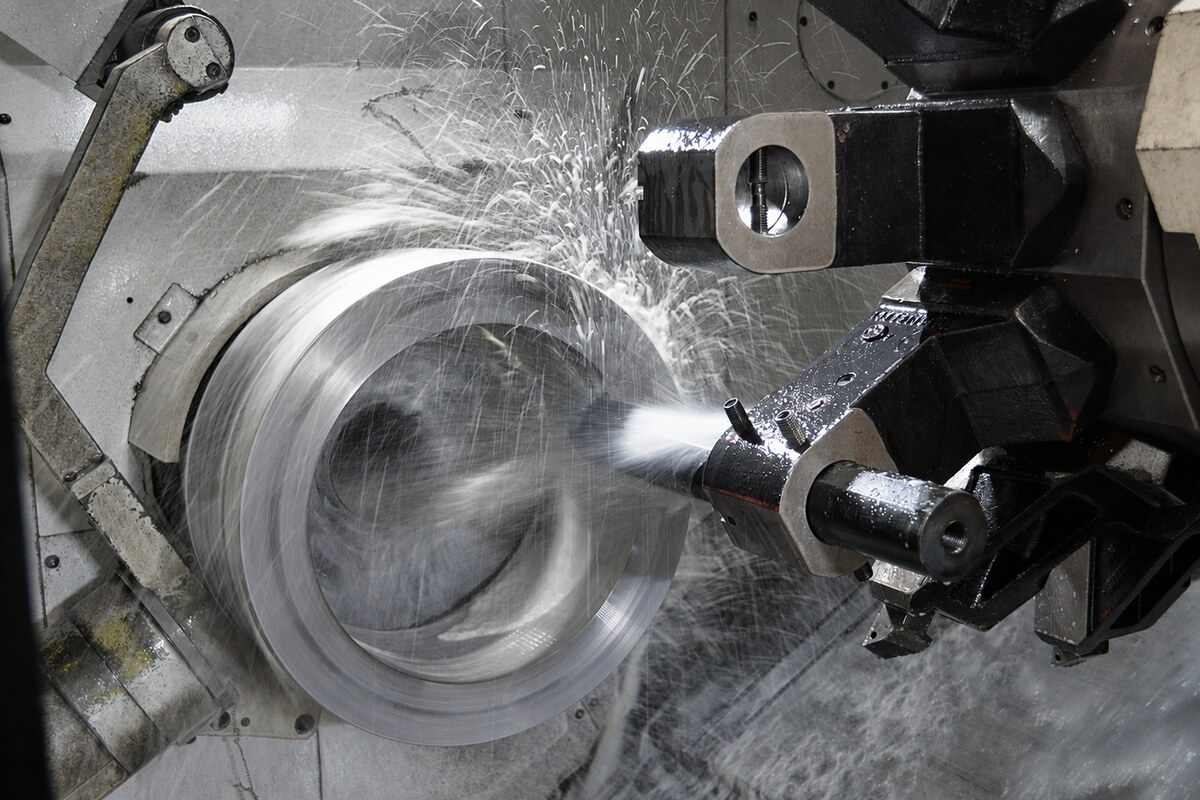
✓ Precision Turning & CNC Milling: Precision turning accommodates parts up to 26" in diameter and 160" long, with standard tolerances of ±0.0005" and precision features held to ±0.0002". CNC milling produces housings, manifolds, and instrument components with standard tolerances of ±0.001".
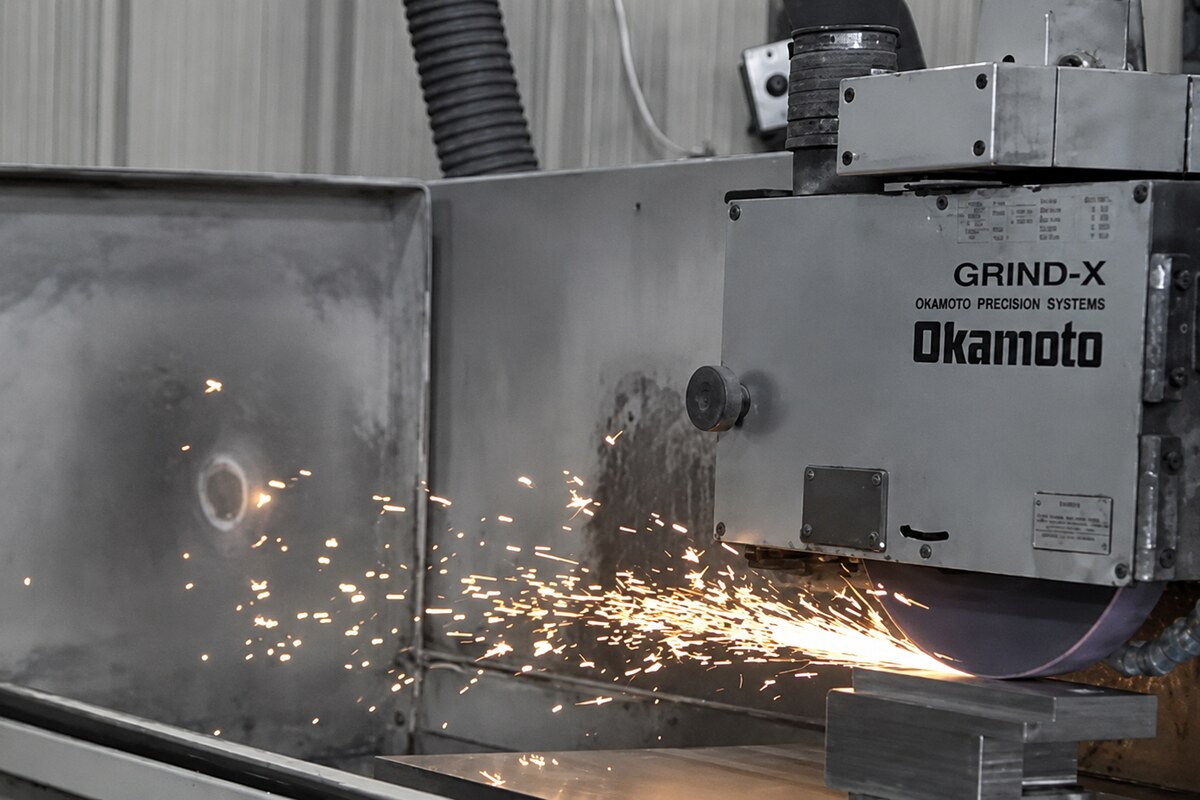
✓ Precision Grinding & Wire EDM: Surface grinding, OD grinding, and honing support tolerances from ±0.0005" to ±0.0002" with finishes down to 8 Ra. Wire EDM produces precise features without cutting pressure in workpieces up to 31" × 28" × 11".
✓ Documented Inspection & First Article Verification: Hexagon CMM, MicroVu, OGP SmartScope, and Keyence IM-7030 inspection equipment support dimensional verification, PC-DMIS documentation, and first article inspection requirements.
CNC Machining for Medical & Pharmaceutical Manufacturers
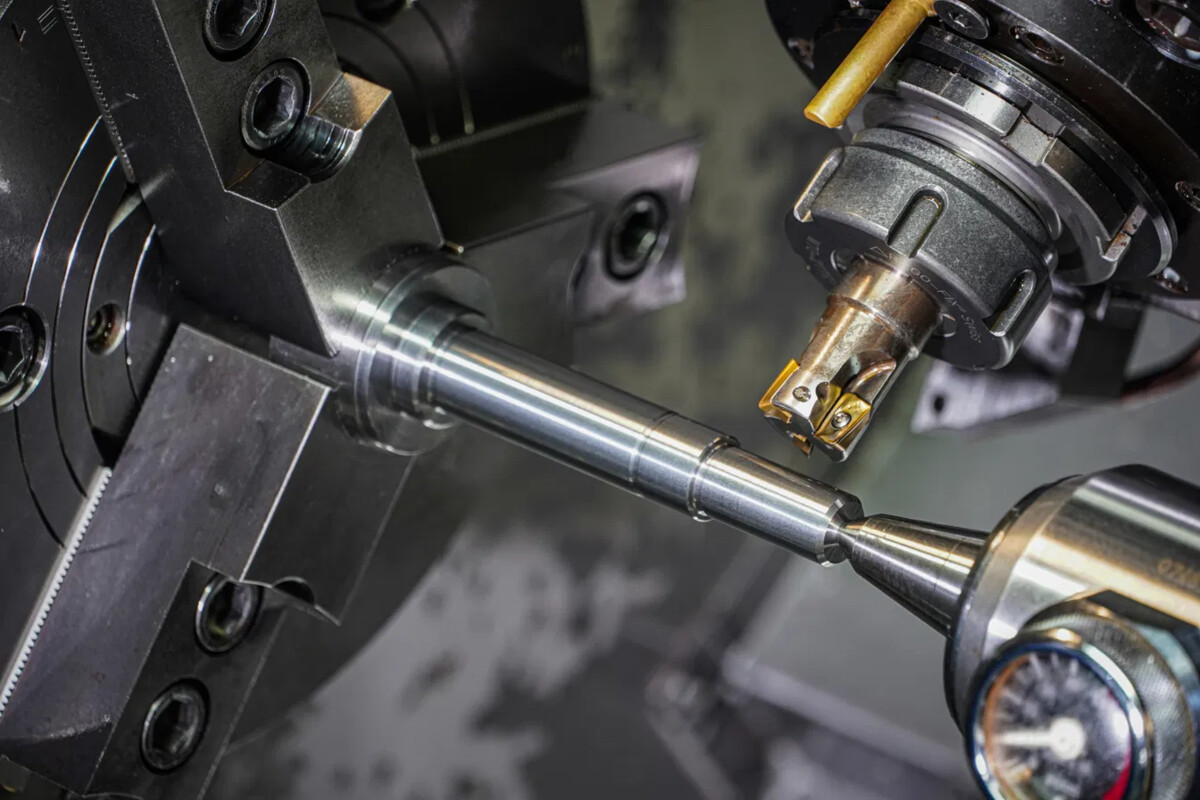
Swiss turning completes small, long, slender, or feature-dense components in one setup, which is where concentricity on this kind of part is won or lost. Precision grinding delivers the final size and finish. Wire EDM cuts delicate profiles in hardened material without cutting pressure, so thin sections survive.
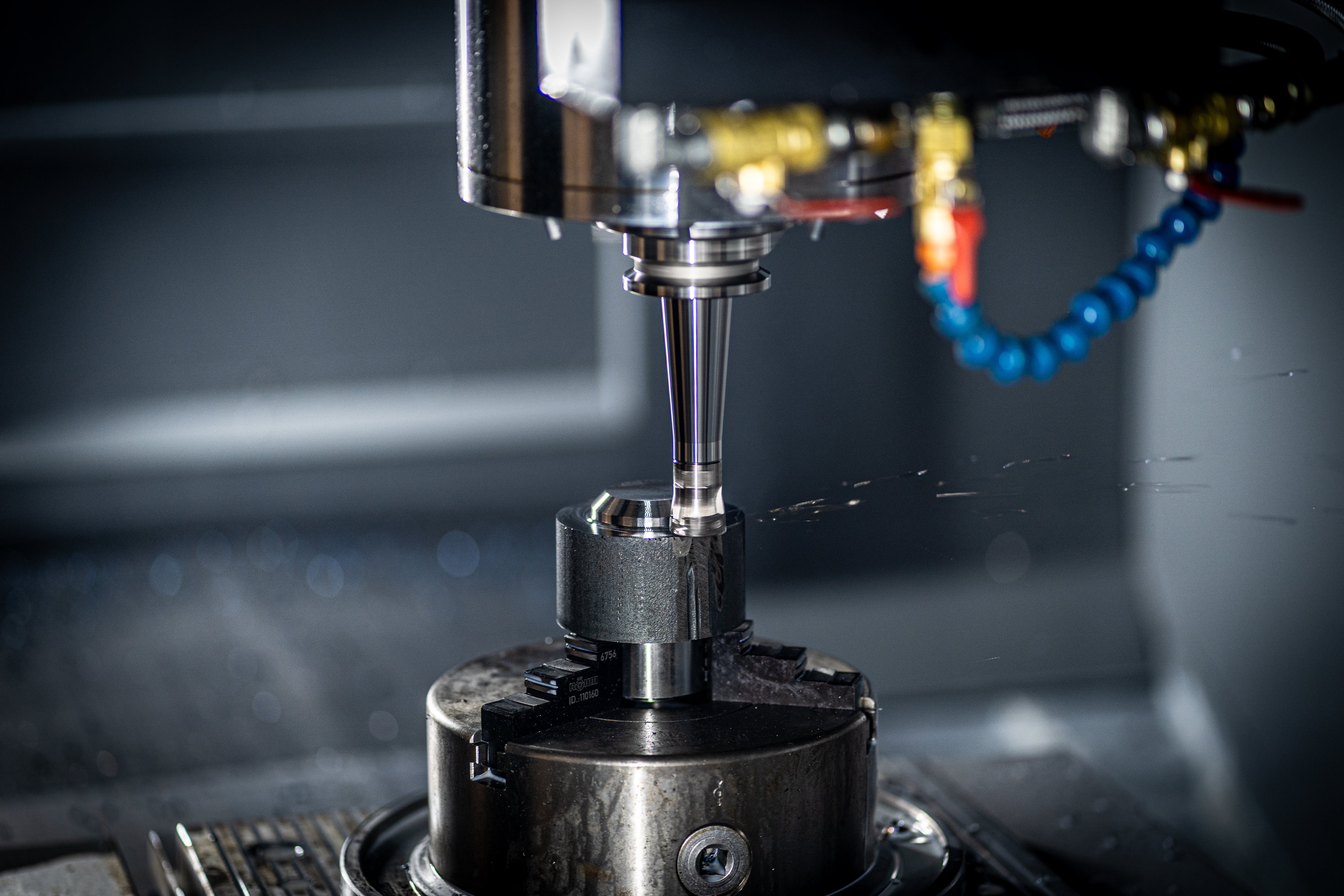
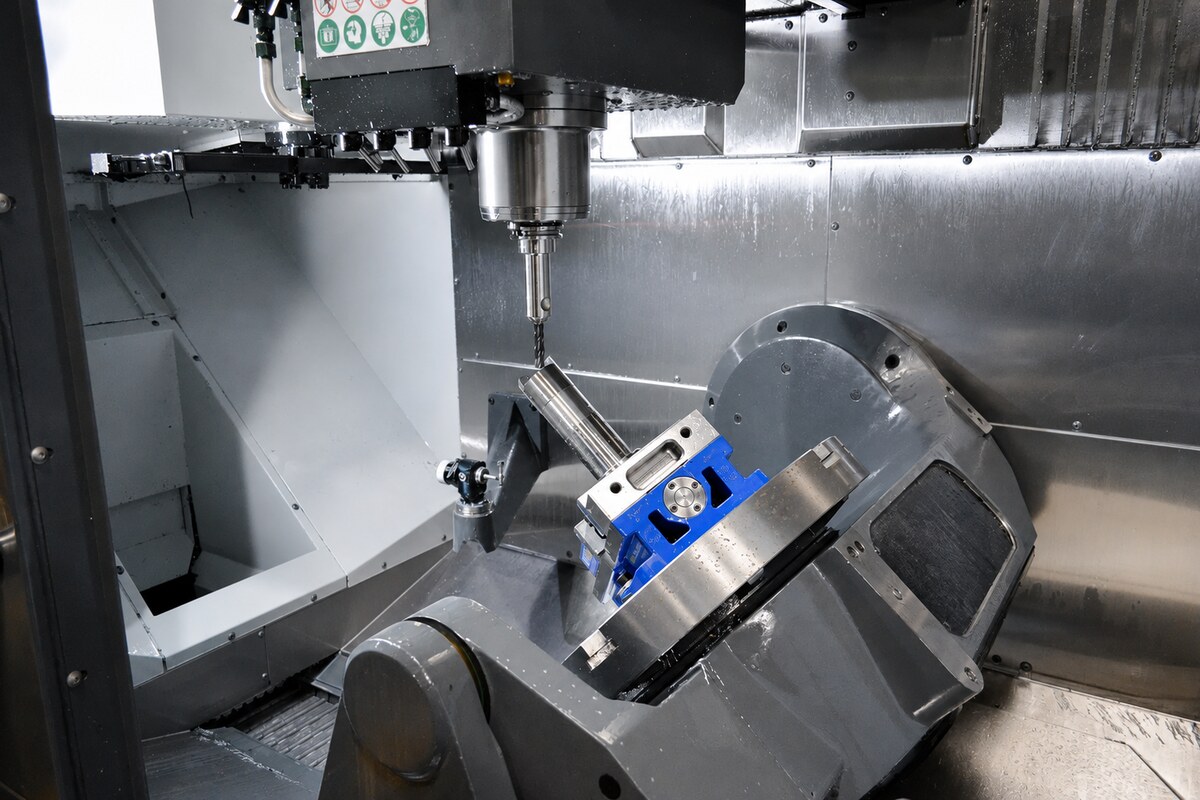
Milling produces instrument housings, manifolds, and equipment components. Vision-based measurement on MicroVu, OGP SmartScope, and Keyence systems verifies features a contact probe cannot reach, and the results go into the documentation package that ships with the lot.

Medical & Pharmaceutical Components We Machine
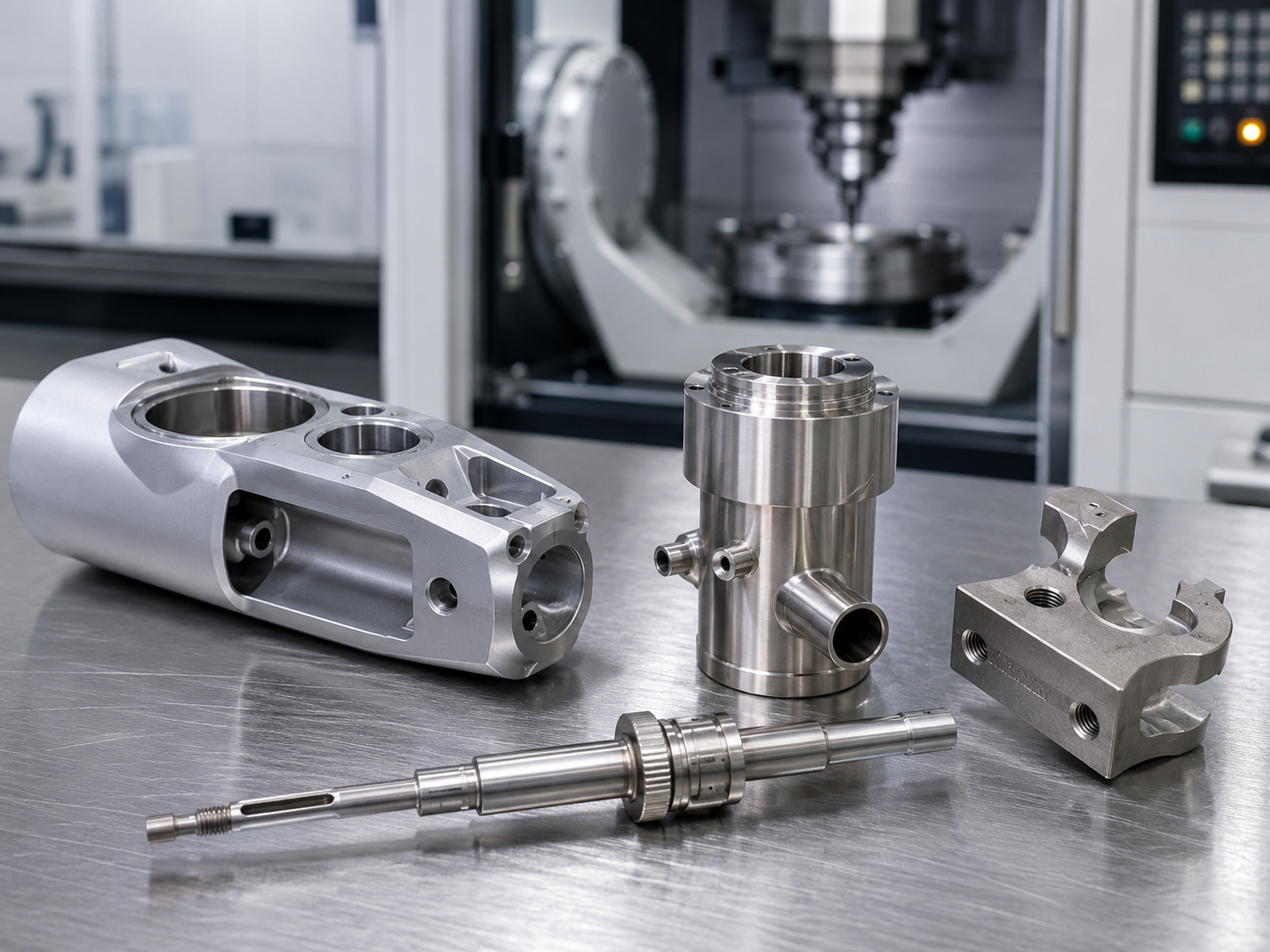
Representative of the work this industry brings us, from instrument details through equipment-scale components.
| Component | Process | Material | Critical feature |
| Instrument shaft, feature-dense | Swiss turn | 316 stainless | Concentricity, length to diameter stability |
| Precision-ground pin set | Grind | 440C hardened | Diameter ±0.0002", 8 Ra |
| Manifold block | Mill | 316 stainless | Port positions, cross-hole integrity |
| Equipment drive component | Turn, mill | 17-4 PH | Feature-to-feature accuracy |
| Instrument housing detail | Mill | Delrin / acetal | Thin-wall stability |
| Sealing and wear component | Turn, mill | PEEK | Dimensional stability after machining |
Send the Print and We Will Tell You Straight What We Can Hold
No hedging, no discovering it together at first article. One conversation with an engineer who has read the drawing. Quotes come back within 48 hours, with no obligation.
Frequently asked questions
What medical and pharmaceutical components does Steelcrest Precision machine?
Components for medical devices, diagnostic instruments, lab automation, and pharmaceutical processing and packaging equipment, from Swiss-machined small parts through equipment-scale housings and manifolds.
What tolerances can Steelcrest hold on medical parts?
Precision turning and grinding to ±0.0002 inch, standard turning to ±0.0005 inch, and milling to ±0.001 inch, with ground finishes down to 8 Ra depending on material and geometry.
Does Steelcrest offer Swiss machining for small medical components?
Yes. Star and Citizen Cincom Swiss lathes machine small-diameter, long, slender, or feature-dense components complete in one setup, which supports both tight concentricity and consistent repeatability across a lot.
What materials does Steelcrest machine for medical applications?
Stainless steels including 303, 304, 316, 410, 440C, 17-4 PH, and 15-5 PH, plus engineering plastics such as Delrin, PEEK, and PTFE. Material certifications are provided with the parts.
How is medical part quality documented?
Hexagon CMM inspection running PC-DMIS, vision measurement on MicroVu, OGP SmartScope, and Keyence systems for features a contact probe cannot reach, and first article documentation delivered with the parts.
Is Steelcrest Precision certified?
Steelcrest Precision is ISO 9001 certified and machines to AS9100-compliant processes while pursuing full AS9100 certification. CMM inspection and first article documentation are standard on every job.
How fast does Steelcrest respond to a quote request?
Quotes come back within 48 hours. Send a drawing or 3D model, material specification, tolerances, quantities, and your requested delivery date, along with any inspection or documentation requirements.