
Die-Cut Gaskets, Seals & Wear Components
DIE-CUT GASKETS, SEALS & WEAR COMPONENTS
Die Cutting, Waterjet and Digital Knife for Elastomer Components
Most of the parts on this page are not machined, and that is the point. Elastomers deflect under any cutting or clamping force and spring back afterwards, so the tool path and the finished dimension are not the same thing. The right processes are die cutting, waterjet and digital knife, and choosing between them is a volume and thickness decision that we can make with you in about five minutes.
Steelcrest Precision die-cuts gaskets, seals, pads and wear components in silicone, EPDM, nitrile, Viton and urethane, and kits them into the assemblies we build. If your gasket and your machined housing currently come from two suppliers, they do not have to.
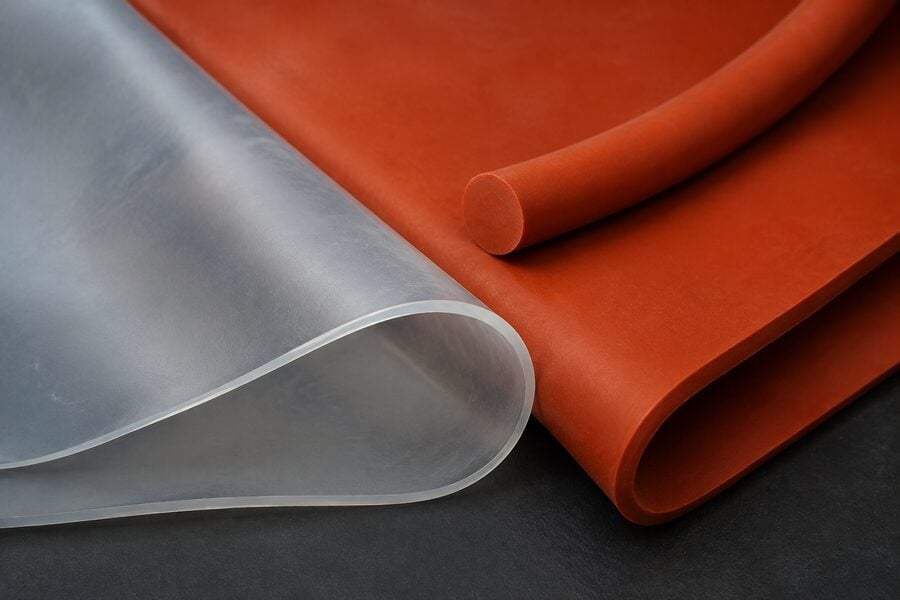
Materials We Cut
| Material | Choose it for | Do not choose it for |
|---|---|---|
| Nitrile (NBR) | Oil, fuel and hydraulic service. The default industrial sealing elastomer. | Ozone, weather and sunlight exposure. |
| EPDM | Water, steam, ozone and weathering. Outdoor and wash-down service. | Oil and fuel. EPDM swells badly in petroleum. |
| FKM / Viton | High temperature combined with aggressive chemicals. The premium choice. | Applications where cost matters more than performance. |
| Silicone | Temperature extremes, food contact and medical service. | Abrasion and tear resistance. Silicone is poor at both. |
| Cast urethane and urethane sheet | Abrasion resistance and load-bearing wear. 60A through 75D. | Chemical service. |
NOTE*: Material selection is where most gasket problems start. If you tell us the service condition — what fluid, what temperature, what pressure, indoors or out — we will recommend the material rather than quoting whatever the drawing says and letting it fail in the field.
Choosing The Process: Die Cut, Waterjet Or Knife
This is the decision that determines your unit cost and your lead time, and it comes down to annual quantity and material thickness.
| Process | Tolerance | Max thickness | Tooling cost | Best for |
|---|---|---|---|---|
| Die cutting (steel rule or matched metal) | ±0.010" to ±0.025" | About 1/8" solid | $300–$700 per design | Above roughly 100 pieces per year |
| Waterjet | ±0.005" | 6" and beyond | None | 10 to 1,000 pieces, or thick sections |
| Digital knife | ±0.008" | About 1" | None | Under 50 pieces, and prototypes |
The practical read: if you are ordering more than about a hundred of the same gasket a year, a die pays for itself quickly and gives you the lowest unit cost. Below that, or on thick material, cut without tooling. For a first article or a design that is still moving, digital knife gets you parts without committing to a die.
NOTE: Durometer carries its own tolerance — plus or minus five Shore A is normal mill tolerance on elastomer sheet. That belongs on the drawing alongside the dimensional tolerance, because it changes how the part behaves in service.
What Makes Elastomer Work Different
Precipitation-hardening stainless is really two materials, before and after ageing, and the condition on the print decides everything about how the part gets made.
The urethane exception
Cast urethane is the one material on this page we do machine. At 85A and above, and particularly in the D range from 55D to 75D, urethane turns and mills acceptably with very sharp tooling, light cuts and air cooling rollers, bushings, wear pads and load-bearing components are routine work, holding roughly ±0.005".
Below about 80A the material deflects too much under cutting and clamping load, and cutting rather than machining is the correct process. Tell us the durometer and we will tell you which route your part takes.
Kitting into assemblies
This is where being a machine shop that also die-cuts actually matters. We fabricate, machine and assemble complete units — so a gasket, its housing, the fasteners and the hardware can arrive as one kitted assembly from one supplier with one part number, rather than as three purchase orders that have to be reconciled on your receiving dock.
Pressure-sensitive adhesive backing is applied at the sheet level before cutting, which produces a cleaner part than applying it afterwards. Assembly, integration and kitting are handled in-house.
Finishing and Post-Processing
Cutting, kitting, and inspection stay in-house, and we manage elastomer-specific services like post-curing and surface treatment through qualified outside partners.
In-house at Steelcrest
- Die cutting and precision cutting
- PSA adhesive backing applied at sheet level before cutting
- Machining of harder cast urethane grades: rollers, bushings and wear pads
- Assembly, integration and kitting into finished units
- Deburring and inspection
Managed through qualified partners
- Post-curing of silicone and FKM for compression set and outgassing, important in food-contact and medical service
- Plasma and chlorination surface treatment for bonding or low friction
- Urethane casting and molding where the geometry is three-dimensional
- Waterjet cutting for thick sections and low quantities
Industries We Cut Gaskets and Seals For
Steelcrest Precision die-cuts gaskets, seals, pads, and wear components in silicone, EPDM, nitrile, Viton, and urethane for automotive, food and beverage, medical and pharmaceutical, and material handling applications.

.png?width=1920&height=603&name=e-commerce%20(2).png)
Talk To Us About Your Die-Cut Gaskets, Seals & Wear Components Parts.
Send the drawing and the quantity. We will come back with a real number, a real lead time, and — if there is a better material or condition for what the part has to do — we will tell you that too.
Frequently Asked Questions
Do I need a die for my gasket?
Above roughly a hundred pieces a year, yes tooling runs $300 to $700 per design and the unit cost drops enough to pay for it quickly. Below that, or on material thicker than about an eighth of an inch, waterjet or digital knife cutting gets you parts with no tooling cost at all.
Which material should I specify for my seal?
It depends entirely on service condition. Nitrile for oil and fuel, EPDM for water, steam and weather but never oil, Viton for high temperature plus aggressive chemicals, silicone for temperature extremes and food or medical contact. Tell us what the seal is up against and we will recommend it this is where most gasket failures start.
What tolerance can you hold on a die-cut gasket?
±0.010" to ±0.025" die-cut, ±0.005" waterjet, ±0.008" digital knife. Elastomers deflect and recover, so those bands are the material's limit rather than the equipment's. Durometer also carries its own plus or minus five Shore A mill tolerance, which belongs on the drawing.
Can you machine rubber?
Not usefully, and we will tell you so rather than quoting it. Below about 80A durometer the material deflects under any cutting or clamping force and springs back — cutting is the right process. Cast urethane at 85A and above, and especially in the D range, is the exception and we do machine that.
Can you supply the gasket and the machined part together?
Yes, and this is the main reason to buy both from us. We machine, fabricate, die-cut and assemble on one site, so a gasket, its housing and the hardware can ship as one kitted assembly under one part number instead of three separate orders.
Do you apply adhesive backing?
Yes. PSA backing is applied at sheet level before cutting, which gives a cleaner result than applying it to finished parts.