Skip to content

PTFE & PPS Machining Services

PTFE & PPS MACHINING SERVICES

CNC PTFE and PPS Machining for Chemical and Sealing Applications

These two share a page because they solve the same problem from opposite directions. Both go into chemical, high-temperature and sealing applications. PTFE gets there through chemical inertness and the lowest friction of any solid, at the cost of being the least dimensionally trustworthy polymer we machine. PPS gets there through stability near-zero moisture absorption and ±0.001" on small features at the cost of being one of the most tool-destructive polymers in common use. 

Steelcrest Precision machines virgin and filled PTFE and unfilled and glass-filled PPS across turning, Swiss and milling platforms in Wauseon, Ohio. 

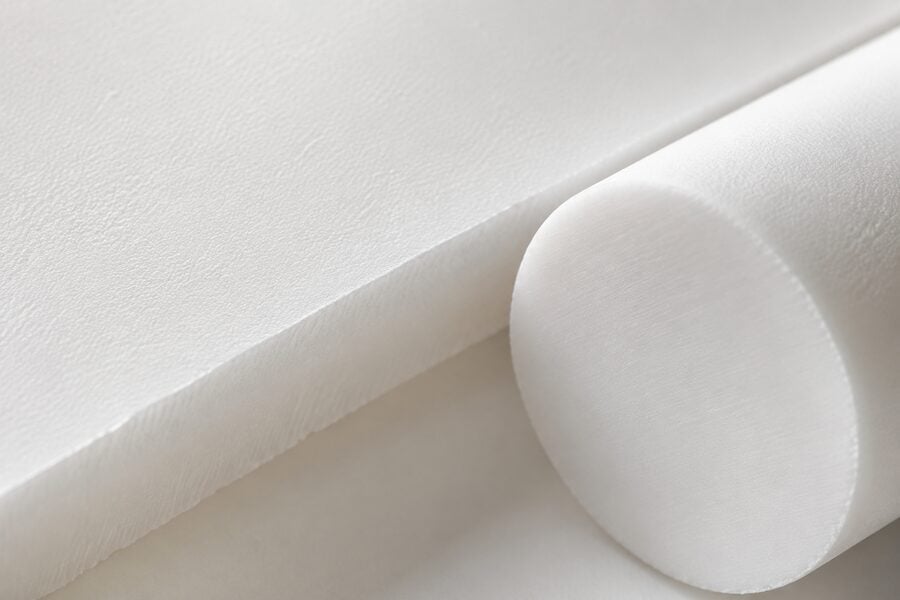
24-ptfe-texture

What We Run 

Material Character Typical use
Virgin PTFE Chemically inert, lowest friction of any solid. Cold flows under sustained load. Seals, gaskets, low-friction bearings, chemical-service components.
Filled PTFE — glass, carbon, bronze, graphite, MoS₂ Resists cold flow far better than virgin. Bronze-filled has the highest compressive strength and lowest deformation under load. All fillers increase tool wear; glass-filled is abrasive. Bearings, seals and wear components under sustained load.
PPS (Ryton) Near-zero moisture absorption, excellent chemical resistance, around 200°C continuous service. Chips rather than smears. Under-hood automotive, electrical and high-temperature chemical components.
40% glass-filled PPS Very dimensionally stable. Among the most abrasive polymers in common use — carbide minimum, PCD for production. High-temperature structural and electrical details.

 Tolerances We Hold

Material Realistic tolerance What limits it
PTFE, general ±0.003" (range ±0.001" to ±0.005") Thermal expansion around 10× steel, plus cold flow under clamping and service load
PTFE, ±0.002" or better Achievable with a two-stage process Rough machine, let the part relax 24 to 48 hours at stable temperature, then finish
PPS, unfilled and glass-filled ±0.001" on small features Comparable to acetal and PEEK — one of the few dimensionally trustworthy polymers


NOTE*:  
On PTFE, over clamping is the single most common cause of out-of-round turned parts. The material cold flows under sustained load, so soft jaws, collets and uniform clamping pressure matter more than they do on any metal.

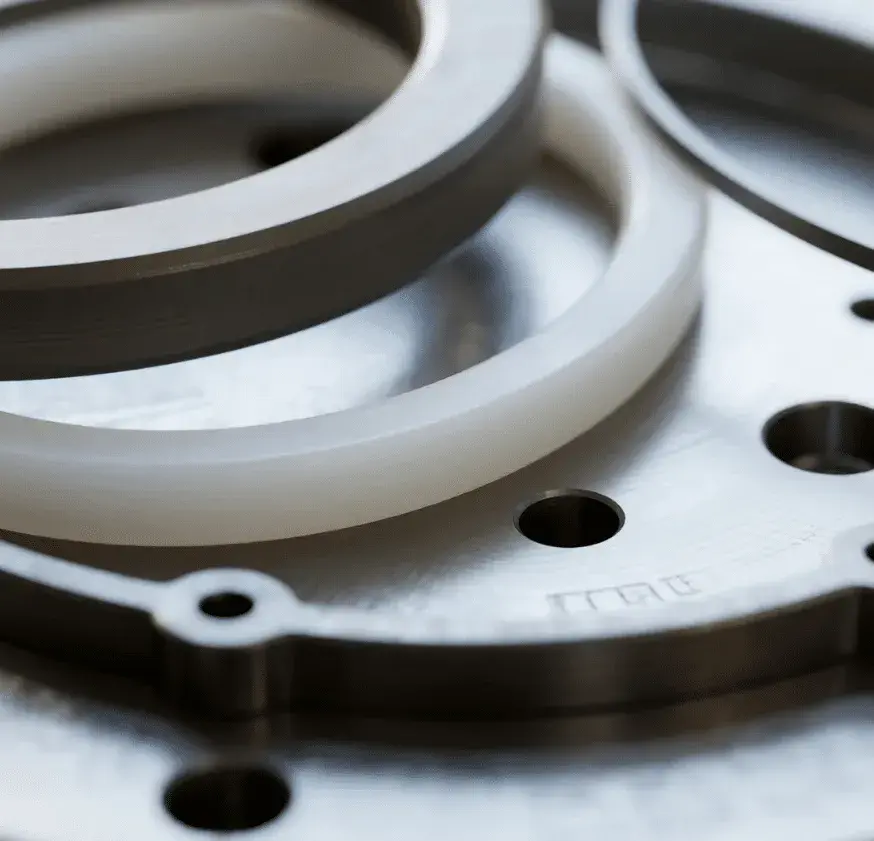
PTFE-seals-and-gaskets-quanda

How We Machine Them

Turning covers most PTFE work seals, bearings, sleeves and rings on our CNC lathes with soft jaws or collets, plus Swiss platforms for small components to Ø1.5" bar. Sharp tooling with 6 to 10 degrees of positive rake throughout: a dull tool or excessive speed causes PTFE to smear rather than cut, producing a glazed rather than machined surface that will not seal. 

PPS runs across turning, Swiss and milling. It machines like a hard, brittle plastic it chips rather than smears so sharp tools and light cuts at edges. Glass-filled grades need carbide as a minimum and PCD for any production quantity. 

Thin PTFE gasket sheet is die cut on our fabrication side rather than machined, which is faster and produces a better part. We will tell you which route suits your geometry and quantity. 

What Makes PTFE and PPS Different

PTFE cold flows, and that changes how it is held

PTFE slowly deforms permanently under sustained load — in the fixture, and in service. Over-clamping puts the part out of round before the tool touches it. Soft jaws, collets and uniform clamping pressure are the countermeasure, and on thin-walled parts cryogenic machining is used to temporarily stiffen the material. 

Skived PTFE sheet carries stress

Sintered and moulded billet is the stable stock form. Skived sheet retains skiving stress and will curl. Where flatness matters, specify billet. 

Filled PTFE trades tool life for stability

Every filler improves cold-flow resistance and compressive strength and costs tool life. Bronze-filled gives the best performance under load; glass-filled is genuinely abrasive and needs carbide minimum, PCD for production. Choose the filler for the service condition and accept the machining cost, rather than choosing virgin and accepting the creep. 

PPS is the opposite problem

Very stable, near-zero moisture absorption, ±0.001" achievable on small features — but GF40 PPS is one of the most tool-destructive polymers in common use. Where the part is already moulded, machining only the critical features is usually the right economic call, and we are happy to work that way. 

One item for the drawing

PTFE undergoes a crystalline phase transition close to room temperature, accompanied by a volume change. In practice this means a part machined at one shop temperature and inspected at another can measure differently for reasons unrelated to ordinary thermal expansion. On tight-tolerance PTFE we recommend stating the inspection temperature on the drawing. 

Finishing and Post-Processing

Cutting, marking, and inspection stay in-house, and we manage PTFE and PPS-specific services like surface etching and sintering through qualified outside partners. 

In-house at Steelcrest

  • Precision cutting and die cutting of thin PTFE gasket sheet
  • Deburring, laser etching, CMM inspection
  • Assembly and integration

Managed through qualified partners

  • Sodium-naphthalenide etching before any bonding — PTFE is otherwise unbondable
  • Sintering of PTFE billet
  • Annealing of PPS where an application requires it

Industries We Machine PTFE and PPS For

Steelcrest Precision machines virgin and filled PTFE and unfilled and glass-filled PPS into seals, insulators, and fluid-handling components for automotive and medical and pharmaceutical applications. 

We also machine both materials for chemical processing and electrical customers, where PTFE's inertness and PPS's combination of chemical resistance and dimensional stability are the reasons they are specified.

Talk To Us About Your PTFE & PPS Parts. 

Send the drawing and the quantity. We will come back with a real number, a real lead time, and — if there is a better material or condition for what the part has to do — we will tell you that too. 

Frequently Asked Questions

How tight a tolerance can you hold on PTFE?

±0.003" is the working band, with a range of ±0.001" to ±0.005" depending on geometry. For ±0.002" or better we use a two-stage process: rough machine, let the part relax for 24 to 48 hours at stable temperature, then finish. Thermal expansion around ten times steel plus cold flow are what set the limit. 

Why is my PTFE part out of round?

Almost always clamping. PTFE cold flows under sustained load, so a standard chuck pressure that would be fine on aluminium deforms it before the tool touches it. Soft jaws, collets and uniform clamping pressure are the fix. 

Which PTFE filler should I specify?

Bronze-filled for the highest compressive strength and least deformation under sustained load. Glass filled for general improvement in cold-flow resistance, accepting that it is abrasive. Carbon and graphite filled for wear and thermal conductivity. Virgin only where chemical purity rules out fillers, and then design around the creep. 

Can you hold ±0.001" on PPS?

Yes, on small features. PPS is one of the few dimensionally trustworthy polymers near-zero moisture absorption and a thermal expansion around four times steel, dropping further in glass-filled grades. It is comparable to acetal and PEEK in that respect. 

Should thin PTFE gaskets be machined or die-cut?

Die-cut. It is faster, cheaper and produces a better part on thin sheet. We do that work on our fabrication side and can kit the finished gaskets into assemblies.