






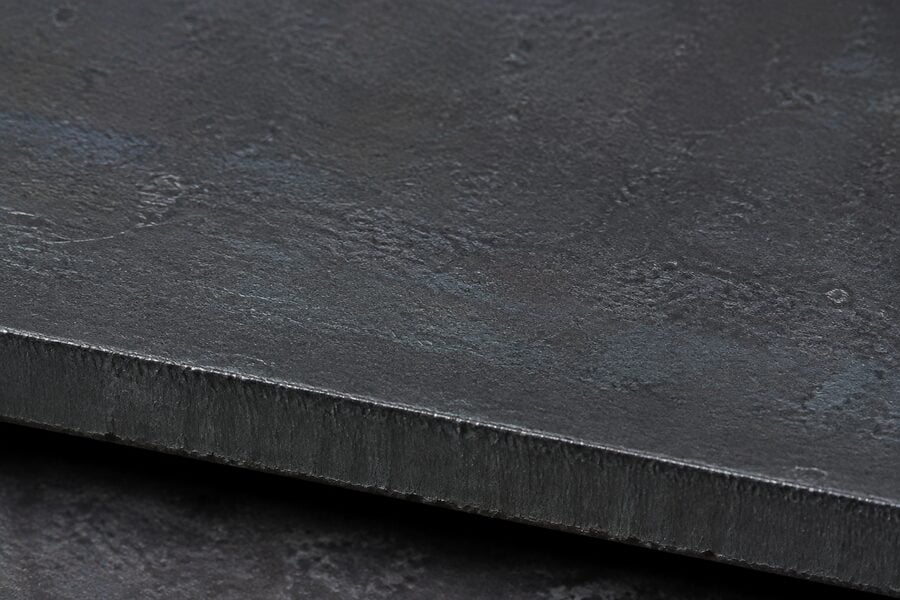
Carbon Steel
1018, 1045, 1095
The general-purpose workhorse. 1018 for bar-fed turned parts and hardware, 1045 for shafts and drive components, 1095 where spring temper matters. We turn to ±0.0005" and grind hardened parts to size after heat treat.
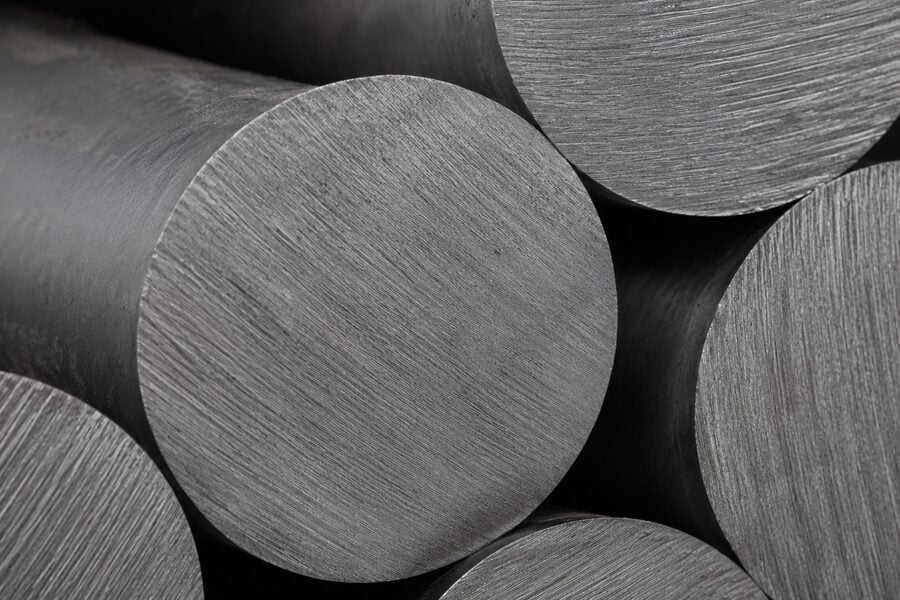
Alloy Steel
4130, 4140, 4340, 8630, 300M
Where strength-to-weight and fatigue life matter. 4140 pre-hard for fixture bases and high-load shafts, 4340 for pivot components, 300M for landing-gear-class parts. Heat treating and tempering are in-house to 2100°F.
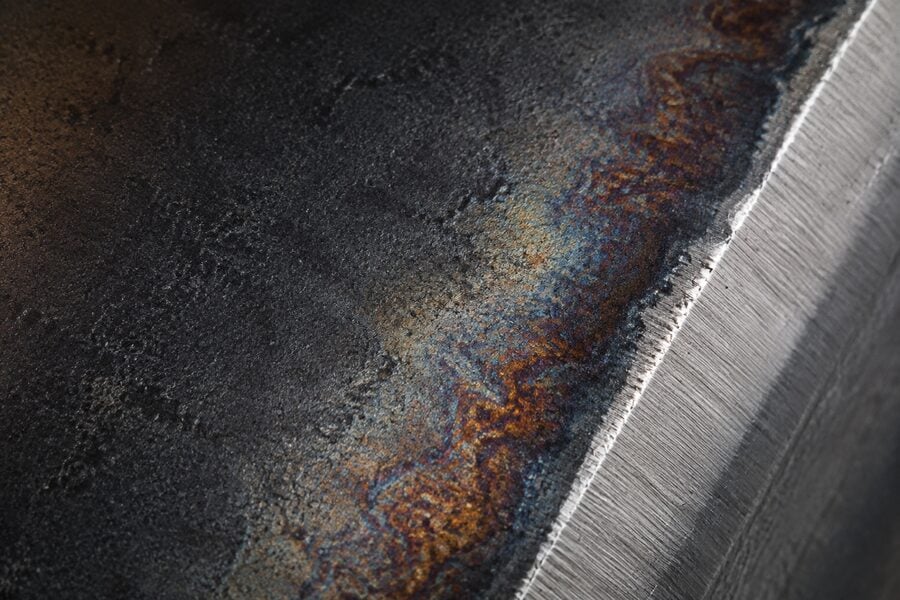
Case-Hardening Steel
8620, 9310
Machined soft, carburized for a hard case over a tough core, then ground to size. 8620 for gears, splines and bushings; 9310 for aerospace transmission gears. We leave grind stock and finish after carburizing.
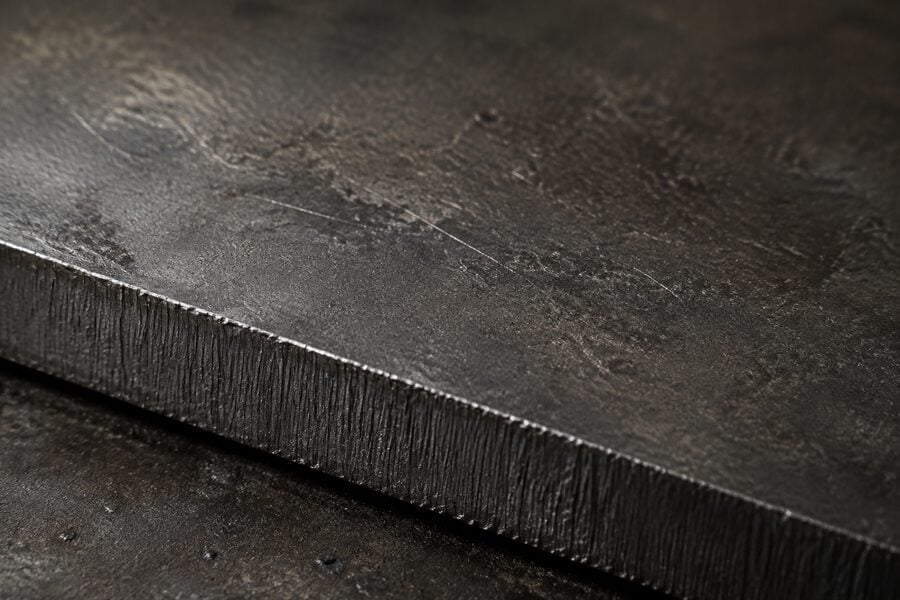
Wear-Resistant Steel
AR400, AR500
Abrasion-resistant plate for buckets, liners, chutes and wear bars. This is fabrication work more than machining — precision cutting, forming, weldment assembly and hole patterns, with hardness preserved rather than annealed away.
Tool Steel
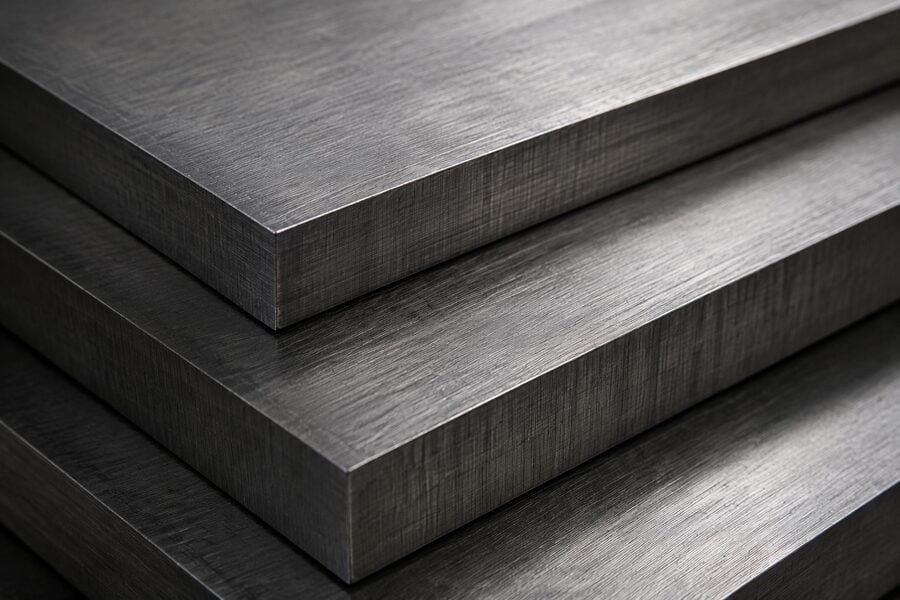
A2, D2, O1, S7, H13
Machined annealed, hardened, then ground and EDM'd to final size. A2 and D2 for gauges and wear details, S7 for shock-loaded die components, H13 for hot-work tooling. Grinding to ±0.0002" is where these parts are made.
Stainless Steel
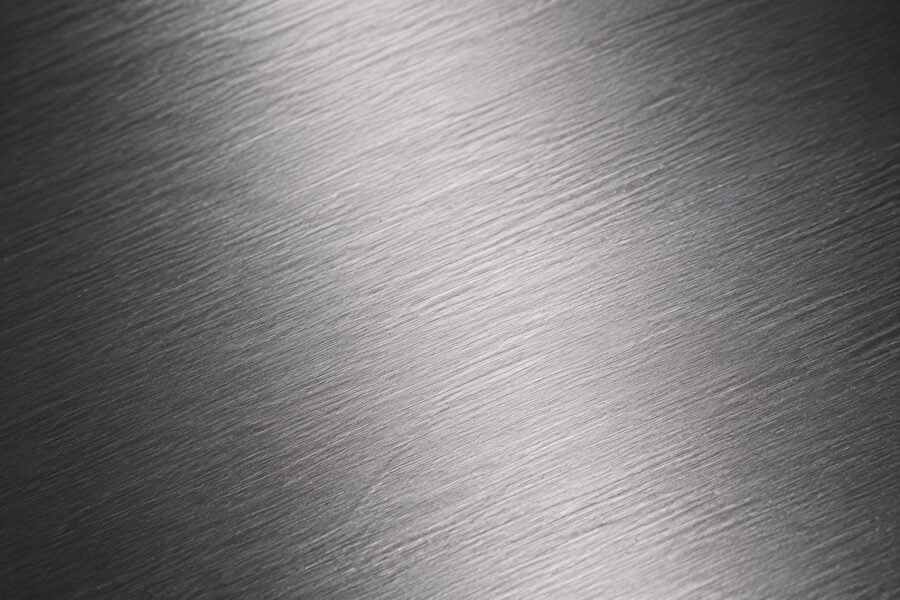
303, 304, 316, 410, 420, 440C
Corrosion-critical hardware, fluid handling and food-contact parts. 303 for free-machining turned details, 316 for chemical and marine service, 440C for hardened wear components. Passivation and electropolishing managed through qualified partners.
Precipitation-Hardening Stainless
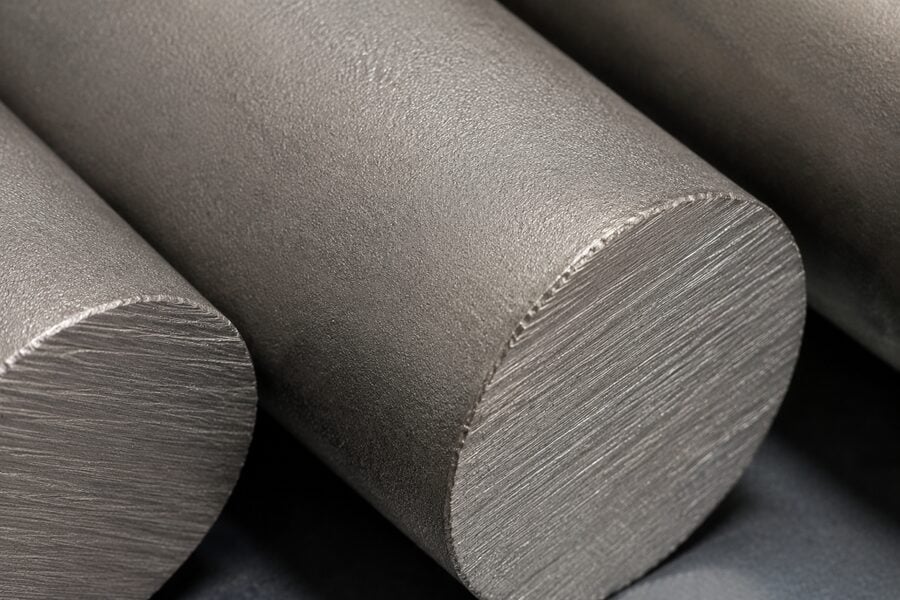
17-4 PH, 15-5 PH
High strength with stainless corrosion resistance. We machine in Condition A and age, or work from pre-aged H1025 and H1150 bar where dimensions are critical — and we compensate for ageing shrinkage either way.
Nickel Steel / Nickel-Alloy Steel
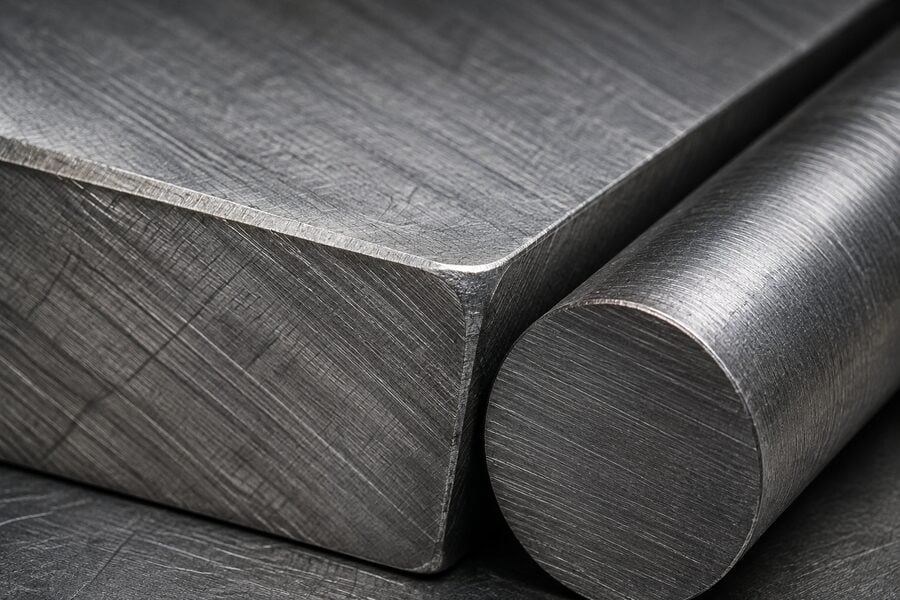
Nickel 200, 201, 300M, 4340, 9310
Commercially pure nickel for chemical and process handling, plus the high-strength nickel-alloy steels. Nickel 200 and 201 machine best from cold-drawn bar; the alloy steels run alongside our 4340 and 9310 work.
Hastelloy
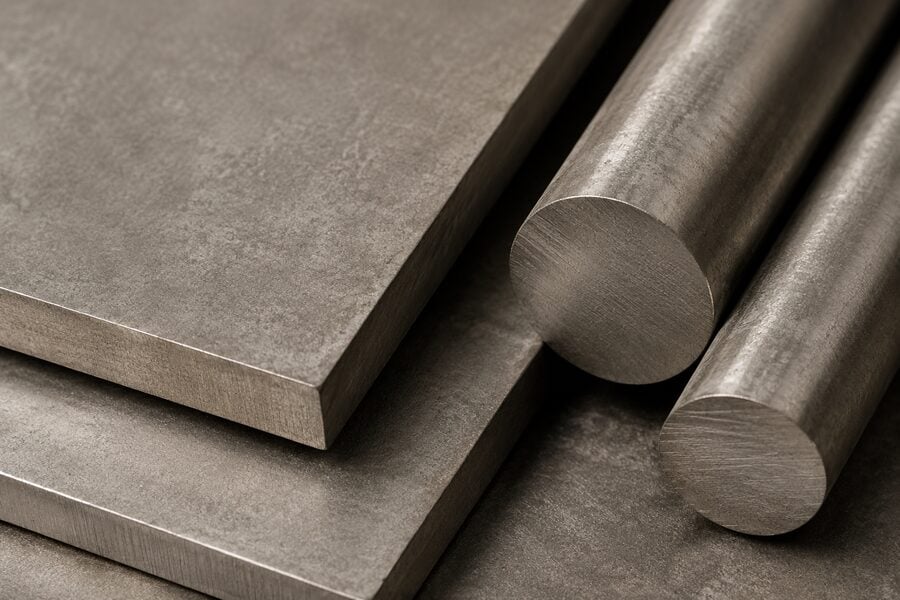
C-22, C-276, B-2
Severe-corrosion nickel-molybdenum alloys for chemical processing and pollution control. Among the most difficult materials in common industrial use — low speeds, sharp tools, rigid setups, and EDM where milling isn't economical.
Monel
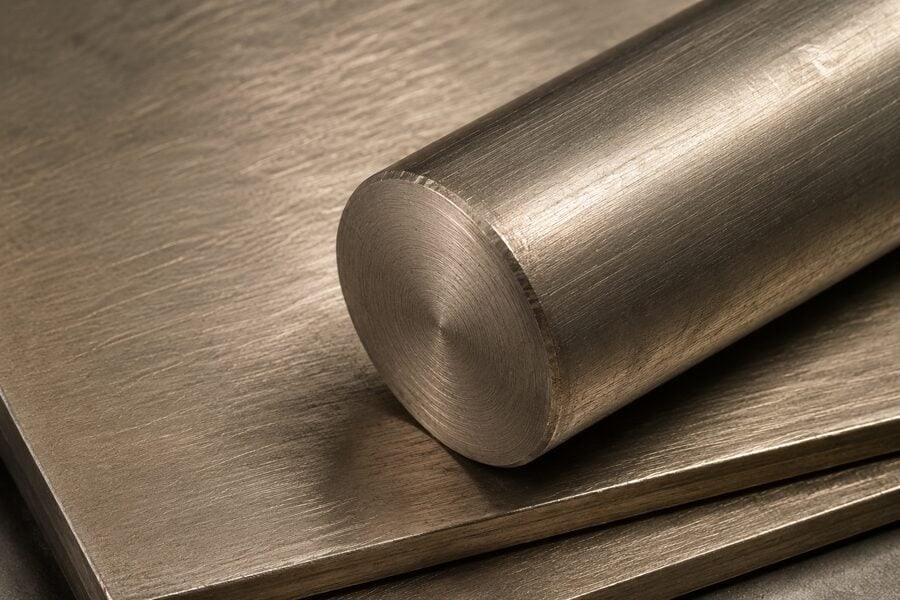
400, K-500
Nickel-copper alloys for marine shafting, valve trim and non-sparking tooling. Monel 400 machines from cold-drawn bar; K-500 is age-hardened to HRC 27–35 and ground after ageing where tolerance is tight.
Inconel / Nickel Superalloys
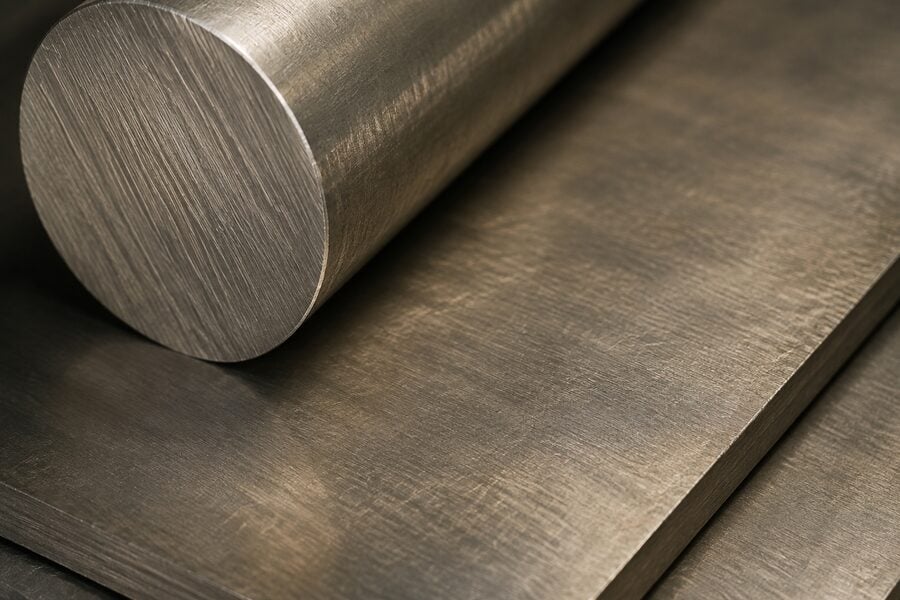
Inconel 600, 625, 718, X-750
Hot-section, exhaust, ducting and rotating components. 718 is the aerospace workhorse. These alloys work-harden the moment a tool stops cutting, so process discipline — not machine capability — is what holds the tolerance.
Titanium – Commercially Pure
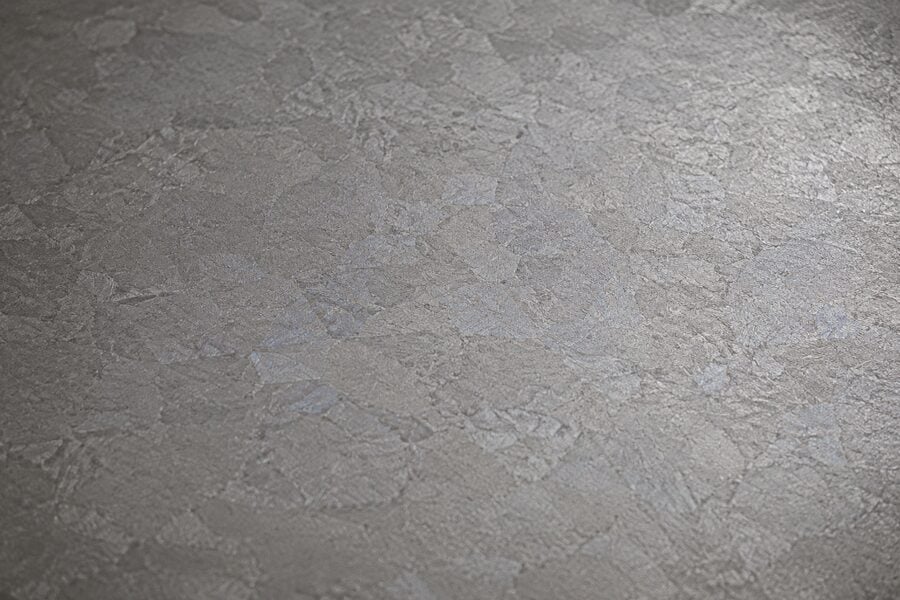
Grade 1, 2, 3, 4
Corrosion-resistant fittings, ducting and medical components where strength requirements are moderate and chemical resistance is not. Softer than Ti-6Al-4V but stickier in the cut — sharp tooling and rigid fixturing are non-negotiable.
Titanium – Alloy
Ti-6Al-4V Grade 5, Grade 23 ELI
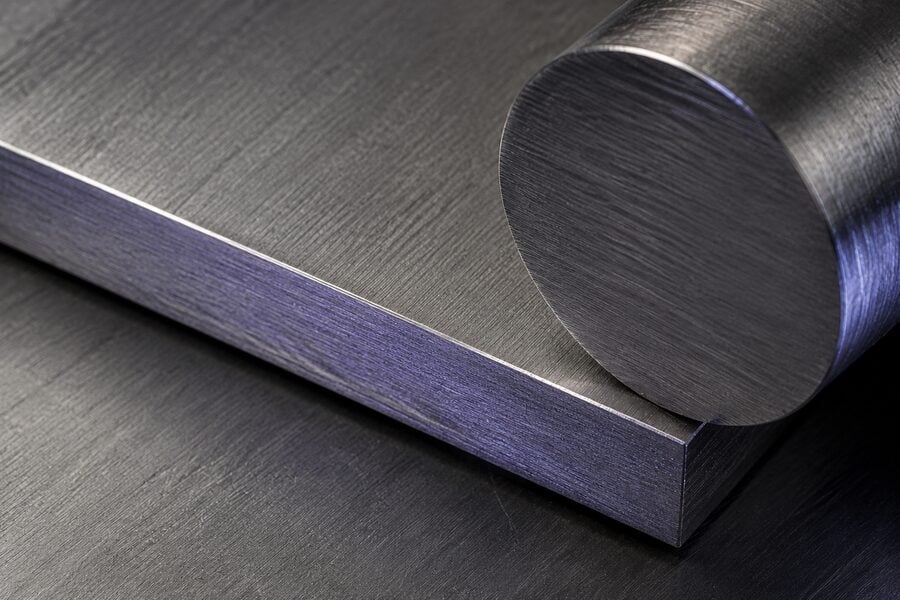
The structural titanium. Brackets, fittings, flight hardware and medical implants. Five-axis milling, precision turning and wire EDM, with domestic-melt traceability for defense work where the contract requires it.
Titanium – High Strength
Ti-6Al-2Sn-4Zr-2Mo
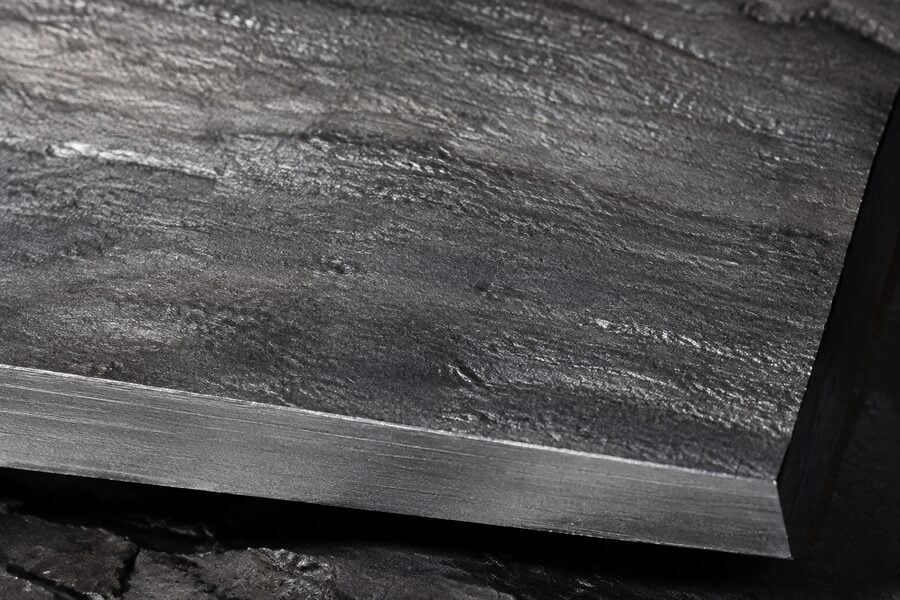
Near-alpha titanium for elevated-temperature structural service. Harder to machine than Ti-6Al-4V at every step — lower speeds, sharper tools, more rigid setups — and normally supplied duplex annealed.
Aluminum
6061, 6063, 7075, 2024
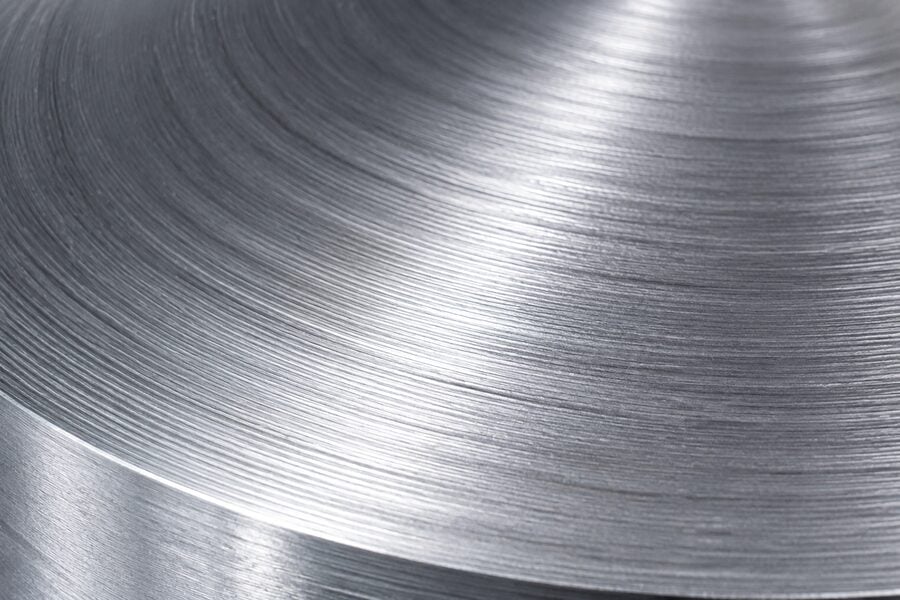
Brackets, housings, fixture plates and structural fittings. 6061 for general work, 7075 for high-strength details, 2024 for fatigue-critical structure. Specify stretched plate — T651 or T7351 — on anything with heavy material removal.
Copper
C110, C101
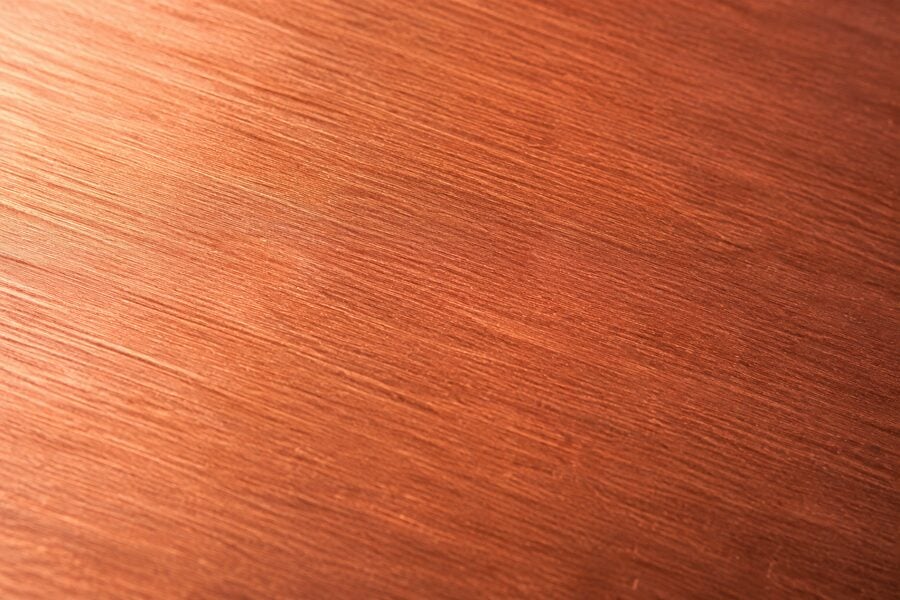
Electrical terminals, bus components and heat-transfer parts. Gummy and burr-prone, so deburring is a real operation rather than an afterthought. Half-hard temper machines far better than annealed — we'll tell you which to buy.

Brass
C360, C464
C360 is the fastest-machining metal in the shop and the natural fit for bar-fed Swiss work — fittings, valve bodies and small turned parts at volume. C464 naval brass for marine hardware. We can advise on low-lead substitutes.
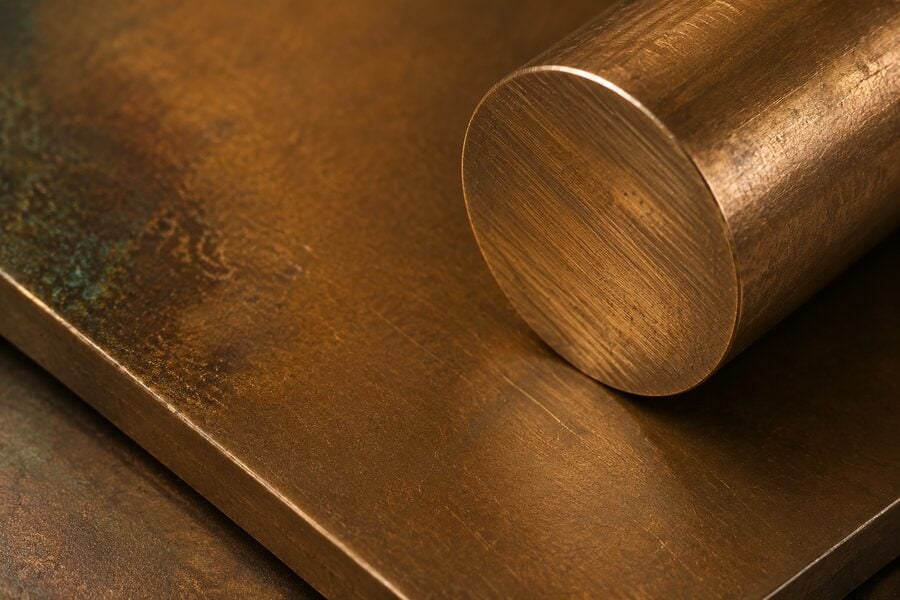
Bronze
C932, C954
C932 bearing bronze for bushings and sleeves, honed to size. C954 aluminum bronze for wear plates and galling-resistant details — strong and tough, but abrasive enough to need carbide and rigid setups.
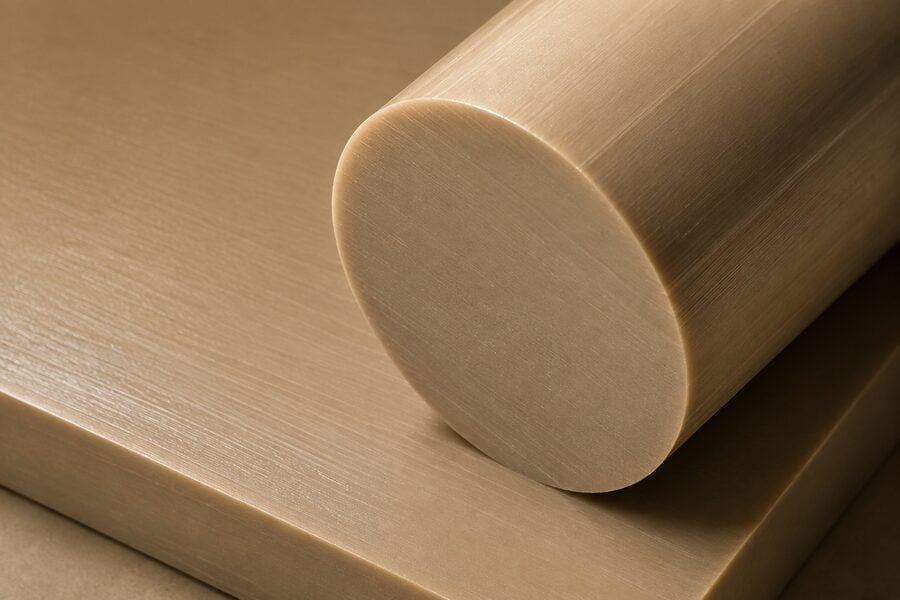
PEEK
Unfilled, glass-filled, carbon-filled
The only plastic on this list that holds metal-class tolerance. Medical instruments, seals, bushings and semiconductor components. Annealing is mandatory, not optional — and carbon-filled PEEK is more dimensionally stable than aluminum.
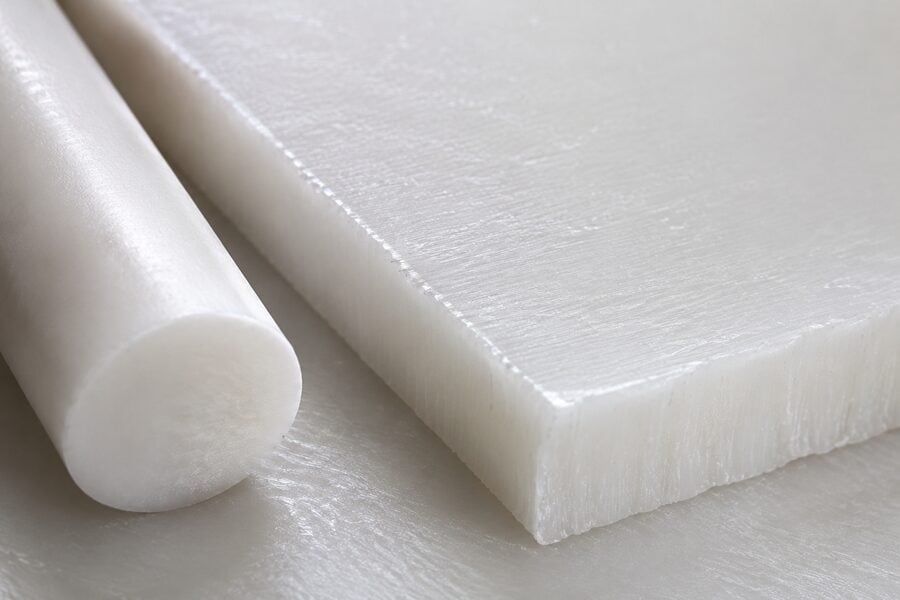
UHMW-PE
UHMW sheet, rod, block
Wear strips, guides, conveyor components and food-contact parts, including FDA-compliant grades. Easy to cut, hard to hold size: thermal expansion runs roughly 18× steel, so we quote ±0.005" and explain why.
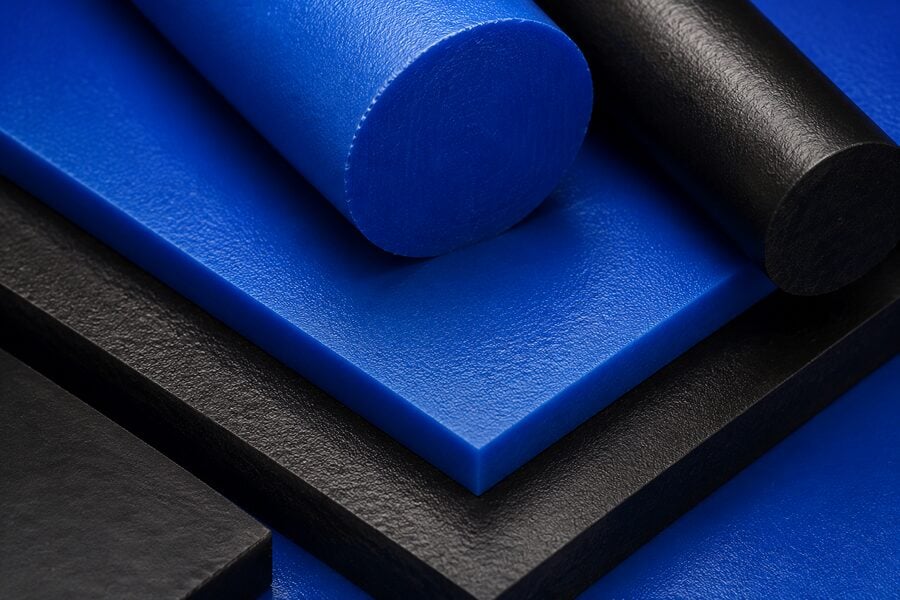
HDPE
HDPE sheet, rod, block
Tank components, wear applications and fabricated assemblies. Stiffer and better behaved than UHMW but subject to the same limits. Thin sheet is usually die-cut rather than milled — often the cheaper answer.
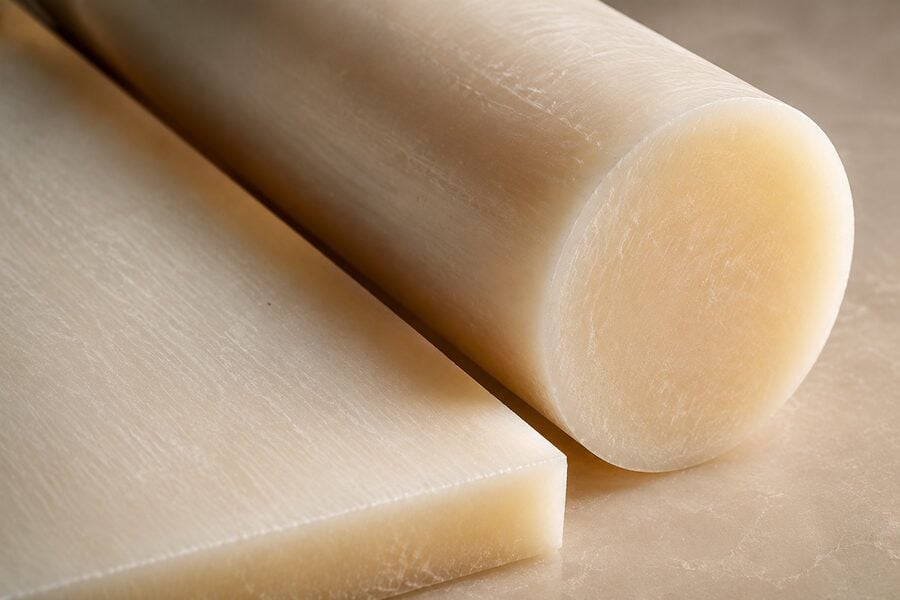
Nylon
Nylon 6, Nylon 6/6, cast nylon
Rollers, bushings, low-load gears and wear components. Nylon absorbs moisture and grows about half a percent doing it, so the drawing has to state whether tolerances apply dry-as-molded or conditioned. We'll flag it if it doesn't.
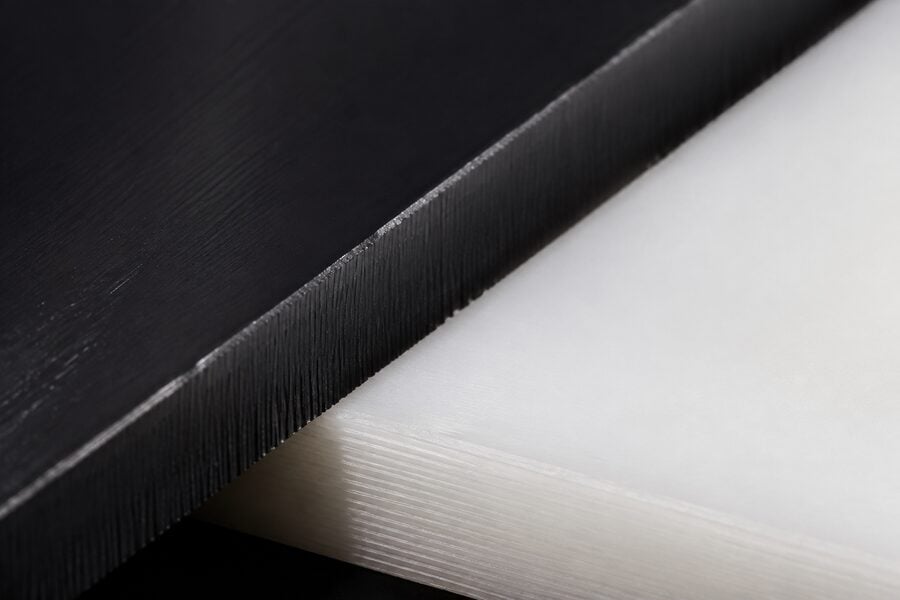
Delrin / Acetal
POM, Delrin, Acetal copolymer
The default when a plastic part needs to hold tolerance — ±0.001" from stress-annealed stock. Bushings, gears, fixtures and precision wear components. We'll steer you to copolymer where centerline porosity would be a problem.
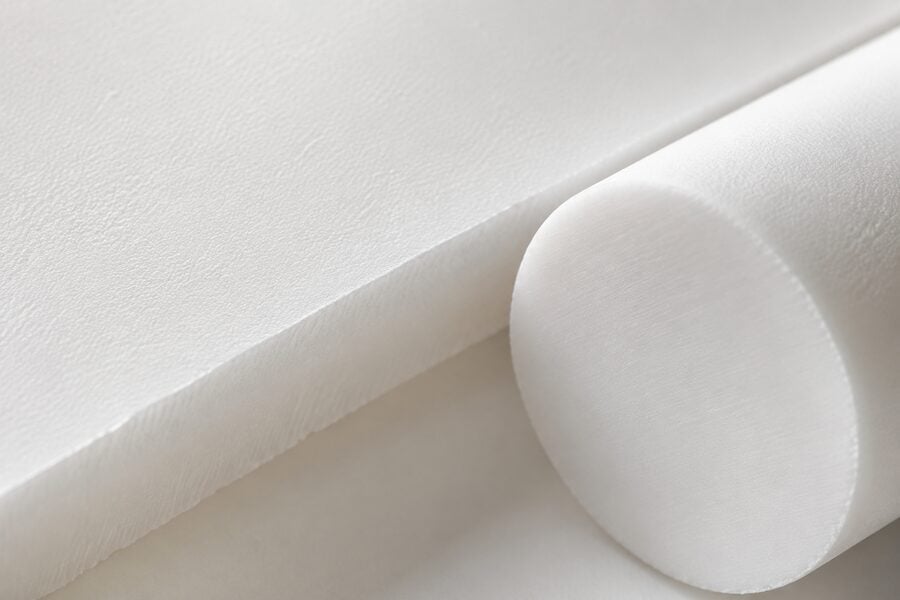
PTFE
PTFE, filled PTFE
Seals, bearings and low-friction components for chemical service. Cold flow and a thermal expansion around 10× steel set the limits; filled grades resist deformation better. Thin gasket sheet we die-cut rather than machine.
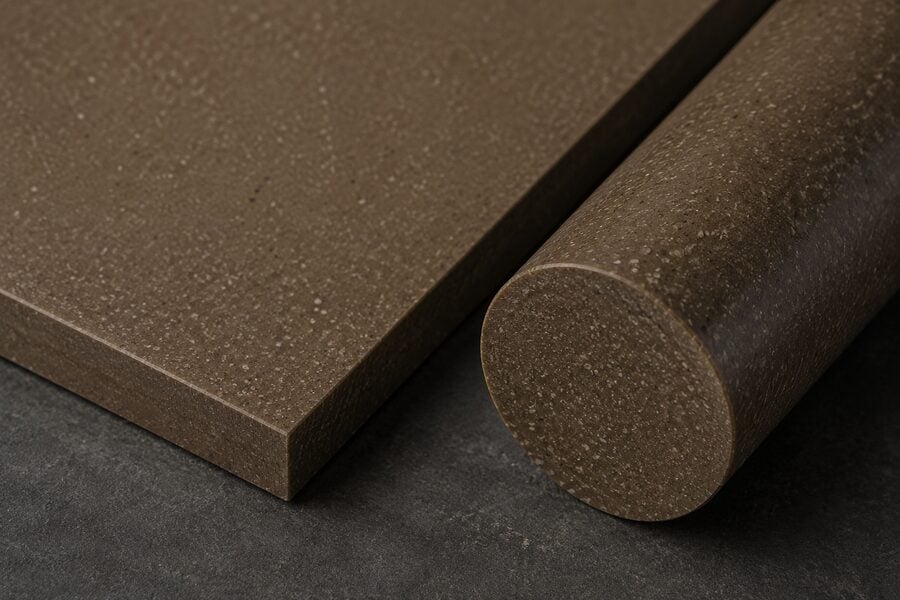
PPS
PPS, glass-filled PPS
One of the few dimensionally trustworthy polymers — near-zero moisture absorption and ±0.001" on small features. Under-hood automotive, electrical and high-temperature chemical parts. Glass-filled grades are hard on tooling.
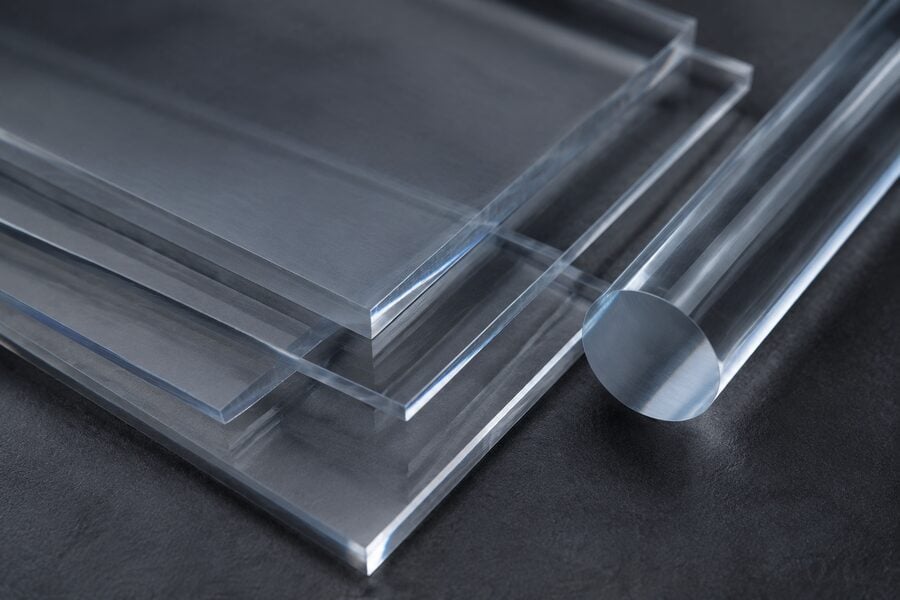
Polycarbonate
PC
Machine guards, housings, windows and medical equipment components. Tough and impact-resistant, but stress-cracking is a real failure mode — water-based coolant only, and annealing after each step that adds stress.
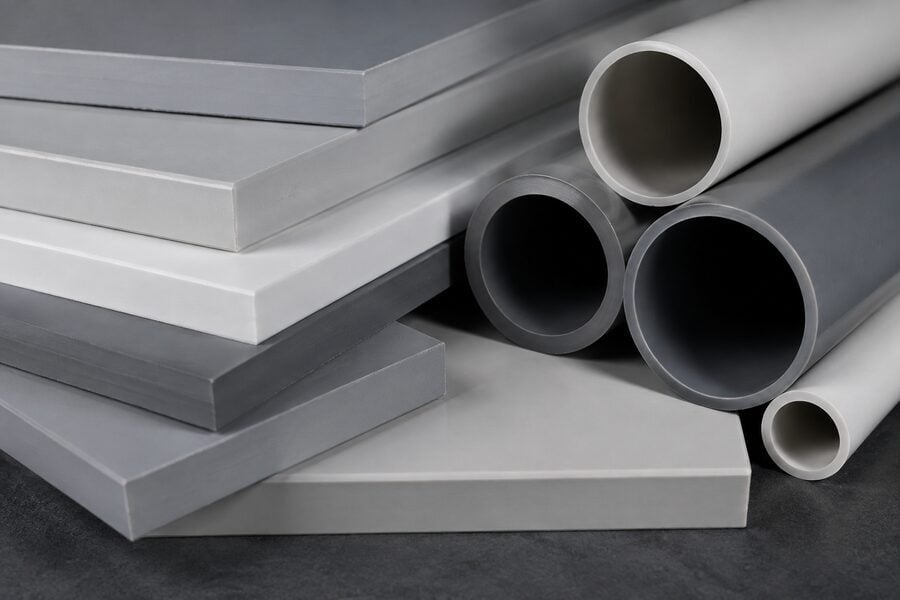
PVC
PVC sheet, rod, pipe
Chemical-service components, fabricated tanks and plumbing details. The easiest of the amorphous plastics to machine and the most stable, at ±0.002". We keep speeds moderate — overheated PVC releases hydrogen chloride.
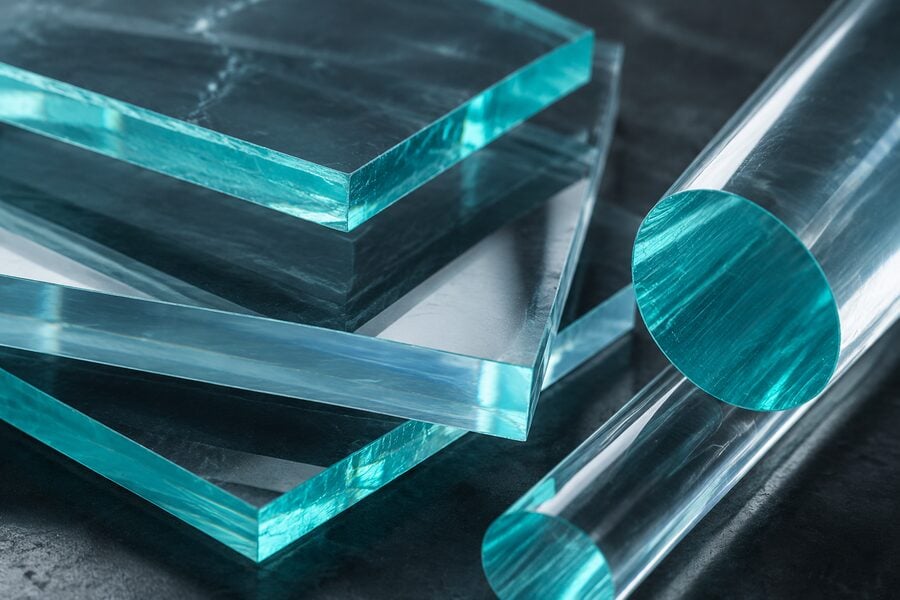
Acrylic
PMMA, cast and extruded
Guards, windows, displays and optical components. Brittle at edges and around holes, so backed drilling and acrylic-specific tooling. Cast acrylic machines considerably better than extruded — worth specifying.
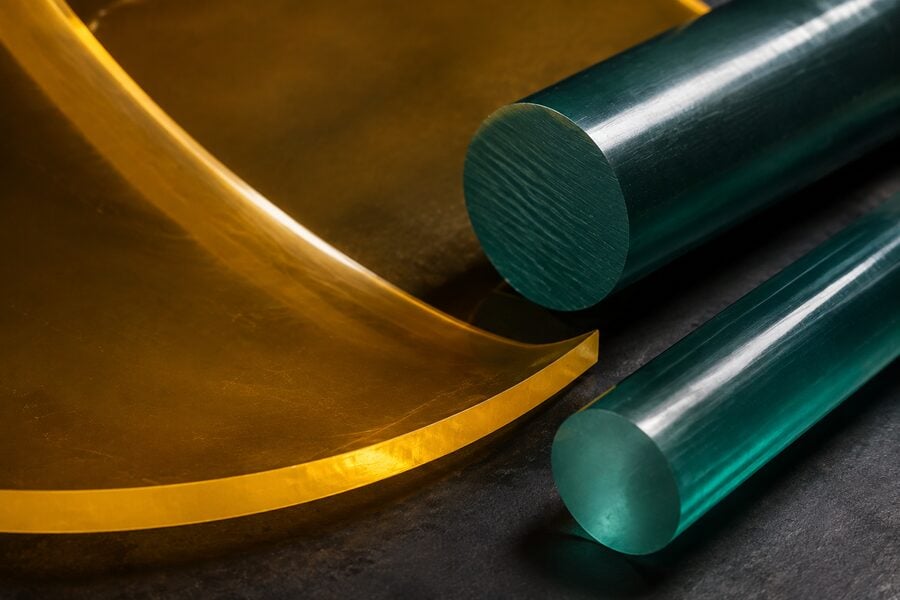
Polyurethane
Cast urethane, urethane sheet
Rollers, bushings, wear pads, seals and bumpers. The harder grades — 85A and up, especially in the D range — we turn and mill. Softer than that and cutting is the right process, not machining.
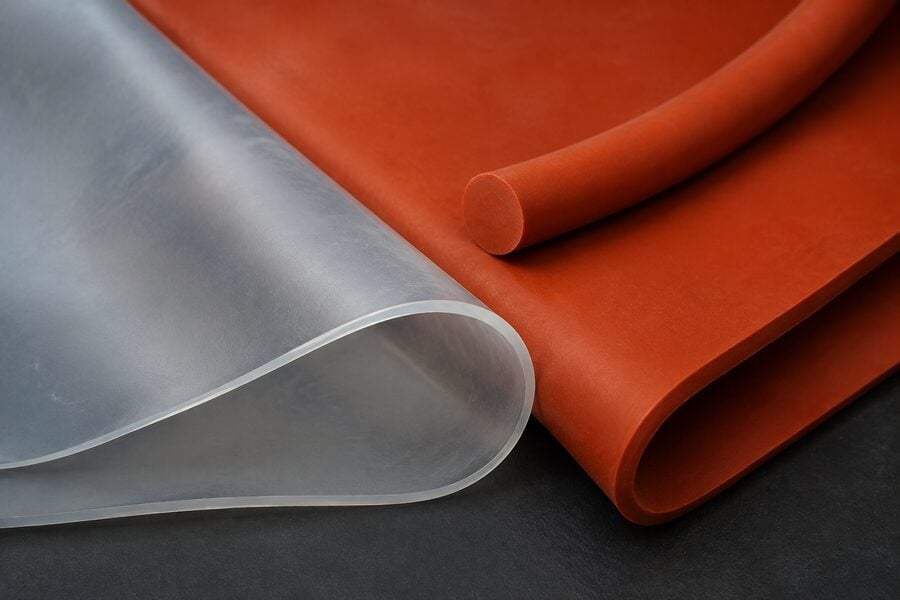
Silicone
Silicone rubber sheet and molded
Gaskets, seals and pads for food, medical and high-temperature service. Die-cut, knife-cut or waterjet — never machined. Excellent across temperature extremes, poor in abrasion and tear, and worth post-curing for compression set.
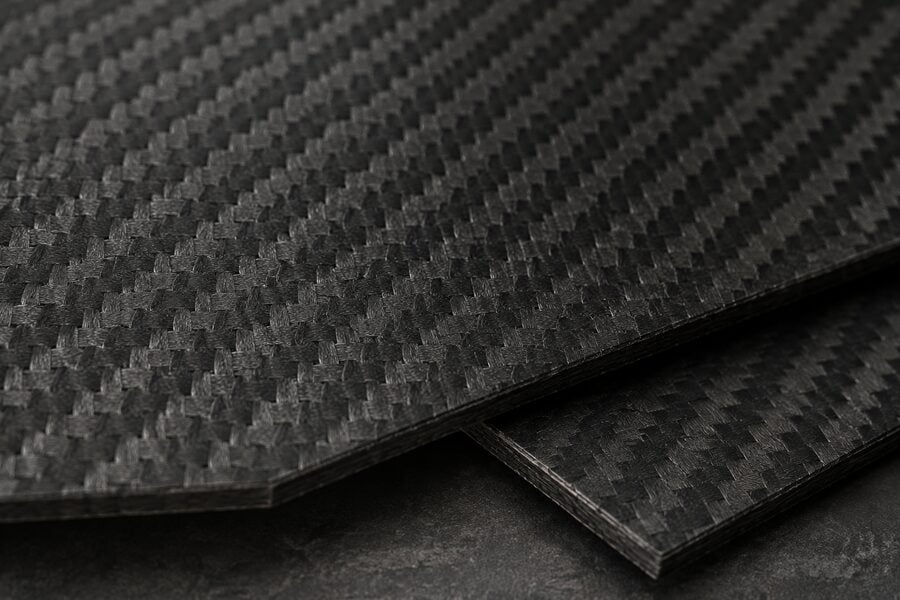
Carbon Fiber Composite
CFRP
Lightweight structural panels, brackets and robotics components. CFRP doesn't cut, it abrades — diamond tooling, dry machining with air cooling, and dust extraction at the tool because carbon dust is electrically conductive.
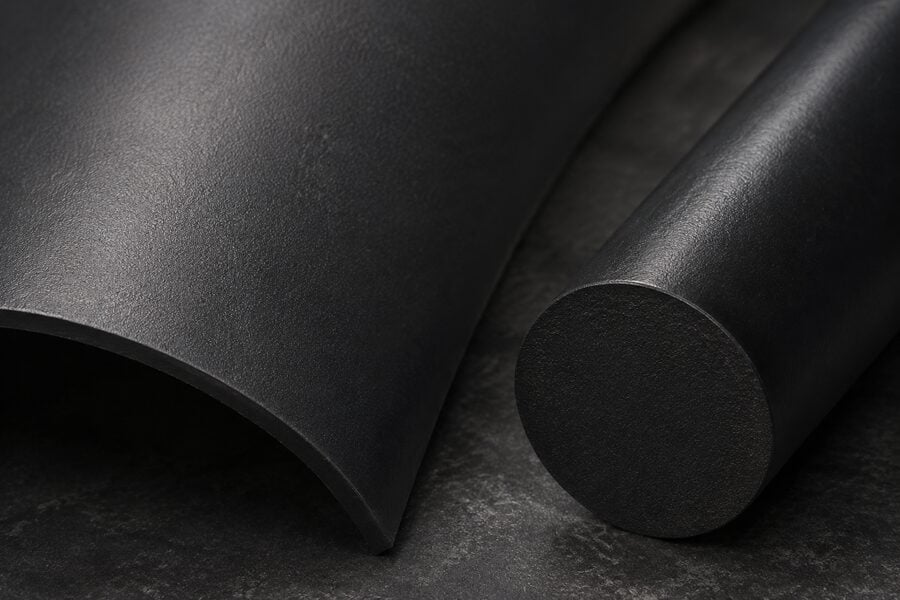
Rubber
EPDM, Nitrile (NBR), FKM / Viton
Gaskets, seals, hoses and vibration components, die-cut to your print and kitted into assemblies. Nitrile for oil and fuel, EPDM for water and steam but never oil, Viton for heat plus chemicals. We help you pick.
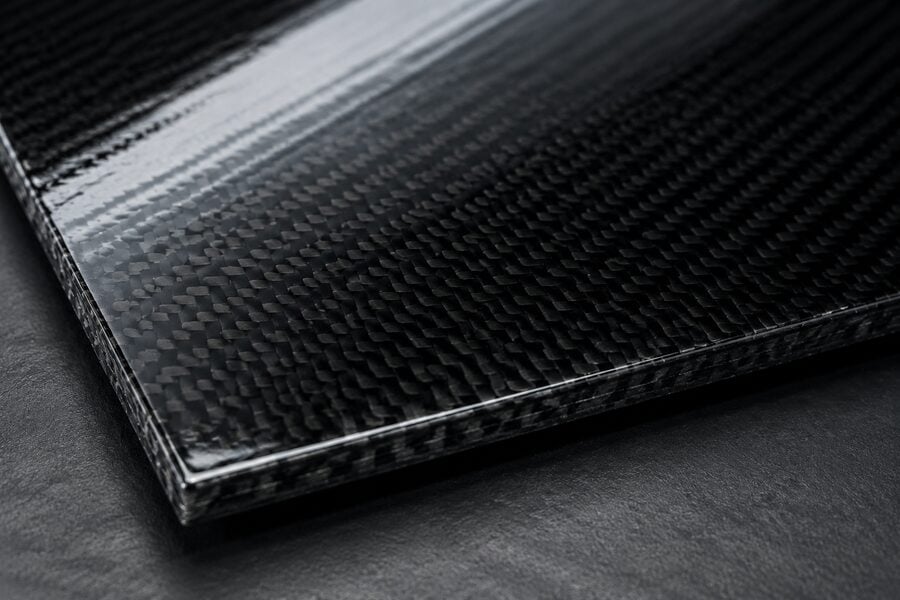
Carbon Fiber / Epoxy
Prepreg, laminate
Aerospace structural panels, plates and stiffeners. Cured laminate is machined with PCD tooling and compression routers; uncured prepreg ply is die-cut on the fabrication side, not machined at all.
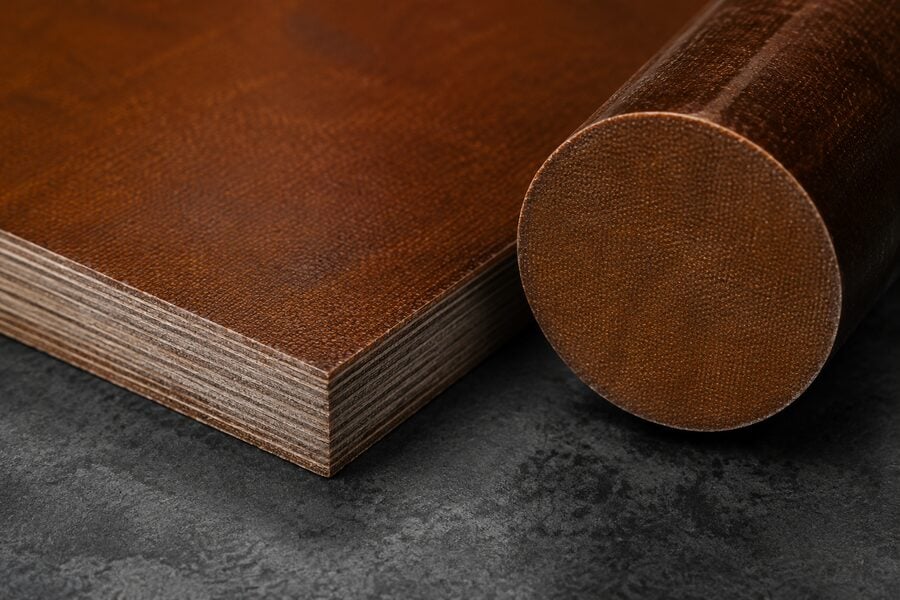
Phenolic Composite
Linen phenolic (LE), paper phenolic (XX/X), canvas (CE), G-10/FR-4
Electrical insulators, bearing details and wear components. Machined dry with air cooling — liquid coolant swells phenolic. LE grades hold the closest tolerances; G-10 and FR-4 are the most abrasive.