



Carbon & Alloy Steel Machining Services
CARBON & ALLOY
CNC Carbon & Alloy Steel Machining From Bar to Hardened Part
Carbon and alloy steel is the backbone of the shop. Shafts, gears, fittings, fixture bases, pivot components and structural details — the parts that hold everything else together. Steelcrest has been machining them in Wauseon, Ohio for over forty years, and we heat treat, temper and anneal in-house in furnaces reaching 2100°F, which means the sequence from bar to hardened, ground part happens under one roof and one quality system.
That matters more than it sounds. Most of what goes wrong with a steel part goes wrong between operations — residual stress released by an asymmetric cut, distortion from a heat-treat cycle, a hardened part that needs 0.020" of grind stock that nobody planned for. Controlling the whole sequence is how those problems stop being surprises.
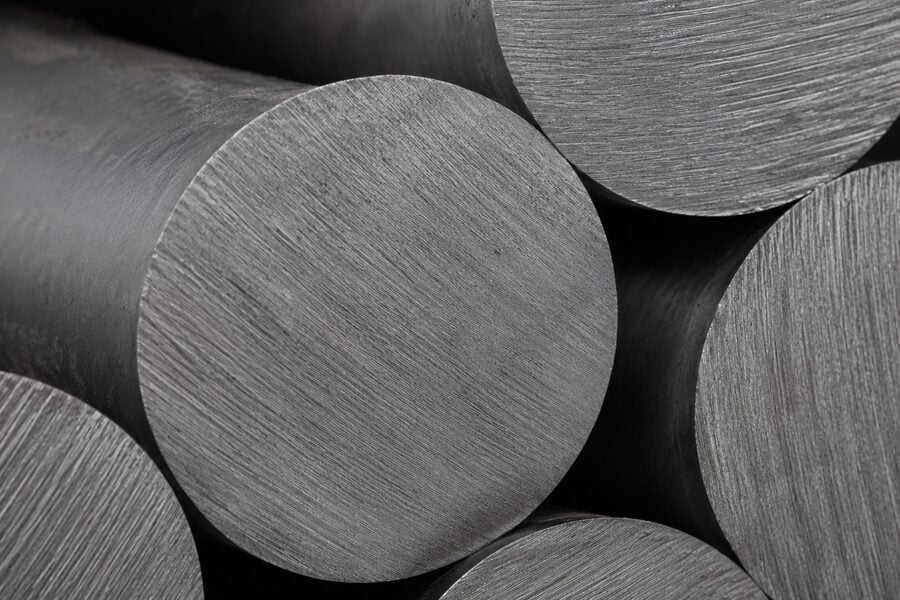
Grades We Run
Carbon Steels
| Grade | Character | Typical use |
|---|---|---|
| 1018 | Low carbon, gummy, case-hardenable | Bar-fed turned components and general hardware. Cold drawn machines meaningfully better than hot rolled. |
| 1045 | Medium carbon, through-hardenable to ~HRC 55 | Shafts, pins and drive components at volume. The general-purpose workhorse. |
| 1095 | High carbon, spring and blade temper | Machined annealed only, then ground after hardening. Heat-treat distortion is significant. |
Alloy Steels
| Grade | Character | Typical use |
|---|---|---|
| 4130 | Weldable, thin-wall | Tubular and welded structural components, chassis and fixture work. |
| 4140 / 4140PH | Deep hardening; pre-hard supplied at 28–32 HRC | Pre-hardened fixture bases, shafts and high-load details. The dominant shop form. |
| 4340 | Deep hardening, high toughness, notch sensitive | High-load shafts and pivot components. Hardens to 38–52 HRC. |
| 8630 | Weldable high strength | Weldable structural components where 4130 is not strong enough. |
| 300M | Silicon-modified 4340, VAR melted | Landing gear and ultra-high-strength aerospace components at 280 ksi and HRC 53–55. See the aerospace section below. |
Case-Hardening Steels
| Grade | Character | Typical use |
|---|---|---|
| 8620 | Low-carbon carburizing grade | Gears, splines and bushings. Machined soft, carburized, then ground. |
| 9310 | Ni-Cr-Mo aerospace gear grade, normally double-vacuum melted to AMS 6265 | Transmission gears and high-load drive components. Tougher, dearer and harder to cut than 8620. |
Tolerances and Surface Finishes We hold
Carbon and alloy steel is dimensionally well behaved and thermally stable the figures below are our machine capability, applied without a material penalty.
| Process | Tolerance | Surface Finish |
|---|---|---|
| CNC turning, standard | ±0.0005" | Up to 8 Ra |
| Precision turning | ±0.0002" | Up to 8 Ra, polishing available |
| CNC milling, 3- and 4-axis | ±0.001" (excluding true-position callouts) | 32 Ra side / 63 Ra face |
| 5-axis milling | ±0.001" linear · ±0.002–0.003" rotational · ±0.003" tilted-hole | 32 Ra |
| INTEGREX / Hyper Quadrex mill-turn | ±0.0005" | 32 Ra |
| OD, surface and Blanchard grinding | ±0.0005" to ±0.0002" | Up to 8 Ra |
| Wire EDM | ±0.0005" to ±0.0002" | 16–32 Ra, fine to 8 Ra |
NOTE: On any part heat treated after machining, quote from the ground tolerance rather than the machined one. Hardened 4340, 1095 and 300M are finished by grinding, and the grind stock has to be planned into the process from the start.
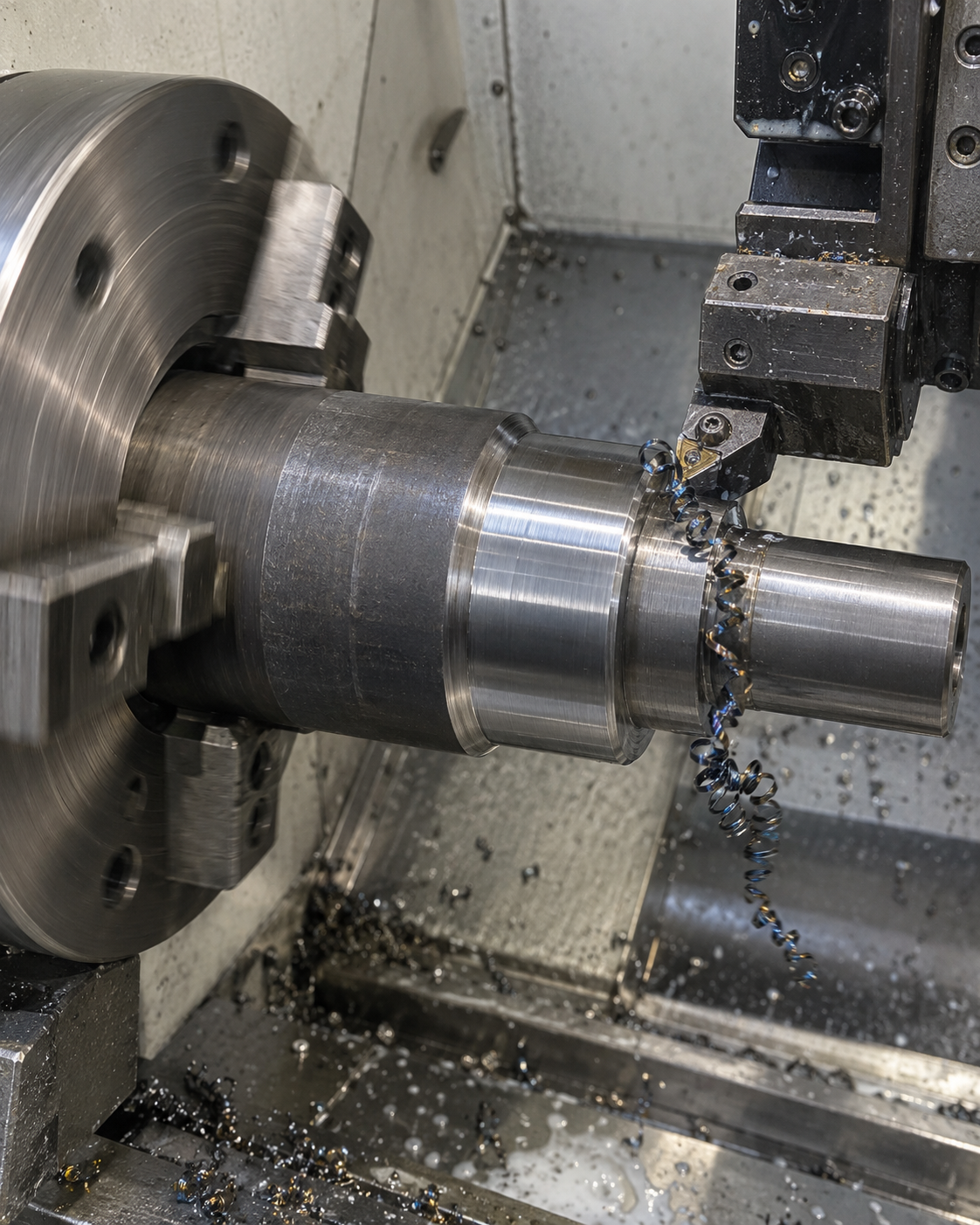
How We Machine Carbon & Alloy Steel
Turning covers shafts, pins and round work: 28 CNC lathes with capacity to Ø26" × 160", the precision sweet spot between Ø0.5" and Ø6", four Swiss lathes for bar-fed production to Ø1.5" with 12-foot bar capacity, and three Y-axis lathes with six inches of Y travel for off-centre features.
Prismatic work runs across 36 vertical machining centers to 30" × 45", eight horizontal centers at 64" × 50" × 32" for production volume, and five 5-axis verticals including Haas UMC-750 platforms. For long or large structural components we run a Johnford to 80" × 50" and a Haas VF-10 to 120" × 20".
Hardened parts finish in grinding and EDM: OD grinding to Ø16" × 60", surface grinding to 32" × 20" × 18", Blanchard to Ø15", honing to Ø8", five wire EDM machines and two RAM EDM machines.
What Makes Carbon & Alloy Different To Machine
With carbon and alloy steels the cutting is the easy part; hardness, heat treat, and the stress locked inside the bar are what decide the process and the price.
Buy pre-hardened 4140 whenever the print allows it
4140PH is supplied at 28–32 HRC and it is the right call any time the drawing permits 32 HRC or below. Machinability drops from around 66 percent annealed to roughly 50–55 percent, but you eliminate an entire heat-treat cycle and the distortion that comes with it. On anything long, thin or dimensionally critical, that trade is worth making every time.
Machinability, for reference
On the AISI scale where free-machining B1112 steel is 100 percent: 1018 at 78 percent cold drawn, 1045 at 64 percent, 1095 at 42 percent, 4130 at 72 percent, 4140 at 66 percent annealed, 4340 between 50 and 57 percent, 8620 at 64–66 percent and 9310 at 51 percent annealed. 8630 and 300M do not have reliably published figures and we do not quote one.
Residual stress is what bows your shaft
Cold-drawn bar carries significant stress from the drawing process, and heavy or asymmetric machining releases it. This is the single most common cause of a straight shaft coming off the machine bowed. The fixes are known: specify cold-drawn stress-relieved bar for long thin parts, or rough, stress relieve at 900–1000°F for two to four hours, then finish. We plan this into the routing rather than discovering it at inspection.
Carburized parts are ground, not machined, to size
8620 and 9310 are deliberately soft as machined — the whole point is to cut them soft and carburize afterwards for a hard case over a tough core. The process plan revolves around carburizing distortion: teeth, splines and bores all grow and move. Our sequence is rough, stress relieve, finish machine leaving 0.010" to 0.030" of grind stock on critical features, carburize to the specified effective case depth, then grind. Surfaces that must stay soft are copper plated or stop-off painted before carburizing.
Finishing and Post-Processing
Some operations we perform in-house; others we manage through qualified partners and control
through our own quality system. We tell you which is which up front.
In-house at Steelcrest
- Quench, temper and anneal in furnaces reaching 2100°F — 4140 to 28–34 HRC, 4340 to 38–52 HRC typical
- Stress relief between roughing and finishing
- Saw cutting and bar preparation
- Carbinite tungsten-carbide application by Electro Spark Deposition for wear surfaces
- Laser etching, industrial spray coating, deburring, and CMM inspection
Managed through qualified partners
- Nitriding — very common on 4140 and 4340, producing an HRC 60-plus case with minimal distortion. Nitride after final machining and allow 0.0002" to 0.0005" per surface of growth
- Gas or vacuum carburizing for 8620 and 9310, to specified effective case depth
- Black oxide, phosphate, zinc, zinc-nickel and chrome plating
- Shot peening on fatigue-critical parts
- Hydrogen-embrittlement relief bake — mandatory on 300M and on any plated part over HRC 40
Industries We Machine Carbon & Alloy For
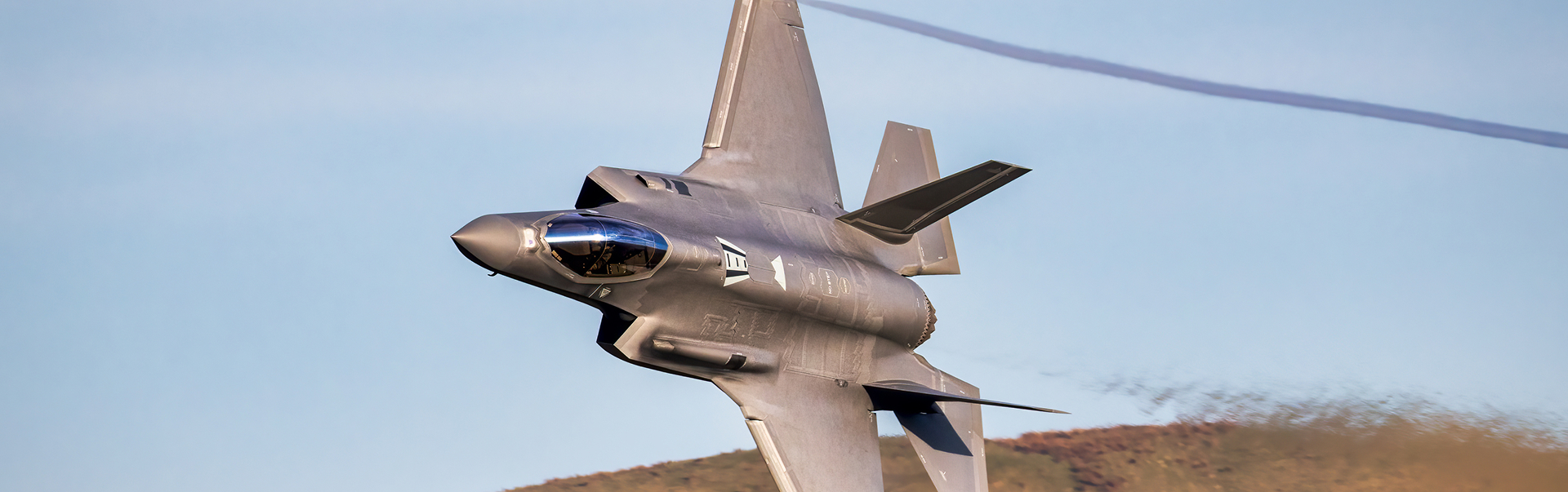
Steelcrest Precision machines carbon and alloy steels, including 1018, 1045, 4140, 4340, and case-hardening grades 8620 and 9310, for aerospace and defense, automotive, agricultural and construction, and consumer products customers. Grade, condition, and heat treat are matched to the part, from pre-hard 4140 fixture work to carburized gears ground to size.
For aerospace and defense work, Steelcrest is ISO 9001:2015 certified, ITAR registered, and machines to AS9100-compliant processes as we pursue full AS9100 certification; put traceability and domestic-melt requirements on the RFQ and we will confirm sourcing and documentation before we quote.
.png?width=1920&height=603&name=construction%20(2).png)
.png?width=1920&height=603&name=consumer-products%20(2).png)
Talk to us about your Carbon & Alloy Steel parts.
Send the drawing and the quantity. We will come back with a real number, a real lead time, and if there is a better material or condition for what the part has to do, we will tell you that too.
Frequently Asked Questions
Do you heat treat in-house?
Yes. Our furnaces reach 2100°F and cover hardening, tempering, annealing and stress relief. That means roughing, stress relief, finish machining, heat treatment and grinding all happen under one roof and one quality system, which is where most steel parts go wrong when the work is split between suppliers.
Should I specify 4140 annealed or pre-hardened?
Pre-hardened, any time the drawing permits 32 HRC or below. 4140PH comes in at 28–32 HRC, machines at roughly 50–55 percent machinability against 66 percent annealed, and eliminates a heat-treat cycle and its distortion. On long, thin or dimensionally critical parts that trade is always worth making.
Why did my shaft come out bowed?
Almost always residual stress from cold drawing, released by an asymmetric cut. The fixes are to specify cold-drawn stress-relieved bar, or to rough, stress relieve at 900–1000°F, then finish. We plan this into the routing for long or thin parts.
Can you machine gears?
We machine gear blanks, splines and drive components in 8620 and 9310, carburize through qualified partners to a specified effective case depth, and grind to final size afterwards. Gear cutting itself — hobbing and shaping — is arranged through partners; confirm scope with us at RFQ.
Do you supply material certifications?
Yes — material certifications and a certificate of conformance ship with the parts, and we can hold mill certs on file against your part number for repeat orders.
What is the largest part you can machine?
Turning to Ø26" by 160" long. Milling to 80" × 50" on our Johnford and 120" × 20" on the Haas VF-10, with horizontal centers at 64" × 50" × 32" for production work.