Skip to content

Titanium Machining Services

TITANIUM MACHINING

CNC Titanium Machining for Complex, Critical Parts 

Titanium is not difficult because it is hard. It is difficult because it conducts heat about a sixth as well as steel, so nearly all the cutting heat stays in the tool edge and the workpiece; because it is chemically reactive at temperature and alloys with the tool material; and because its elastic modulus is roughly half that of steel, so the part deflects away from the cutter and springs back behind it. None of those are solved by buying a faster machine. 

Steelcrest machines titanium with precision turning as the core process, supported by grinding and wire EDM, and we take on titanium milling selectively, where the geometry matches what our tooling and experience handle well. We run an ISO 9001 certified shop machining to AS9100-compliant processes as we pursue full AS9100 certification. For defense work, put the traceability requirement on the RFQ, including domestic-melt specifications, and we will confirm sourcing and documentation before we quote.

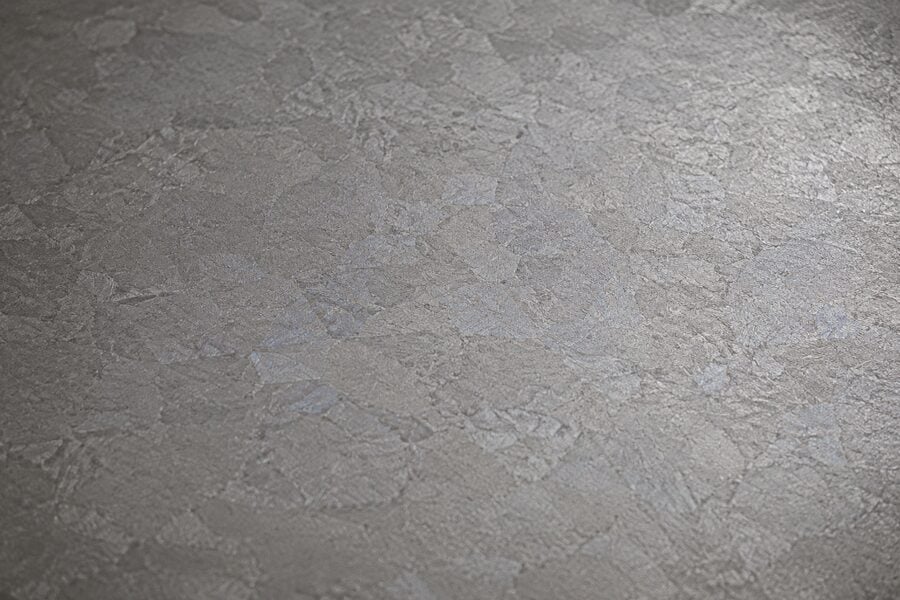
CNC Titanium Machining - Titanium Commercially Pure Texture

Titanium Grades We Run

Grade Condition Typical use
CP Grade 1, 2, 3, 4 Annealed Commercially pure titanium for corrosion-resistant fittings, ducting and medical components. Grade 1 is softest and gummiest; Grade 4 is strongest and behaves closest to Ti-6Al-4V.
Ti-6Al-4V (Grade 5) Mill annealed or STA The structural titanium. Brackets, fittings, flight hardware, valve components. Mill annealed is the standard machining condition.
Ti-6Al-4V ELI (Grade 23) Annealed Extra-low-interstitial grade for medical implants and cryogenic service. Machines identically to Grade 5.
Ti-6Al-2Sn-4Zr-2Mo Duplex annealed Near-alpha alloy for elevated-temperature structural service. Harder to machine than Ti-6Al-4V at every step.

 Tolerances and Surface Finishes We Hold On Titanium

Our published machine capability applies, with one honest caveat that most shops leave out. Titanium's low elastic modulus 16.5 Msi against steel's 30 Msi  means thin walls and long unsupported features deflect under cutting load and spring back afterwards. That, not the machine, is the practical limit. 

Process Tolerance Surface Finish
CNC turning, standard ±0.0005" Up to 8 Ra
Precision turning ±0.0002" Up to 8 Ra, polishing available
CNC milling, 3- and 4-axis ±0.001" (excluding true-position callouts) 32 Ra side / 63 Ra face
5-axis milling ±0.001" linear · ±0.002–0.003" rotational · ±0.003" tilted-hole 32 Ra
INTEGREX / Hyper Quadrex mill-turn ±0.0005" 32 Ra
OD, surface and Blanchard grinding ±0.0005" to ±0.0002" Up to 8 Ra
Wire EDM ±0.0005" to ±0.0002" 16–32 Ra, fine to 8 Ra


NOTE*:  
Quote ±0.001" as the normal band on titanium and reserve ±0.0005" for short, well-supported geometry or ground and wire-EDM features. Where a thin-wall feature needs a tolerance the cutting force will not support, wire EDM removes the cutting force from the equation entirely. 

ChatGPT Image Sep 14, 2026, 12_40_43 PM

How We Machine Titanium

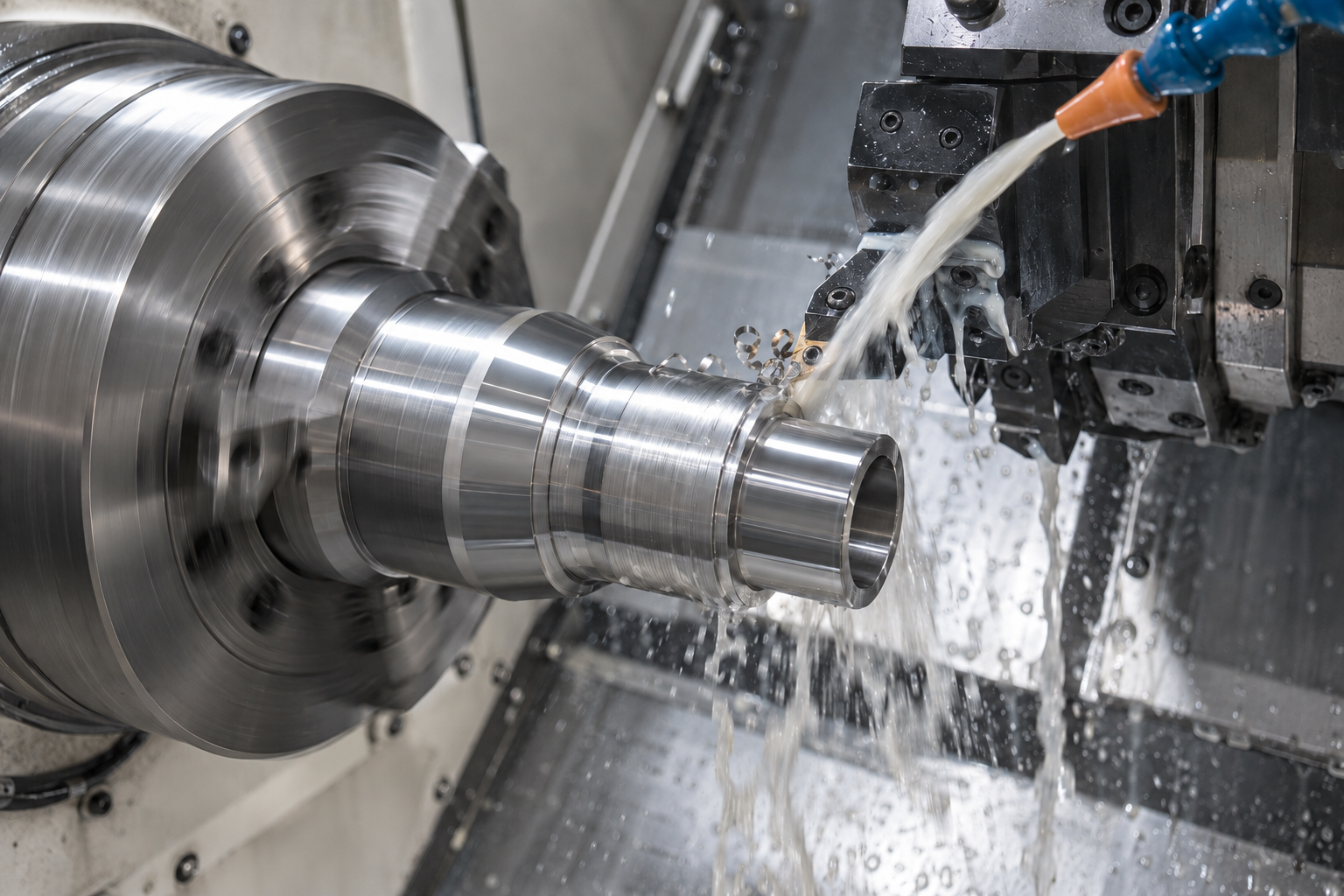
Turning is where our titanium work runs deepest. It spans 28 CNC lathes with precision turning to ±0.0002", four Swiss lathes for small-diameter component and fastener work up to Ø1.5", and INTEGREX and Hyper Quadrex platforms that finish mill-turn parts in one setup at ±0.0005".

Where cutting force would deflect the part, 5 wire EDM machines cut thin features and profiles with no mechanical load at all, holding ±0.0002" to ±0.0005". OD and surface grinding finish the features that need to be tighter than turning will deliver.

Milling is where we are deliberately selective. Titanium's heat and springback punish long tools and ambitious setups, so we take on milled titanium where the geometry fits our tooling and experience, including 5-axis work on our Haas UMC-750 platforms when the part calls for it. Send the drawing and we will tell you straight whether it is a fit.

What Makes Titanium Different To Machine

 Titanium punishes shops four ways at once, and every one of them is a process problem, not a machine problem.  

Heat, not hardness, is the problem

Titanium's thermal conductivity is roughly a sixth of steel's. In a steel part most of the cutting heat leaves in the chip; in titanium it stays in the tool edge and the workpiece. That drives the whole process: low surface speed, high feed, sharp positive-rake tooling, high-pressure through-tool coolant, and never allowing the tool to dwell or rub. 

Titanium attacks the tool chemically

At cutting temperature titanium alloys with the tool material, producing rapid crater and diffusion wear. This is why straight uncoated tungsten carbide in K-grades often outperforms coated grades in titanium turning — a result that surprises people used to steel, where coatings almost always win. 

Deflection is what sets your tolerance

At 16.5 Msi, titanium's elastic modulus is roughly half steel's. Thin walls push away from the cutter and spring back, producing chatter, out-of-round conditions and taper. Rigid fixturing, minimum tool overhang and light finishing passes at high feed are the counter, and on genuinely thin features wire EDM is the answer rather than a smaller cut. 

Chip handling is a safety matter

Fine titanium chips and dust are flammable. We run flood coolant, keep chips evacuated and do not dry grind titanium. It is a routine part of running the material, but it is a real reason titanium work does not belong in a shop that has not set up for it. 

For reference on the AISI scale: Ti-6Al-4V annealed at 21 percent, and 12 percent in the solution-treated-and-aged condition — which is why we machine annealed and age afterwards wherever the drawing allows. Published machinability figures do not exist for the CP grades or for Ti-6-2-4-2, and we do not quote one. 

Certification, Traceability and DFARS

On aerospace and defense titanium work, the material paperwork is often the deciding factor rather than the machining. Steelcrest holds ISO 9001 registration with AS9100-compliant processes, in pursuit of full certification, and is a PMPA member. 

For defense contracts subject to the DFARS specialty metals clause, tell us at RFQ that your contract carries the clause. It changes where the material comes from and what the documentation package has to contain, and we confirm domestic-melt sourcing and the full traceability chain, from mill certificate through finished part, before we quote. 

Material certifications and a certificate of conformance ship with the parts, and we can hold mill certificates on file against your part number for repeat orders. 

Finishing and Post-Processing

We handle cutting, marking, and inspection in-house and manage titanium-specific surface treatments through qualified outside partners. 

In-house at Steelcrest

  • Annealing within our 2100°F furnace range — note that any heat treatment in air forms alpha case, which must be removed
  • Saw cutting and bar preparation
  • Laser etching for UDI marking, lot codes and traceability
  • Deburring, CMM and FARO Arm inspection

Managed through qualified partners

  • Anodizing to AMS 2488 Type 2 for anti-galling and abrasion resistance
  • Descaling and cleaning to ASTM B600 — this is the correct specification for titanium; ASTM A967 and AMS 2700 are stainless specifications and do not cover it
  • Electropolishing to ASTM F86 for surgical implant work
  • Shot peening to AMS 2430 on fatigue-critical parts
  • Alpha-case removal by chemical milling after any air heat treatment

Industries We Machine Titanium For

Steelcrest Precision machines commercially pure titanium and Ti 6Al-4V (Grade 5) for aerospace and defense, medical and pharmaceutical, and automotive applications, with turning, grinding, and wire EDM as the primary processes. 

Talk to us about your Titanium parts. 

Send the drawing and the quantity. We will come back with a real number, a real lead time, and if there is a better material or condition for what the part has to do we will tell you that too. 

Frequently Asked Questions

Can you machine titanium to ±0.0005"?

On short, well supported features and on ground or wire-EDM features, yes. On thin walls and long unsupported geometry, titanium's low elastic modulus means the part deflects under cutting load and springs back — so we quote ±0.001" as the normal band and use wire EDM where a feature needs to be tighter than the cutting force will allow. 

Do you handle DFARS specialty metals requirements?

Yes we manage domestic melt sourcing and maintain traceability from mill certificate to finished part for defense contracts carrying the clause. Tell us at RFQ, because it determines where the material is bought and what documentation ships with the part. 

Should I specify mill annealed or STA Ti-6Al-4V?

Mill annealed wherever the drawing allows. STA is stronger but roughly halves machinability, from 21 percent to 12 percent on the AISI scale. Where the part needs STA properties, the usual route is to machine annealed and age afterwards. 

What is the difference between Grade 5 and Grade 23?

Grade 23 is Ti-6Al-4V ELI  extra low interstitial  used for medical implants and cryogenic service where fracture toughness matters. It machines identically to Grade 5. 

Do you machine CP titanium differently from Ti-6Al-4V?

Yes. CP grades are softer but stickier they gall and smear rather than cutting cleanly, and Grade 1 is the worst of the four for it. Lower speeds, sharper tools and more attention to chip evacuation, but the same underlying rules about heat, dwelling and rigidity. 

Can you laser mark titanium parts for UDI?

Yes. Our Tykma Vereo fiber laser marker with rotary attachment handles UDI marking, lot codes and traceability marking in house.