



Tool Steel Machining Services
TOOL STEEL MACHINING
CNC Tool Steel Machining, Hardened and Ground In-House
Tool steel parts are made twice. They are machined soft, heat treated, and then made to size a second time by grinding and EDM — and it is the second half that determines whether the part is any good. A shop that mills tool steel but sends it out to be hardened and ground is handing off the operations that actually set the tolerance.
Steelcrest does all of it. We machine annealed, harden and double-temper in furnaces reaching 2100°F, and finish in a grinding and EDM department running OD, surface and Blanchard grinding, honing, five wire EDM machines and two RAM EDM machines. Ground and EDM'd features hold ±0.0002" to ±0.0005".
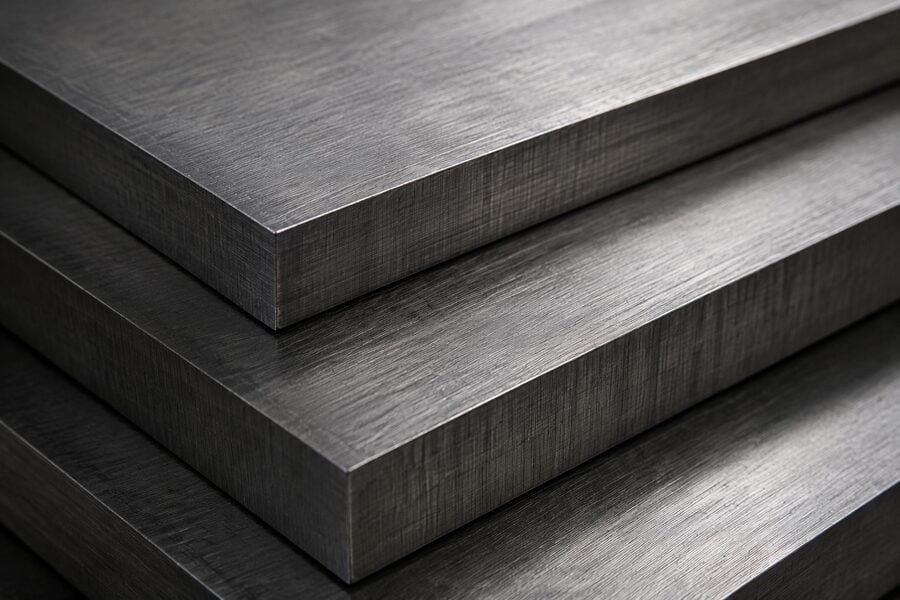
Tool Steel Grades We Run
Every tool steel is a trade between wear resistance, toughness, and how much it moves in heat treat. These five earn their place by winning that trade differently, and the notes below say which one wins where.
| Grade | Type | Working hardness | Where it earns its place |
|---|---|---|---|
| A2 | Air hardening, cold work | HRC 57–62 | The balanced choice — better size stability than O1 and good machinability for a tool steel. Fixture locators, detail sets, forming tools. |
| D2 | High-chromium, cold work | HRC 54–61 | Maximum wear resistance. Checking gauge bodies and hardened wear details. Genuinely abrasive even annealed — see the notes below. |
| O1 | Oil hardening, cold work | HRC 57–62 | Easiest of the group to machine and heat treat, but more distortion and size change than A2. Short-run tooling and repair details. |
| S7 | Shock resisting, air hardening | HRC 40–58 | Die components subject to impact. Tough, good size stability, and the best machining of the group. |
| H13 | Hot work | HRC 38–53 | Hot-work die and mould details. Available pre-hardened at 38–44 HRC, which machines reasonably and skips a heat-treat cycle. |
Tolerances and Surface Finishes We Hold
On tool steel the meaningful capability is the hardened-state capability. Annealed machining sets up the part; grinding and EDM finish it.
| Process | Tolerance | Surface Finish |
|---|---|---|
| Surface grinding (32" × 20" × 18") | ±0.0005" to ±0.0002" | Up to 8 Ra |
| OD grinding (Ø16" × 60") | ±0.0005" to ±0.0002" | Up to 8 Ra |
| Blanchard grinding (Ø15") | ±0.0005" to ±0.0002" | Up to 8 Ra |
| Honing (to Ø8") | ±0.0005" to ±0.0002" | Up to 8 Ra |
| Wire EDM (31" × 28" × 11") | ±0.0005" to ±0.0002" | 16–32 Ra, fine finish to 8 Ra |
| RAM / sinker EDM (24" × 14" × 10") | Cavity and blind-feature work | Per application |
| CNC milling, annealed condition | ±0.001" | 32 Ra side / 63 Ra face |
| CNC turning, annealed condition | ±0.0005" | Up to 8 Ra |
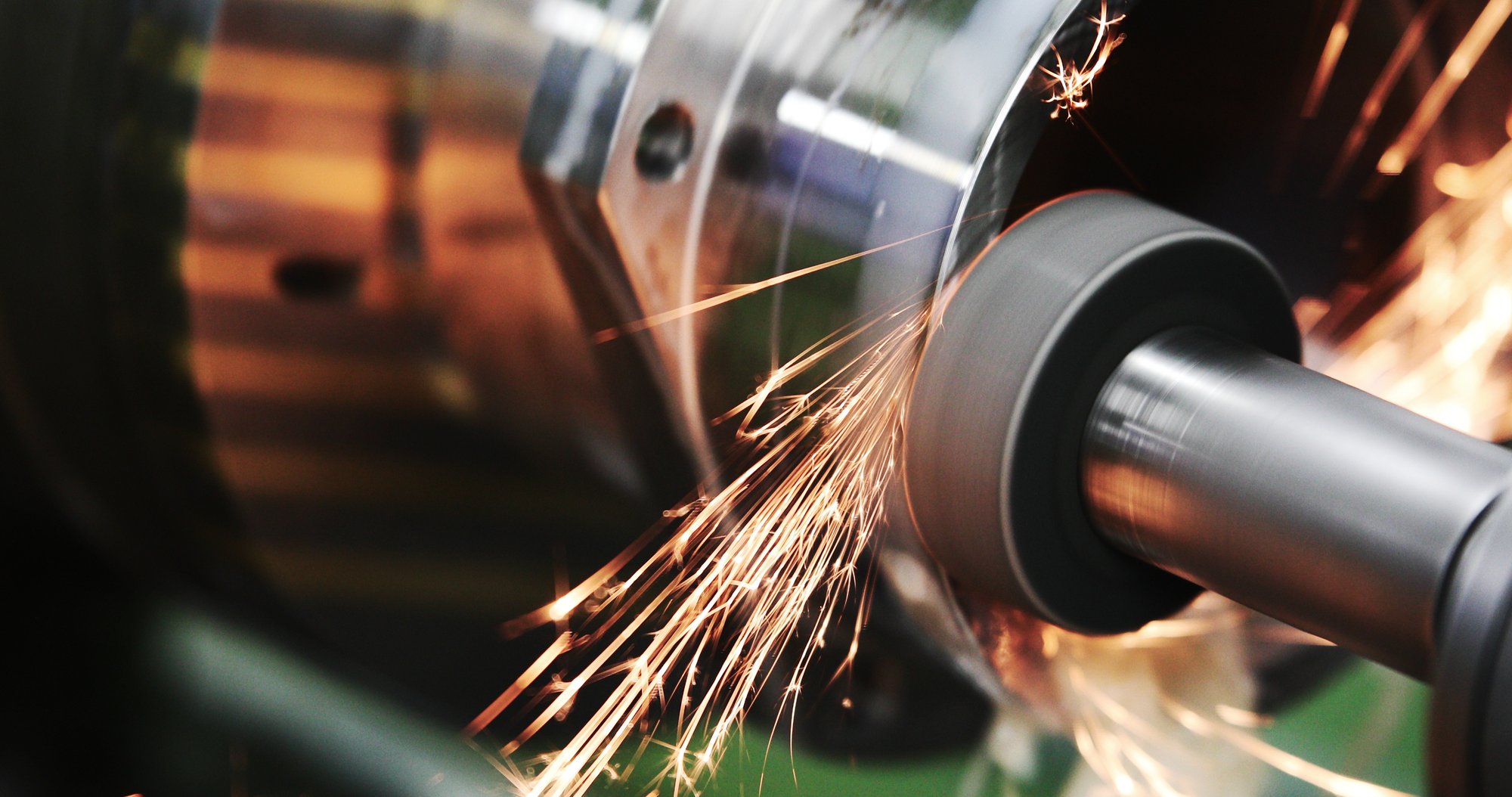
NOTE: Two things that cost people parts. Hot-rolled tool steel bar carries a real decarburized layer — allow 0.030" to 0.060" per side of cleanup, more on large sections. And precision-ground flat stock, O1 especially, is convenient but is NOT stress relieved; machine it asymmetrically and it will move.
The Sequence, and Why It Matters
Tool steel work follows a fixed order, and skipping a step is how parts end up out of tolerance after heat treat.
- Rough machine in the annealed condition, at 200–255 HB
- Stress relieve at 1150–1250°F — annealed bar carries rolling and forging stress, and roughing adds more
- Finish machine, leaving grind stock on every critical feature
- Harden, then double or triple temper — essential on A2, D2 and H13 to convert retained austenite
- Cryogenic treatment between tempers where dimensional stability is critical, through a qualified partner
- Grind, hone or EDM to final size
Finishing and Post-Processing
Some operations we perform in-house; others we manage through qualified partners and control
through our own quality system. We tell you which is which up front.
In-house at Steelcrest
- Hardening, double and triple tempering, and annealing in furnaces reaching 2100°F
- Stress relief after rough machining
- Grinding, honing, wire EDM and RAM EDM to final size
- Carbinite tungsten-carbide application by Electro Spark Deposition for wear surfaces
- Laser etching for part and cavity identification, deburring, and CMM inspection
Managed through qualified partners
- Cryogenic treatment between tempers on D2 and A2 for dimensional stability
- Nitriding on H13 dies
- PVD coating — TiN, TiCN, AlTiN, CrN — on punches and mould cores
Industries We Machine Tool Steel For
Steelcrest Precision machines A2, D2, O1, S7, and H13 tool steels into the dies, fixtures, gauges, and wear details that keep automotive, consumer products, and agricultural equipment production running.
.png?width=1920&height=603&name=consumer-products%20(2).png)
.png?width=1920&height=603&name=construction%20(2).png)
Talk to us about your Tool Steel parts.
Send the drawing and the quantity. We will come back with a real number, a real lead time, and — if there is a better material or condition for what the part has to do — we will tell you that too.
Frequently Asked Questions
Can you machine tool steel in the hardened condition?
Above roughly HRC 50 we finish by grinding and EDM rather than by cutting, which is the correct approach rather than a limitation. We run OD, surface and Blanchard grinding, honing to Ø8", five wire EDM machines and two RAM EDM machines, all holding ±0.0002" to ±0.0005".
Do you harden tool steel in-house?
Yes. Furnaces reaching 2100°F cover hardening, double and triple tempering, annealing and stress relief. Cryogenic treatment between tempers is arranged through a qualified partner where dimensional stability requires it.
A2 or D2 for my part?
D2 if the part genuinely needs maximum wear resistance and you can accept the machining cost — it is abrasive even annealed, tool life is short and finish is poorer. A2 for everything else: better size stability than O1, good machinability for a tool steel, and considerably cheaper to make.
How much grind stock should I allow?
It depends on the feature and the heat-treat route, but we plan it into the routing at quote rather than leaving it to chance. On hot-rolled bar, also allow 0.030" to 0.060" per side for the decarburized layer before you start.
Can you cut complex die cavities?
Yes — two RAM EDM machines with 24" × 14" × 10" capacity handle complex cavities, blind features and intricate geometry that cannot be milled, and five wire EDM machines handle through-features and profiles in the hardened condition.