

Skip to content

Aluminum Machining Services

ALUMINUM MACHINING

CNC Aluminum Machining for Parts That Stay Flat

Aluminum is the material most shops claim and fewest explain. The cutting is not the hard part. A well-set-up mill will cut 6061 all day. What separates a good aluminum part from a bowed one is the temper you specified, how much material is coming off, and whether anyone planned for the stress locked into the plate before the first cut.

Steelcrest machines aluminum across 36 vertical machining centers, five five-axis verticals, eight horizontal centers and large-format platforms reaching 120 inches, plus a full turning department. We hold ±0.001" milled and ±0.0005" turned, and we will tell you at quote if the temper on your drawing is going to cause a problem.

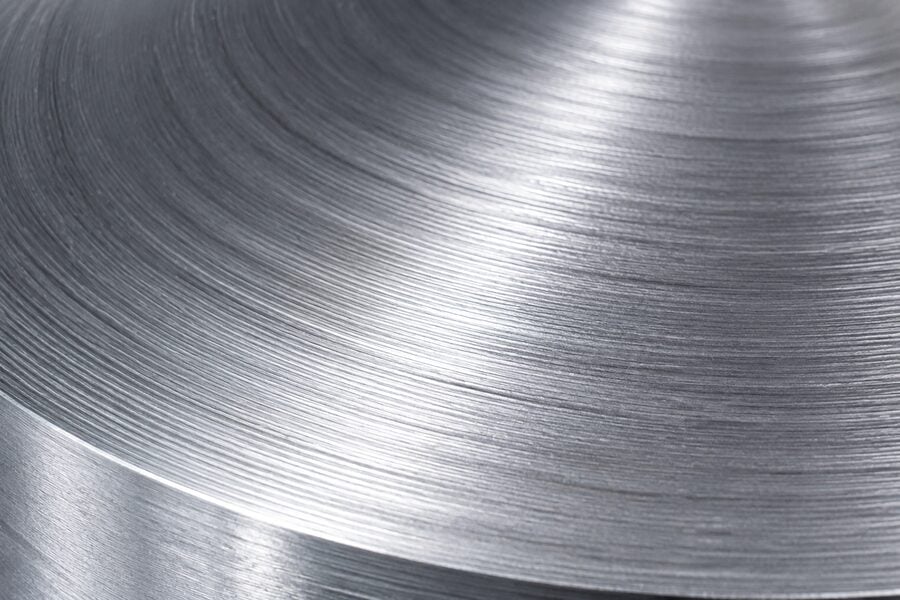
15-aluminum-texture

Aluminum Grades We Run

Alloy Machinability Character Typical use
6061 Grade C The default structural alloy. Good strength, excellent corrosion resistance, anodizes cleanly. Brackets, housings, mounting structure, fixture plates.
6063 Grade C Extrusion alloy, softer and gummier than 6061. Extruded rail, trim and framing components.
7075 Grade B Highest-strength common alloy at around 83 ksi. Machines better than 6061 — chips break. High-strength structural fittings and machine details.
2024 Grade B Aerospace fatigue alloy. Around 4.4 percent copper, which reduces corrosion resistance and changes anodizing behaviour. Fatigue-critical structural components.

Tolerances and Surface Finishes We Hold On Aluminum

The figures below are our machine capability. On aluminum, the practical limit on a large part is usually not the machine it is thermal expansion at roughly twice that of steel, and residual stress in the plate. On parts over about twelve inches with heavy material removal, plan on ±0.001" to ±0.002" and state the inspection temperature on anything tighter.

Process Tolerance Surface Finish
CNC turning, standard ±0.0005" Up to 8 Ra
Precision turning ±0.0002" Up to 8 Ra, polishing available
CNC milling, 3- and 4-axis ±0.001" (excluding true-position callouts) 32 Ra side / 63 Ra face
5-axis milling ±0.001" linear · ±0.002–0.003" rotational · ±0.003" tilted-hole 32 Ra
INTEGREX / Hyper Quadrex mill-turn ±0.0005" 32 Ra
OD, surface and Blanchard grinding ±0.0005" to ±0.0002" Up to 8 Ra
Wire EDM ±0.0005" to ±0.0002" 16–32 Ra, fine to 8 Ra
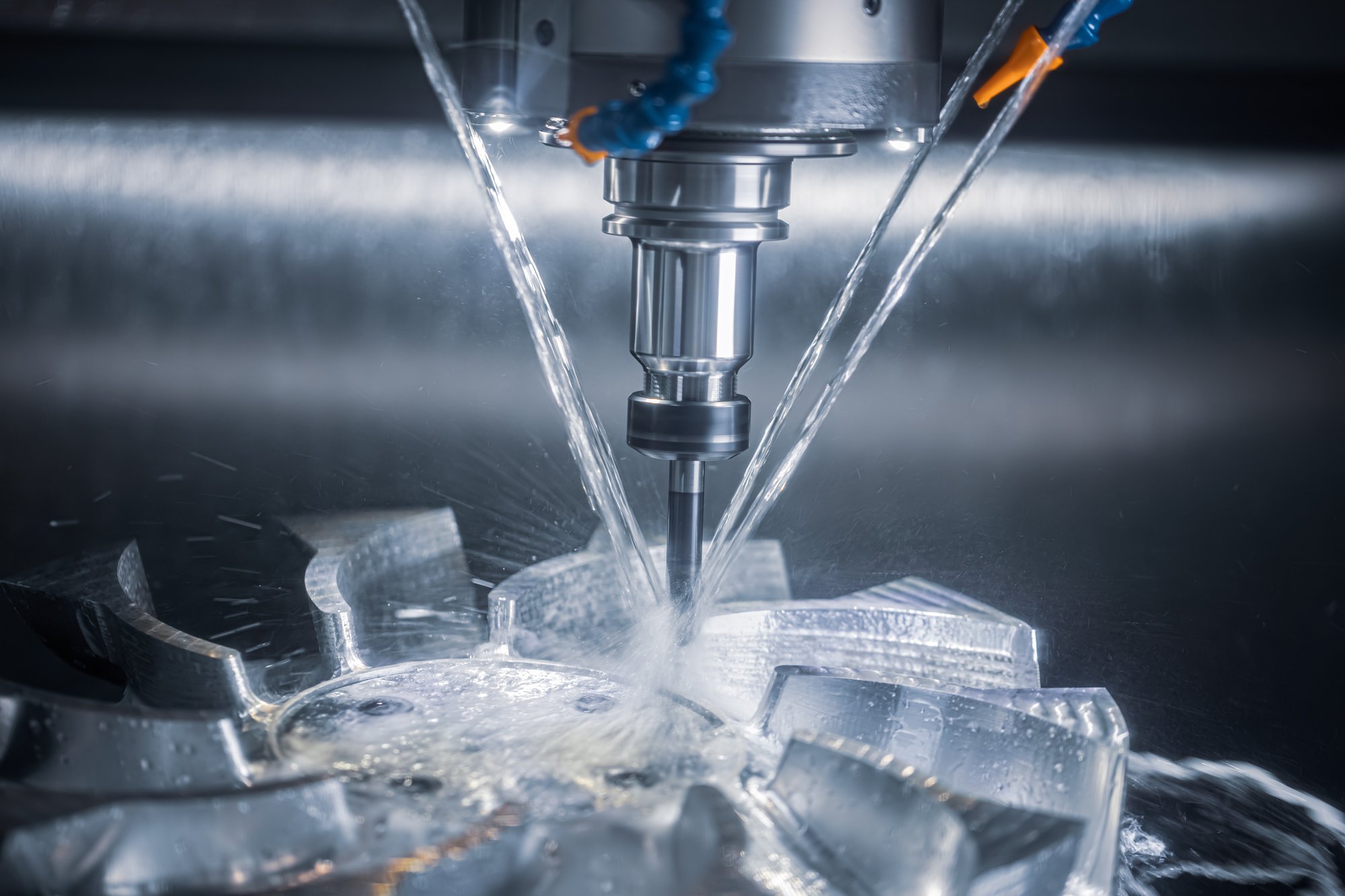
cnc-milling-machine-cutting-metal-part-with-coolant

How We Machine Aluminum

Milling is the primary route. Thirty-six vertical machining centers with capacity to 30" × 45" cover the bulk of bracket and housing work. Five five-axis verticals including Haas UMC-750 platforms handle complex geometry and reduce setups on multi-face parts. Eight horizontal centers at 64" × 50" × 32" carry production volume.

For long or large structural parts we run a Johnford to 80" × 50" and a Haas VF-10 to 120" × 20" — capacity that most job shops in our size class do not have and that marketplaces do not offer at all.

Round and turned work runs across 28 CNC lathes to Ø26" × 160", with Swiss and bar-fed turning to Ø1.5" for smaller volume parts, live-tool and Y-axis platforms for cross-features, and INTEGREX and Hyper Quadrex multi-tasking for one-hit mill-turn work at ±0.0005". Fabrication and assembly cover built-up structures and integrated assemblies.

 What Makes Aluminum Different To Machine

Aluminum cuts fast and finishes beautifully, and almost everything that goes wrong with an aluminum part is decided by temper, residual stress, and coating choice before the first chip is made. 

Specify the temper — this is where aluminum parts are lost

T6 is solution heat treated and artificially aged, with no stress relief. T651 is the same, stretched to relieve stress before ageing. T7351 is overaged and stretched — lower strength, lowest residual stress and best stress-corrosion resistance. T351 is the equivalent stretched condition for 2024.

If your part has heavy material removal, specify stretched plate. Unstretched T6 plate will bow when you machine one side of it, and no amount of care at the machine fixes that. For thick, heavily pocketed parts, T7351 is the most stable choice. Where the geometry allows it we rough both faces evenly, let the part rest or thermal-cycle, re-fixture and finish — but the temper is decided when the material is ordered, not on the shop floor.

6061 is not the easiest alloy to machine

Counterintuitively, 7075 machines better than 6061. 6061 is Aluminum Association grade C because it produces continuous, stringy chips and cuts gummy; it finishes beautifully with high-rake, polished-flute two- and three-flute cutters and good chip evacuation, but it needs the right tooling. 7075 is grade B — the chips break. 6061 in the O condition is genuinely bad and should be avoided outright. 6063, the extrusion alloy, is softer and gummier still.

2024 anodizes differently, and it matters

The copper that makes 2024 a fatigue alloy also produces lower-quality anodic coatings than 6061, with hard anodize in particular tending to come out thinner and less uniform. 7075 is affected to a lesser degree. If your drawing calls for Type III hardcoat on 2024, tell us at RFQ so we can confirm feasibility with our anodizing partner before the part is made.

Finishing and Post-Processing

Some operations we perform in-house; others we manage through qualified partners and control
through our own quality system. We tell you which is which up front.

In-house at Steelcrest

  • Saw cutting and plate preparation
  • Laser etching for part marking, lot codes and traceability
  • Industrial spray coating
  • Deburring, assembly and integration, CMM and FARO Arm inspection

Managed through qualified partners

  • Anodizing to MIL-A-8625 — Type II sulfuric for general use, Type III hardcoat at 0.001" to 0.004" for wear surfaces, Type I chromic where fatigue life matters. Class 1 undyed, Class 2 dyed
  • Chem film and conversion coating to MIL-DTL-5541 — Class 1A for corrosion, Class 3 where electrical conductivity is required
  • Powder coating, painting and bead blasting
  • Shot peening on 7075 fatigue-critical parts


NOTE: One dimension detail for the drawing: Type III hardcoat grows roughly half its thickness outward from the surface. On a 0.002" coating, subtract about 0.001" from the machined dimension. Call out the thickness on the drawing — the specification does not set it for you.

Industries We Machine Aluminum For

Steelcrest Precision machines aluminum, including 6061, 6063, 7075, and 2024, for aerospace and defense, automotive, material handling and e-commerce, and consumer products customers. Alloy and temper are matched to the job, from stress-relieved plate for heavily pocketed housings to conveyance components delivered as fabricated and assembled units. 

Talk to Us About your Aluminum Parts.

Send the drawing and the quantity. We will come back with a real number, a real lead time, and if there is a better material or condition for what the part has to do we will tell you that too.

Frequently Asked Questions

What is the largest aluminum part you can machine?

120" × 20" on our Haas VF-10 and 80" × 50" on our Johnford, with eight horizontal centers at 64" × 50" × 32" for production work and turning to Ø26" by 160" long.

Should I specify T6 or T651?

T651 on anything with meaningful material removal. T651 plate is stretched to relieve residual stress before ageing; unstretched T6 will bow when you machine one side of it. For thick, heavily pocketed parts, T7351 is more stable still.

Which is easier to machine, 6061 or 7075?

7075, which surprises most people. 6061 produces continuous stringy chips and cuts gummy — Aluminum Association grade C. 7075's chips break, making it grade B. 6061 finishes beautifully with the right tooling, but it is not the easy alloy.

Do you anodize in-house?

Anodizing is managed through qualified partners and controlled through our quality system. Give us the full callout — for example MIL-A-8625, Type III, Class 2, black, 0.002" — and we handle it as part of the job.

Can you hold ±0.0005" on aluminum?

On small, stiff features, yes — and ±0.0005" is standard on our turning and INTEGREX platforms. On large parts it is a different question: aluminum's thermal expansion is roughly twice steel's, so on parts over about twelve inches the inspection temperature has to be part of the specification for a tolerance that tight to mean anything.

Do you supply material certifications?

Yes — material certifications and a certificate of conformance ship with the parts, and we can hold mill certs on file against your part number for repeat orders.