Skip to content

Polycarbonate, Acrylic & PVC Machining Services

POLYCARBONATE, ACRYLIC & PVC MACHINING SERVICES

Crack-Free Machining for Clear and Chemical-Service Plastics 

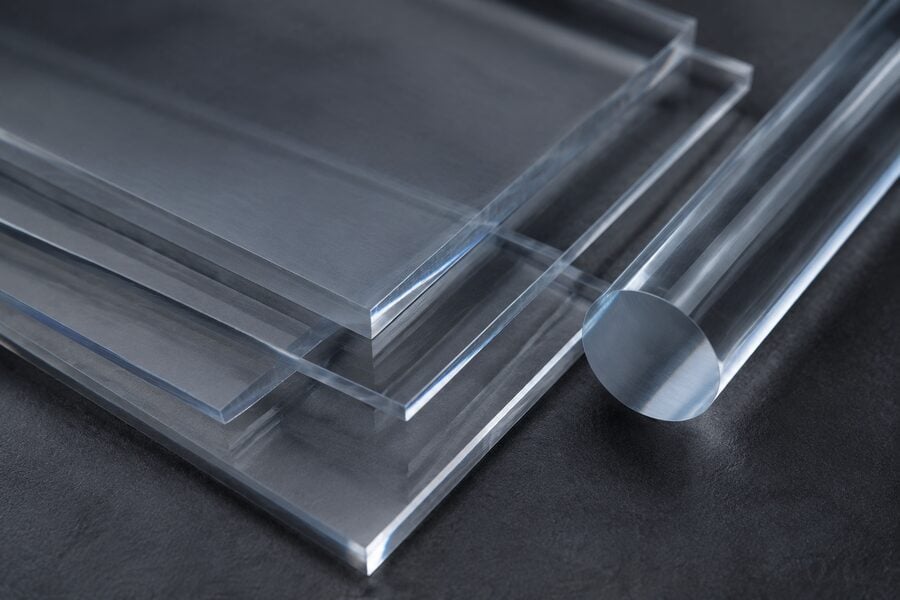
Polycarbonate, acrylic and PVC belong together because they fail the same way. All three are amorphous plastics that carry internal stress from extrusion, accumulate more of it during machining, and craze or crack when the wrong coolant touches them. Crazing is not a cosmetic problem; it is the early warning that catastrophic cracking is coming, and it is usually caused by something entirely avoidable. 

Steelcrest Precision machines and fabricates all three in Wauseon, Ohio: guards, windows, housings, enclosures and chemical-service components, with water-based coolant only, annealing between stress-inducing steps, and assembly into finished units. 

26-polycarbonate-texture

What We Run 

Material Tolerance Character Typical use
Polycarbonate (PC) ±0.005" Tough and ductile. Gummy, melts easily, burrs. Notch-sensitive to residual stress in service. Machine guards, housings, windows, medical equipment components.
Acrylic (PMMA) ±0.005" Brittle — chips and cracks at edges and holes. Cast machines far better than extruded. Guards, windows, displays, optical components.
PVC ±0.002" The easiest of the three. Good chip formation, low cutting forces, most stable. Chemical-service components, fabricated tanks, plumbing details.


On acrylic, specify cast rather than extruded wherever tolerance or edge quality matters. The difference is substantial and it costs very little more.
 

 Tolerances We Hold

These are not precision machining materials and it does no one any favours to pretend otherwise. The limits come from internal stress and crazing risk rather than from thermal expansion alone.

Material Realistic tolerance Limiting factor
PVC ±0.002" Softness and a thermal expansion around six times steel
Polycarbonate ±0.005" Internal stress and crazing risk rather than thermal expansion
Acrylic ±0.005" Chipping and stress, not thermal expansion
acrylic-material-for-cnc

How We machine and Fabricate Them

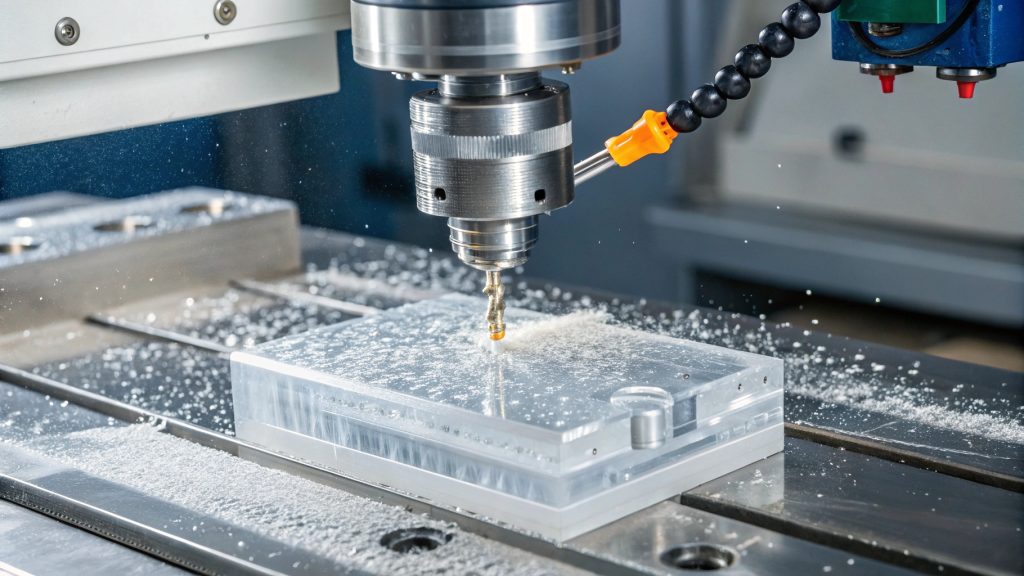
Milling and routing on our vertical machining centers, precision cutting and laser cutting on the fabrication side, and turning where the part is round. Sharp single-flute or O-flute tooling throughout these materials want a clean shearing cut, not a scraping one. 

On acrylic: slow feed on entry and exit, sacrificial backing behind every drilled hole, and acrylic-specific drill points at 60 degrees or modified zero rake. Standard twist drills crack acrylic around the hole, every time. 

On polycarbonate: the opposite problem. It is tough and ductile, so it gums and burrs rather than chipping. Sharp tooling and good chip evacuation, and vapour polishing where the finish matters. 

Most work in these materials ends up as an assembly guards with hardware, enclosures with cutouts and fasteners, tank components with fittings so fabrication, assembly and integration are as much a part of the job as the machining. 

What Makes These Plastics Different 

Coolant chemistry is a failure mode, not a process variable

Amorphous plastics stress crack on contact with sulfurized and petroleum cutting oils. Water-based coolant only, on all three materials, without exception. Acrylic should also never contact alcohol or solvents while under load. This single rule prevents most of the field failures these materials suffer. 

Annealing after every stress-inducing step

Extrusion introduces internal stress; machining, drilling and tapping add more. Annealing is a lengthy process measured in hours and days rather than minutes, and it varies by material and thickness but additional annealing is necessary after each manufacturing step that introduces stress, not just once at the start. We anneal in-house; confirm the specific temperature and soak schedule with us at RFQ for your material and thickness. 

Do not overheat PVC

PVC decomposes thermally and releases hydrogen chloride, which is corrosive to the machine and hazardous to operators. Moderate speeds and air cooling. This is a real operational constraint rather than a caution, and it is one reason PVC work belongs with a shop that runs it regularly. 

Finishing and Post-Processing

In-house at Steelcrest

  • Annealing before machining and after stress-inducing steps
  • Precision cutting, laser cutting and die cutting
  • Fabrication, assembly and integration into finished guards, enclosures and units
  • Deburring, saw cutting, CMM inspection

Managed through qualified partners

  • Flame polishing and diamond edge-polishing on acrylic
  • Vapour polishing on polycarbonate
  • Solvent bonding acrylic cement on PMMA, PVC cement on PVC
  • Printing, marking and graphics application

Industries We Machine Polycarbonate, Acrylic and PVC For 

Steelcrest Precision machines and fabricates polycarbonate, acrylic, and PVC into guards, windows, housings, and chemical-service components for consumer products, food and beverage, and medical and pharmaceutical applications.  

Talk To Us About Your Polycarbonate, Acrylic & PVC Parts. 

Send the drawing and the quantity. We will come back with a real number, a real lead time, and if there is a better material or condition for what the part has to do we will tell you that too. 

Frequently Asked Questions

Why did my acrylic part crack around the holes?

Almost certainly a standard twist drill. Acrylic is brittle and needs acrylic-specific drill points at 60 degrees or modified zero rake, slow feed on entry and exit, and sacrificial backing behind the hole. The other common cause is coolant petroleum or sulphurised oil will stress-crack acrylic. 

Can I use regular cutting oil on polycarbonate?

No. Amorphous plastics stress crack with sulphurised and petroleum oils. Water-based coolant only, on polycarbonate, acrylic and PVC alike. This is the single most common cause of field failures in these materials. 

Should I specify cast or extruded acrylic?

Cast, wherever tolerance or edge quality matters. It machines considerably better than extruded and costs very little more. 

Do you fabricate complete guards and enclosures?

Yes. Most work in these materials ends up as an assembly, so fabrication, hardware installation, assembly and integration are part of the job rather than a separate quote. 

What tolerance can you hold on polycarbonate?

±0.005" realistically. The limit is internal stress and crazing risk rather than thermal expansion. PVC is more stable at ±0.002". If you need tighter than that in a clear plastic, tell us what the part does and we will suggest an approach.