



Food and beverage
304 and 316 fluid-handling and contact components, where corrosion resistance and finish drive the specification.
STAINLESS STEEL
17-4 PH is the alloy buyers reach for when a part needs the strength of a heat-treated alloy steel and the corrosion resistance of a stainless, and it is the alloy that most often arrives with an incomplete drawing. A print that says "17-4 PH" without a condition is asking for a part that could be HRC 33 or HRC 44 depending on who reads it — a 30 percent difference in strength and an entirely different machining plan.
Steelcrest Precision machines 17-4 PH and 15-5 PH across turning, multi-axis milling, grinding and wire EDM, and our multi-tasking platforms already run 17-4 H1075 and 17-4 PH as standard work. We turn to ±0.0005" and grind to ±0.0002", and we plan the ageing shrinkage into the process rather than discovering it at inspection.
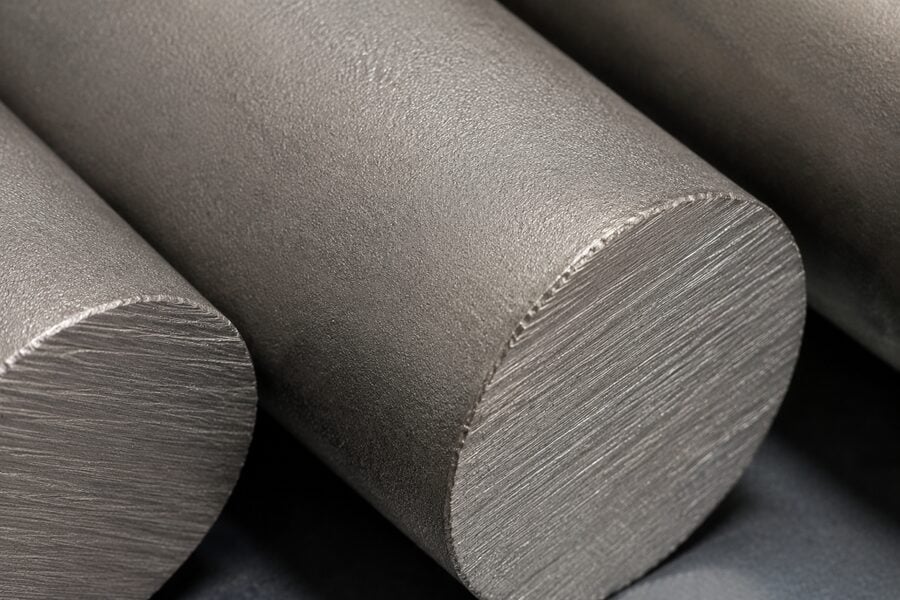
Two alloys, four commonly specified conditions. The H-number is the ageing temperature in degrees Fahrenheit — the lower the number, the higher the strength and the lower the toughness.
| Condition | Hardness | Tensile (min) | What it's for |
|---|---|---|---|
| Condition A | ≤ HRC 38, typically 30–35 | - | Solution annealed. This is a MACHINING condition, not a service condition — it is untempered martensite with low fracture toughness and poor stress-corrosion resistance. Parts should be aged before they go into service. |
| H900 | ≈ HRC 44 | 190 ksi | Peak strength. Least tough, most notch-sensitive, poorest stress-corrosion resistance. Specified where strength governs and the environment is benign. |
| H1025 | ≈ HRC 38 | 155 ksi | The balanced choice, and the most common condition we see on commercial drawings. |
| H1075 | ≈ HRC 36 | 145 ksi | A common intermediate condition. Already standard work on our multi-tasking platforms. |
| H1150 | ≈ HRC 33 | 135 ksi | Overaged. Best toughness and best stress-corrosion resistance — the right call for subsea, marine and anything with a cracking risk. |
Stainless is one of the materials where our published machine capability applies without a material penalty. It is stiff, dimensionally stable and thermally well behaved — the limits below are the machines' limits, not the material's.
| Process | Tolerance | Surface finish |
|---|---|---|
| CNC turning, standard | ±0.0005" | Up to 8 Ra turned |
| Precision turning | ±0.0002" | Up to 8 Ra, additional polishing available |
| CNC milling, 3- and 4-axis |
±0.001" (excluding true-position callouts) |
32 Ra side / 63 Ra face |
| 5-axis milling |
±0.001" linear · ±0.002–0.003" rotational · ±0.003" tilted-hole positioning | 32 Ra |
| INTEGREX / Hyper Quadrex mill-turn | ±0.0005" | 32 Ra |
| OD, surface and Blanchard grinding | ±0.0005" to ±0.0002" | Up to 8 Ra |
| Wire EDM | ±0.0005" to ±0.0002" | 16–32 Ra, fine finish to 8 Ra |
NOTE: On parts aged after machining, the tolerance that matters is the post-ageing ground tolerance. Ageing shrinkage of 0.0009–0.0012 in/in to H1150 will consume any ±0.001" budget on a part of meaningful size.
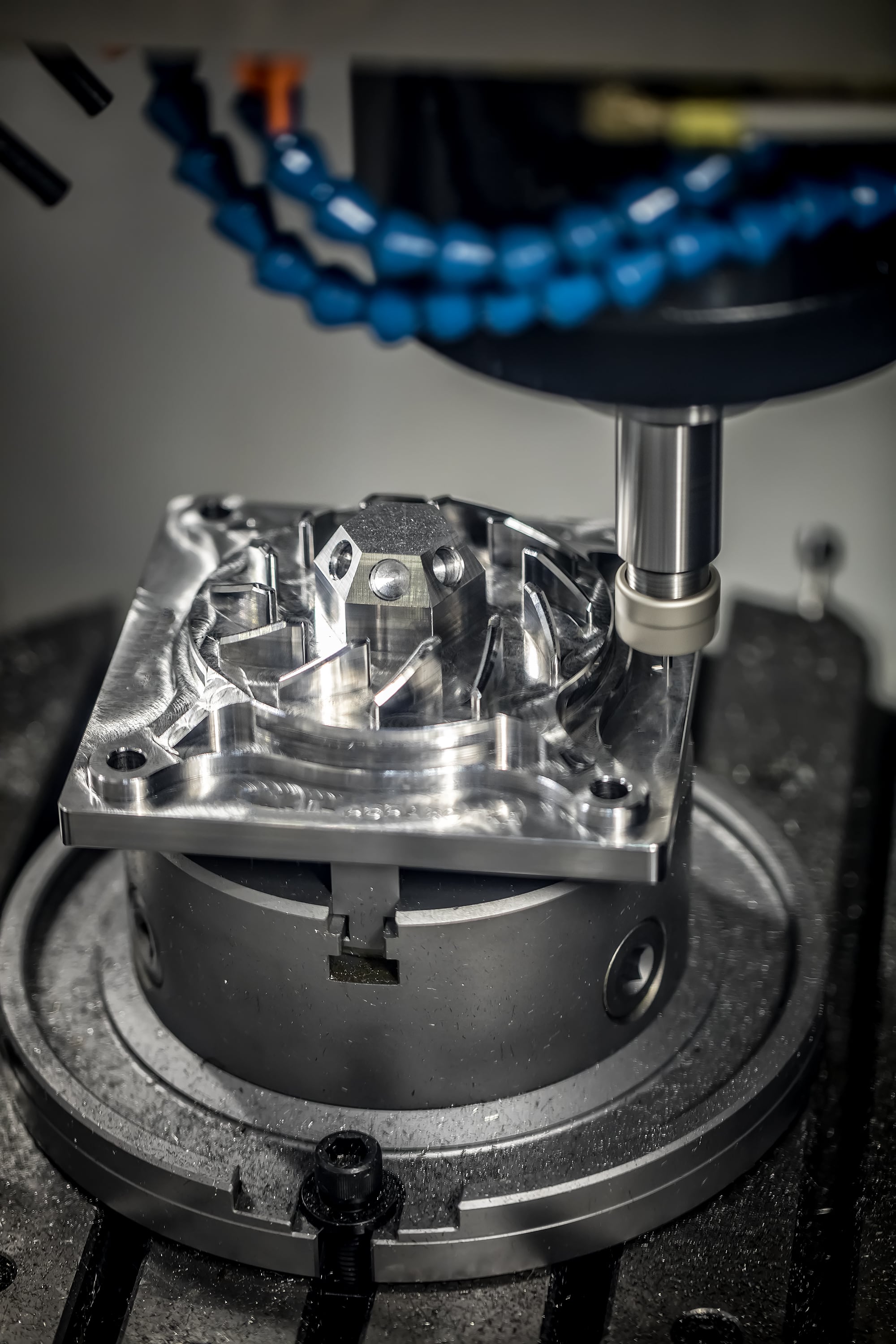
Turning covers most 17-4 work: 28 CNC lathes to Ø26" × 160", precision turning to ±0.0002", live-tool and Y-axis platforms for cross-features, and four Swiss lathes for bar-fed production up to Ø1.5".
INTEGREX and Hyper Quadrex multi-tasking platforms hold ±0.0005" at 32 Ra and already run 17-4 H1075 and 17-4 PH as standard work — turning, milling and drilling in a single setup, which matters on shafts and housings where concentricity between turned and milled features is the whole point.
Prismatic work runs on 36 vertical machining centers, eight horizontals to 64" × 50" × 32" and five five-axis verticals. Post-ageing sizing runs through OD grinding to Ø16" × 60", surface grinding to 32" × 20" × 18", honing to Ø8", and five wire EDM machines for hardened detail.
Precipitation-hardening stainless is really two materials, before and after ageing, and the condition on the print decides everything about how the part gets made.
Annealed and H1150 material machines comfortably; H900 machines like a hardened part. When the print allows it, we machine in the softer condition and age afterward. When it calls for finished dimensions in H900, the process is planned around harder cutting, slower feeds, and finishing operations after heat treat. Same alloy, two different jobs, and the quote reflects which one the drawing is asking for.
17-4 shrinks as it ages, predictably but not negligibly, and tight tolerances can disappear in the furnace. We machine oversize by the expected shrinkage, age, then bring critical features to final size by grinding or hard turning. The tightest diameters and datums on a PH part are always finished after ageing, never before.
15-5 PH is the remelted, cleaner-chemistry cousin, with better toughness across the grain, which is why aerospace prints increasingly call for it. It machines nearly identically to 17-4, so the switch costs little at the spindle. If your part sees impact or through-thickness loading, 15-5 is worth a conversation before the drawing is final.
Some operations we perform in-house; others we manage through qualified partners and control
through our own quality system. We tell you which is which up front.
NOTE: Sequence matters on PH parts. We age first, finish critical features second, and passivate last, so the surface chemistry and the final dimensions both survive to inspection. Put the condition and the passivation spec on the drawing and the sequence takes care of itself.
Medical and pharmaceutical — instrument components, fluid-path parts and housings in 303, 304, 316, 410 and 440C, where surface finish, cleanability and documentation matter as much as dimension.
304 and 316 fluid-handling and contact components, where corrosion resistance and finish drive the specification.
304, 316, 410, 420 and 440C housings, brackets, valve components and hardened wear details under AS9100.
303, 304 and 316 fittings, fixture components and turned details, prototype through production.
We also machine stainless for chemical processing, marine and general industrial customers who reach us directly rather than through a named industry program.
Steelcrest Precision machines 17-4 PH and 15-5 PH in conditions from annealed through H900 and H1075 for aerospace and defense, medical, and automotive applications.
We also machine PH stainless for oil and gas and general industrial customers, where H1150 and H1150M conditions are common for their stress-corrosion resistance.
Send the drawing and the quantity. We will come back with a real number, a real lead time, and — if there is a better material or condition for what the part has to do — we will tell you that too.
We machine 17-4 PH and 15-5 PH in the annealed condition and in aged conditions including H900, H1075, and H1150. When the print allows, we machine in the softer condition and age afterward; when finished dimensions are called out in the aged condition, we plan the process around harder cutting and post-age finishing.
Whichever the part requires. The most economical route is machining annealed or overaged material and ageing afterward, with critical features finished by grinding or hard turning after heat treat. Ageing shrinks the part, so tight tolerances are always brought to final size after the furnace, never before.
±0.0005" on turned features as standard, ±0.0002" on precision-turned and ground features, and ±0.001" on milled features. The tightest diameters and datums on an aged part are finished by grinding after heat treat.
15-5 PH is a remelted, cleaner-chemistry version of 17-4 with better toughness across the grain, which is why aerospace prints increasingly specify it. The two machine nearly identically, so switching costs little at the spindle. If your part sees impact or through-thickness loading, 15-5 is worth considering before the drawing is final.
Because it decides the machining plan. Annealed and H1150 material cuts comfortably; H900 machines like a hardened part and needs slower cutting and post-age finishing. A print that says "17-4 PH" without a condition leaves the strength and the machining plan undefined, and we will ask at quote.
Yes. Material certifications and a certificate of conformance ship with the parts, and we can hold mill certs on file against your part number for repeat orders.