



Stainless Steel Machining Services
STAINLESS STEEL
CNC Stainless Steel Machining for Parts That Have to Perform
Stainless is the most requested material family in our shop and the one buyers most often get wrong on the drawing. The gap between 303 and 316 is the difference between a part that machines fast and a part that survives in service, and the gap between annealed 440C and hardened 440C is the difference between a milling job and a grinding job. We machine all of it, and we will tell you at quote which grade actually fits what the part has to do.
Steelcrest Precision runs stainless across 28 CNC lathes, 36 vertical machining centers, five 5-axis mills and a full grinding and EDM department in Wauseon, Ohio. Turned features hold ±0.0005" as standard and ±0.0002" in precision turning; ground and wire-EDM features hold ±0.0002" to ±0.0005".
Stainless Steel Grades We Run
Six grades cover the overwhelming majority of the stainless work that comes through the shop.
Each is here because it does something the others don't.
| Grade | Type | Where it earns its place |
|---|---|---|
| 303 | Austenitic, free-machining | Fittings, small turned parts and hardware where machinability matters more than corrosion. The added sulfur that makes it cut well also creates pitting initiation sites — never substitute 303 for 304 or 316 in marine, food or medical service without engineering sign-off. |
| 304 | Austenitic | The general-purpose corrosion-resistant grade. Housings, brackets, general hardware, structural details. |
| 316 | Austenitic, molybdenum-bearing | Chemical, marine and fluid-handling components where chloride resistance matters. Gummier than 304 in every operation — expect it to cost more to cut, not just more to buy. |
| 410 | Martensitic | Valve and wear components. Machined annealed, then hardened and ground. |
| 420 | Martensitic | Wear components and precision-ground pins. Higher carbon than 410, harder in service. |
| 440C | Martensitic, high-carbon | Bearing races and high-hardness wear details. Reaches HRC 58–60 hardened, at which point the part is finished by grinding, not by cutting. |
Need 17-4 PH or 15-5 PH? Those are precipitation-hardening grades with their own heat-treat conditions and their own dimensional behaviour. See our 17-4 PH and 15-5 PH stainless machining page.
Tolerances and Surface Finishes We Hold On Stainless
Stainless is one of the materials where our published machine capability applies without a material penalty. It is stiff, dimensionally stable and thermally well behaved — the limits below are the machines' limits, not the material's.
| Process | Tolerance | Surface finish |
|---|---|---|
| CNC turning, standard | ±0.0005" | Up to 8 Ra turned |
| Precision turning | ±0.0002" | Up to 8 Ra, additional polishing available |
| CNC milling, 3- and 4-axis |
±0.001" (excluding true-position callouts) |
32 Ra side / 63 Ra face |
| 5-axis milling |
±0.001" linear · ±0.002–0.003" rotational · ±0.003" tilted-hole positioning | 32 Ra |
| INTEGREX / Hyper Quadrex mill-turn | ±0.0005" | 32 Ra |
| OD, surface and Blanchard grinding | ±0.0005" to ±0.0002" | Up to 8 Ra |
| Wire EDM | ±0.0005" to ±0.0002" | 16–32 Ra, fine finish to 8 Ra |
NOTE: Hardened 410, 420 and 440C reach HRC 58–60. Above roughly HRC 50 the finish operation is grinding or EDM, not cutting — so the tolerance you should quote from is the ground tolerance, not the machined one.
How We Machine Stainless Steel
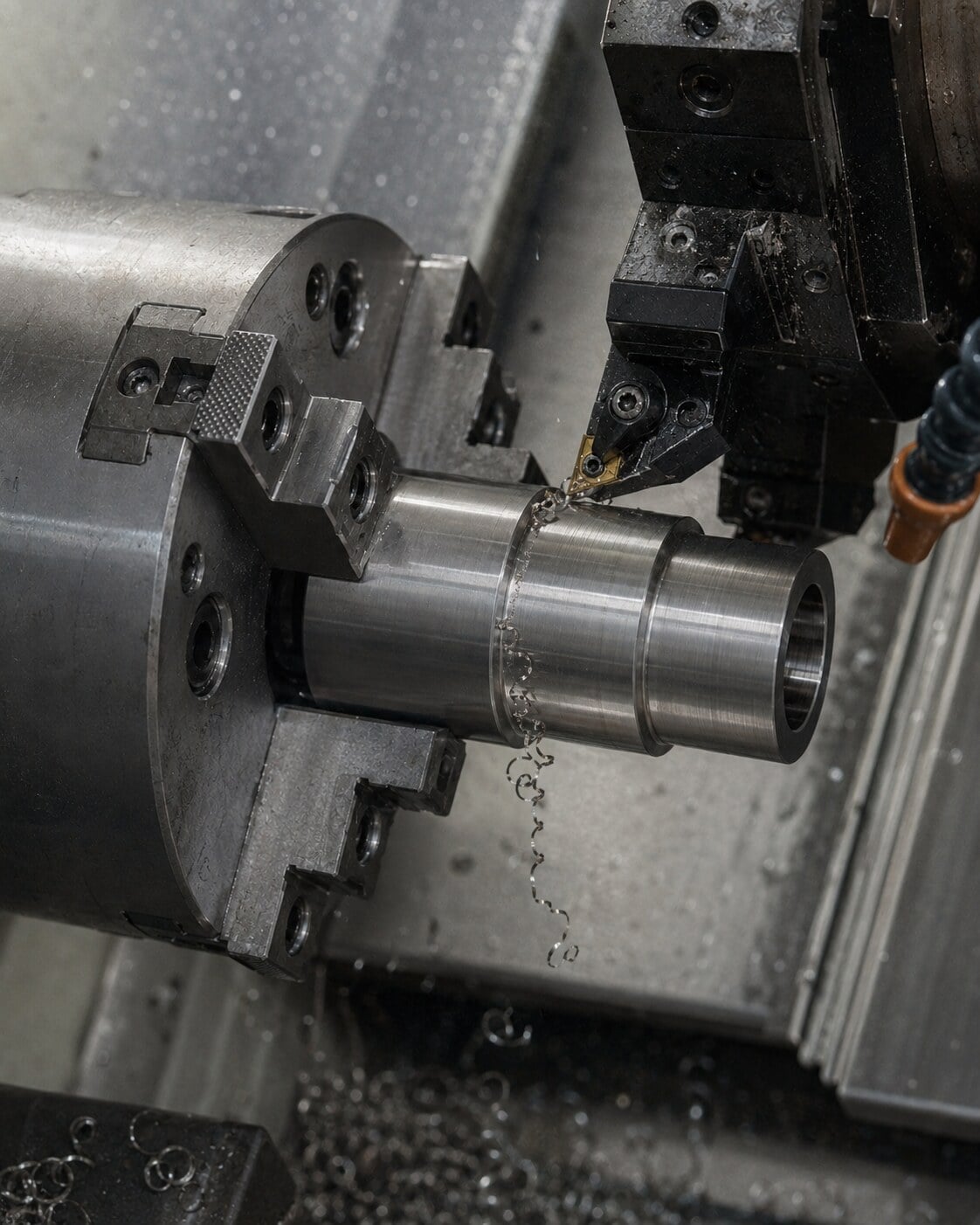
Turning is the natural route for most stainless work. We run 28 CNC lathes with capacity to Ø26" × 160", with the precision sweet spot between Ø0.5" and Ø6". Four Swiss lathes handle bar-fed production up to Ø1.5" with 12-foot bar capacity — the right platform for 303 fittings and small turned details at volume. Three live-tool lathes and three Y-axis lathes add cross-drilling, milling and off-centre features without a second setup.
Prismatic and multi-face parts run on 36 vertical machining centers with capacity to 30" × 45", eight horizontal centers at 64" × 50" × 32" for production volume, and five 5-axis verticals including Haas UMC-750 platforms. Where a part would otherwise need three setups, INTEGREX and Hyper Quadrex multi-tasking platforms cut it complete in one at ±0.0005".
Hardened martensitic grades finish in the grinding and EDM department: OD grinding to Ø16" × 60", surface grinding to 32" × 20" × 18", Blanchard to Ø15", honing to Ø8", five wire EDM machines and two RAM EDM machines for cavities and blind features.
What Makes Stainless Different To Machine
Three things about stainless change what a part costs, and they are worth understanding before the drawing is finished.
The austenitic grades work-harden as you cut them
303, 304 and 316 harden roughly three to four times faster than carbon steel, leaving a hardened layer between 0.002" and 0.010" deep behind every pass. That is not a tooling problem, it is a process-discipline problem: every subsequent pass has to get underneath the layer the last one created. In practice that means the second pass takes 0.030" to 0.060" of depth, the finish pass takes at least 0.010" and is never interrupted, feed never drops below about 0.004" per revolution, and a drill is never allowed to spin in a hole without feeding. Dwell for a second at the bottom of a hole and the next tool will skate across a work-hardened surface instead of cutting it.
316 costs more to cut than 304, not just more to buy
The molybdenum that gives 316 its chloride resistance also makes it gummier, more prone to built-up edge and slower in every operation. If the part does not see chlorides, 304 will do the same job for less money. If it does, 316 is the right call and the extra machining time is part of the price.
The martensitic grades are two jobs, not one
410, 420 and 440C are machined in the annealed condition and hardened afterward. Annealed 440C is only about 225 HB, but it is full of chromium carbides — it is the most abrasive of the common stainlesses and the slowest to cut. Hardened, it reaches HRC 58–60, and from that point the part is finished by grinding. Plan the sequence and the grind stock at quote, not after heat treat.
Finishing and Post-Processing
Some operations we perform in-house; others we manage through qualified partners and control
through our own quality system. We tell you which is which up front.
In-house at Steelcrest
- Hardening, tempering and annealing in furnaces reaching 2100°F — covers 410, 420 and 440C
- Saw cutting and bar preparation
- Carbinite tungsten-carbide application by Electro Spark Deposition for wear surfaces
- Laser etching for part marking, lot codes and traceability
- Deburring and CMM inspection
Managed through qualified partners
- Passivation to ASTM A967 for commercial work or AMS 2700 for aerospace
- Electropolishing to ASTM B912, or ASTM F86 for surgical implant work
- Bead blast, #4 and #8 mechanical polish
- Cryogenic treatment on 440C where retained austenite must be converted
NOTE: One passivation detail worth putting on the drawing: free-machining 303 and the high-carbon martensitic grades 420 and 440C can be flash-attacked by a standard nitric bath. Specify the nitric type or a citric process rather than writing "passivate" and leaving it open.
Industries We Machine Stainless For
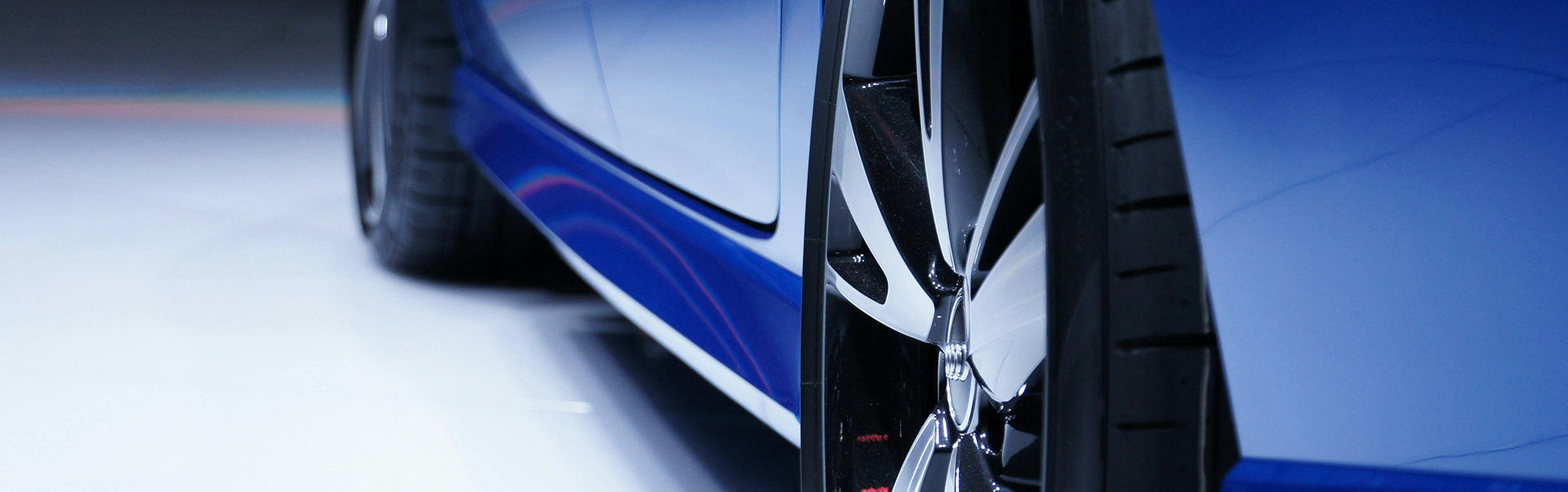
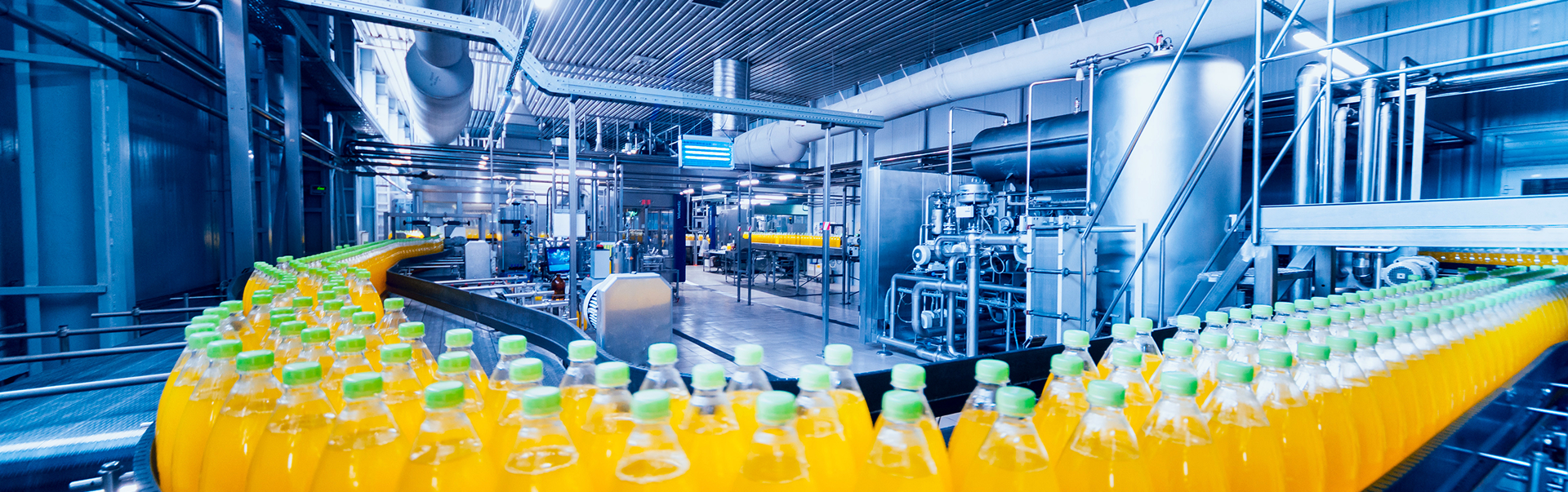
Steelcrest Precision machines stainless grades 303, 304, 316, 410, 420, and 440C for medical, food and beverage, aerospace and defense, and automotive applications, matching grade, finish, and documentation to each industry's requirements.


We also machine stainless for chemical processing, marine and general industrial customers who reach us directly rather than through a named industry program.
Talk To Us About Your Stainless Steel Parts.
Send the drawing and the quantity. We will come back with a real number, a real lead time, and — if there is a better material or condition for what the part has to do — we will tell you that too.
Frequently Asked Questions
Do you provide material certifications with stainless parts?
Yes — we supply material certifications and a certificate of conformance with the parts, and we can hold mill certs on file against your part number for repeat orders.
What is the tightest tolerance you can hold on stainless?
±0.0002" on precision-turned and ground features, and ±0.0002" to ±0.0005" on wire-EDM features. Milled features hold ±0.001" as standard, and ±0.0005" on our INTEGREX multi-tasking platforms. Anything tighter than ±0.0005" should be discussed at quote so we can plan the process around it.
Should I specify 303, 304 or 316?
303 if machinability is the priority and the part does not see a corrosive environment. 304 for general corrosion resistance. 316 when chlorides are involved — marine, chemical, food processing with sanitizers. Never substitute 303 for 304 or 316 in a corrosive application to save machining cost; the sulfides that make 303 cut well are pitting sites.
Can you machine hardened stainless?
Yes. We machine 410, 420 and 440C annealed, harden and temper them in-house to 2100°F, then finish by OD, surface or Blanchard grinding, honing, or wire and RAM EDM. Above roughly HRC 50 that is the only sensible route, and we plan the grind stock into the process from the start.
Do you passivate in-house?
Passivation is managed through qualified partners and controlled through our quality system. Tell us the specification — ASTM A967 or AMS 2700 — and we handle it as part of the job.
What quantities do you run?
Prototype through production. Swiss and bar-fed turning covers higher-volume small turned parts; our horizontal centers cover production prismatic work; and we run low-volume and one-off jobs across the same equipment.