Skip to content

Composite & Phenolic Machining Services

COMPOSITE & PHENOLIC MACHINING SERVICES 

Precision Machining for the Materials Most Shops Decline 

Carbon fiber does not cut. It abrades: the process resembles sanding more than chip formation, there is dust instead of chips, and tools dull in minutes rather than hours. The resin conducts almost no heat, so what the cutter generates stays in the tool and the part. And the dust is electrically conductive, which means it will short out machine electronics in a shop that has not set up for it. 

Those are the reasons most job shops decline composite work, and the reasons the ones that do it properly are worth finding. Steelcrest Precision machines CFRP, cured carbon fiber/epoxy laminate and phenolic composites with diamond tooling, dry with compressed-air cooling, in Wauseon, Ohio. 

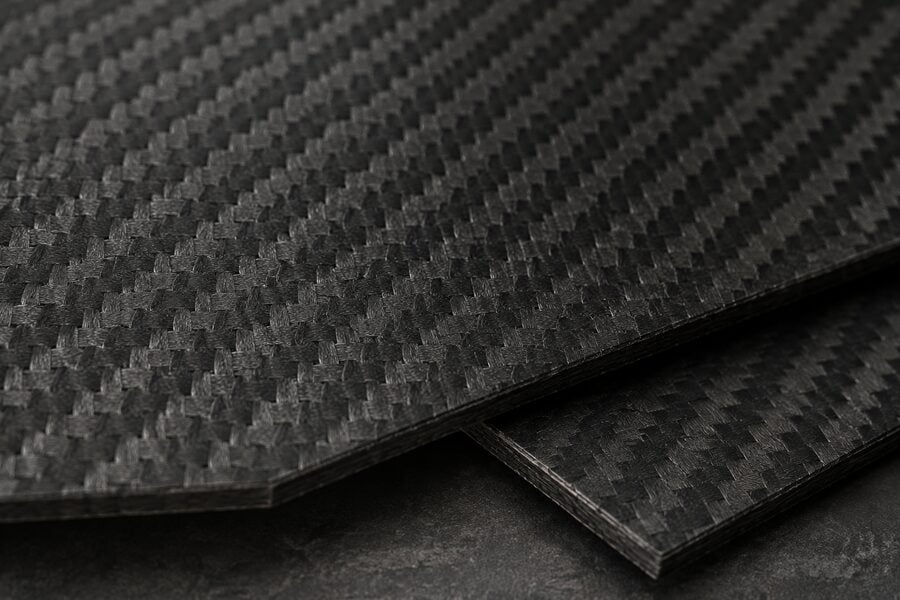
31-carbon-fiber-composite-texture

Composites We Machine 

Material Character Typical use
CFRP — carbon fiber reinforced polymer Abrasive rather than chip-forming. Cutting force and edge quality vary with fibre orientation. Lightweight structural panels, brackets, robotics arms and components.
Carbon fiber / epoxy — cured prepreg and laminate Machined only after cure. Uncured ply is die-cut, not machined. Aerospace structural panels, plates and stiffeners.
Phenolic — LE linen, XX/X paper, C and CE canvas, G-10 / FR-4 glass Abrasive and dust-generating. Must be machined dry. Electrical insulators, bearing and wear components, structural detail.


NEMA grade matters and buyers specify by it. LE linen is the grade chosen when closer tolerances and smoother finishes are required; paper grades are softer and more forgiving; G-10 and FR-4 glass grades are the most abrasive of the family. 

 Tolerances We Hold

Material Realistic tolerance Limiting factor
CFRP and cured laminate ±0.002" to ±0.005" Fibre pull-out, delamination risk and layup variation — not machine capability
Phenolic, LE linen grades ±0.002" to ±0.005" The grade chosen for closest tolerance and smoothest finish
Phenolic, paper and canvas grades ±0.005" Paper grades absorb moisture measurably; specify conditioning if the tolerance is tight


NOTE*:  
Layup direction is a design variable, not a manufacturing detail. Cutting force and surface quality change substantially with the angle between the tool path and the fibre direction, so the layup schedule belongs on the drawing.

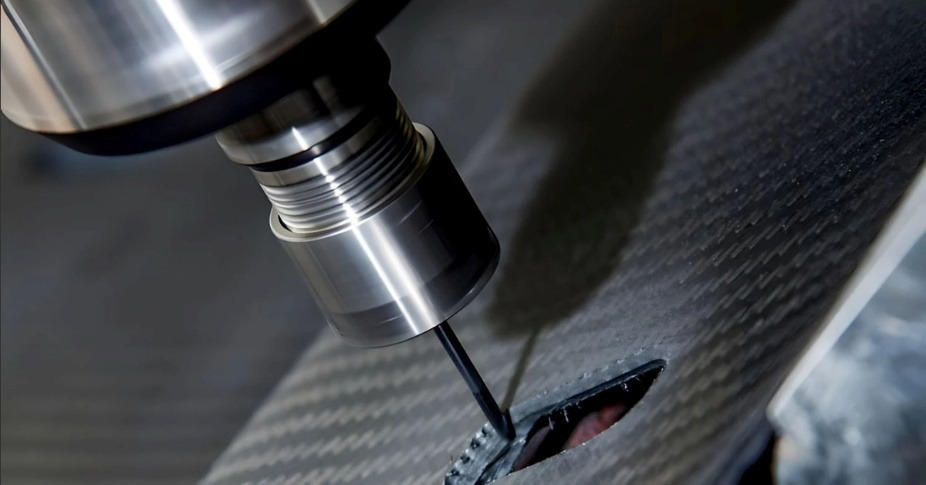
drilling composite material

How We Machine Composites

Milling and routing across our vertical and 5-axis centers, dry, with compressed-air cooling. Liquid coolant is not used: it causes swelling in phenolic and creates a conductive slurry with carbon dust.

Tooling is where the money goes. Diamond-coated carbide for shorter runs, PCD for production, compression routers to prevent fraying, and dagger or brad-point drills with sacrificial backing behind every hole to prevent exit-side delamination.

Dust extraction is taken at the tool, since carbon dust is conductive and respirable. Confirm the extraction arrangement with us at RFQ if your part is high-volume CFRP. And for uncured prepreg ply, cutting happens on a ply table on the fabrication side, never milled: prepreg is cured before machining.

 What Makes Composites Different

Composites do not cut like metal or plastic, and the shops that machine them well are the ones that respect three rules. 

Delamination and fraying are the two defect modes

Both are driven by dull tools and heat. Exit-side delamination on drilling is the classic failure and the fix is a sacrificial backing layer, not a slower feed. Fraying at trimmed edges is what compression routers exist to prevent. 

There is no universal speed and feed

Composite composition varies by fibre type, fibre density and resin system, so there is no one-size parameter set. Cut quality has to be monitored continuously rather than dialled in once, and that is a real part of the cost of composite work. 

Phenolic wants air, not coolant

Liquid coolant causes swelling and warping in phenolic laminate, which defeats the purpose of machining it accurately. Machine dry with an air blast to clear dust and prevent overheating. One tapping detail worth knowing: use slightly oversize tools, because phenolic does not deform like metal and there is no thread swell to allow for. 

Finishing and Post-Processing

In-house at Steelcrest

  • Precision cutting and die cutting of sheet and uncured ply
  • Deburring and edge finishing
  • Assembly and integration of bonded and fastened structures
  • CMM and FARO Arm inspection

Managed through qualified partners

  • Autoclave and oven cure of prepreg layups
  • Edge sealing and painting to prevent moisture ingress and fibre exposure
  • Ultrasonic NDT for structural aerospace components
  • Varnishing of phenolic for electrical applications

Industries We Machine Composites For

Steelcrest Precision machines CFRP, carbon fiber laminate, and phenolic composites for aerospace and defense, automotive, and consumer products applications, where stiffness-to-weight and electrical insulation drive the material choice. 

We also machine composites for robotics and electrical customers, where CFRP's stiffness-to-weight and phenolic's dielectric properties are the reasons they are specified. 

 Talk To Us About Your Composite & Phenolic Parts. 

Send the drawing and the quantity. We will come back with a real number, a real lead time, and if there is a better material or condition for what the part has to do we will tell you that too. 

Frequently Asked Questions

Can you machine carbon fiber?

Yes cured CFRP and carbon fiber/epoxy laminate, with PCD and diamond-coated tooling, dry with compressed-air cooling, and dust extraction at the tool. Uncured prepreg ply is cut rather than machined, which we handle on the fabrication side. 

Why is composite machining more expensive than aluminium?

Tooling and process control. CFRP abrades rather than cuts, so tool life is measured in a fraction of what the same geometry gives in metal, and PCD tooling costs several times more than carbide. There is also no universal speed and feed  composition varies by fibre and resin, so cut quality has to be monitored continuously. 

How do you prevent delamination when drilling?

Sacrificial backing behind every hole, dagger or brad-point geometry, sharp diamond tooling and controlled feed on exit. Exit-side delamination is the classic failure mode and it is a setup problem rather than a parameter problem. 

Which phenolic grade should I specify?

LE linen where you need the closest tolerances and the smoothest finish. Paper grades where the application is less demanding and cost matters. G-10 or FR-4 where you need the glass-reinforced electrical and mechanical properties, accepting that it is the most abrasive of the family. 

Can you machine uncured prepreg?

No, and neither should anyone. Prepreg is cured before machining. Uncured plies are die-cut, knife-cut or ultrasonically cut on a ply table which we handle as a fabrication operation.