
Delrin, Acetal & Nylon Machining Services
DELRIN, ACETAL & NYLON MACHINING SERVICES
CNC Acetal and Nylon Machining for Bushings, Gears and Rollers
Acetal, sold most often as Delrin, and nylon are the two plastics that end up in bushings, gears and rollers, and the choice between them is almost always decided wrong. Acetal holds ±0.001" and picks up almost no moisture. Nylon is tougher and more wear resistant but absorbs up to eight percent of its own weight in water, growing about half a percent as it does, which on a four-inch part is 0.020", twenty times the tolerance most drawings ask for.
Steelcrest machines both across turning, Swiss, milling and live-tool platforms in Wauseon, Ohio, and we will tell you at quote which one your application actually wants.
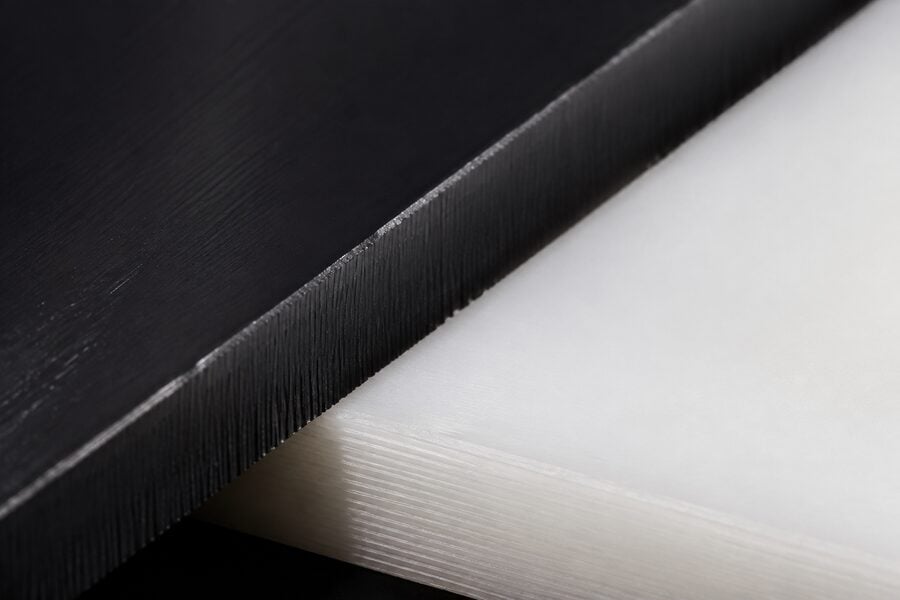
Acetal Or Nylon? The Comparison That Matters
| Acetal / Delrin (POM) | Nylon 6 and 6/6 | |
|---|---|---|
| Machined tolerance | ±0.001" from stress-annealed stock | ±0.002" dry — and 'dry' is doing the work |
| Moisture absorption | 0.8 percent at saturation, around 0.2 percent growth | Up to 8 percent at saturation, around 0.5–0.6 percent growth at 50 percent RH |
| Machinability | The most machinable plastic — crisp chips, excellent finish | Good, but tougher and more prone to deflection |
| Wear and toughness | Low friction, good wear, lower impact toughness | Tougher, more wear resistant, better under shock |
| Watch out for | Centreline porosity in large homopolymer rod; post-shrinkage up to 2.5 percent on unannealed stock | Dimensional change with humidity; strength drops as it absorbs water |
| Specify it when | The part has to hold tolerance | The part has to survive impact and abrasion, and tolerance is loose |
If your part needs both, tight tolerance and nylon's toughness, 30 percent glass-filled nylon is the usual answer. It absorbs substantially less moisture and holds size far better, at the cost of tool wear.
Tolerances We Hold
| Material | Realistic tolerance | Conditions |
|---|---|---|
| Acetal / Delrin | ±0.001" | From stress-annealed stock. The tightest band of any common plastic. |
| Nylon 6, 6/6, cast | ±0.002" | Dry. Wider once humidity is a factor. Moisture condition must be stated on the drawing. |
| 30% glass-filled nylon | ±0.002" and considerably more stable in service | Abrasive — carbide minimum, PCD for production |
NOTE*: Acetal's thermal expansion is around nine times steel's, and unannealed stock can post-shrink by up to 2.5 percent. Dimensionally precise parts can only be made from stress-annealed semi-finished stock — this is not a preference, it is a requirement.
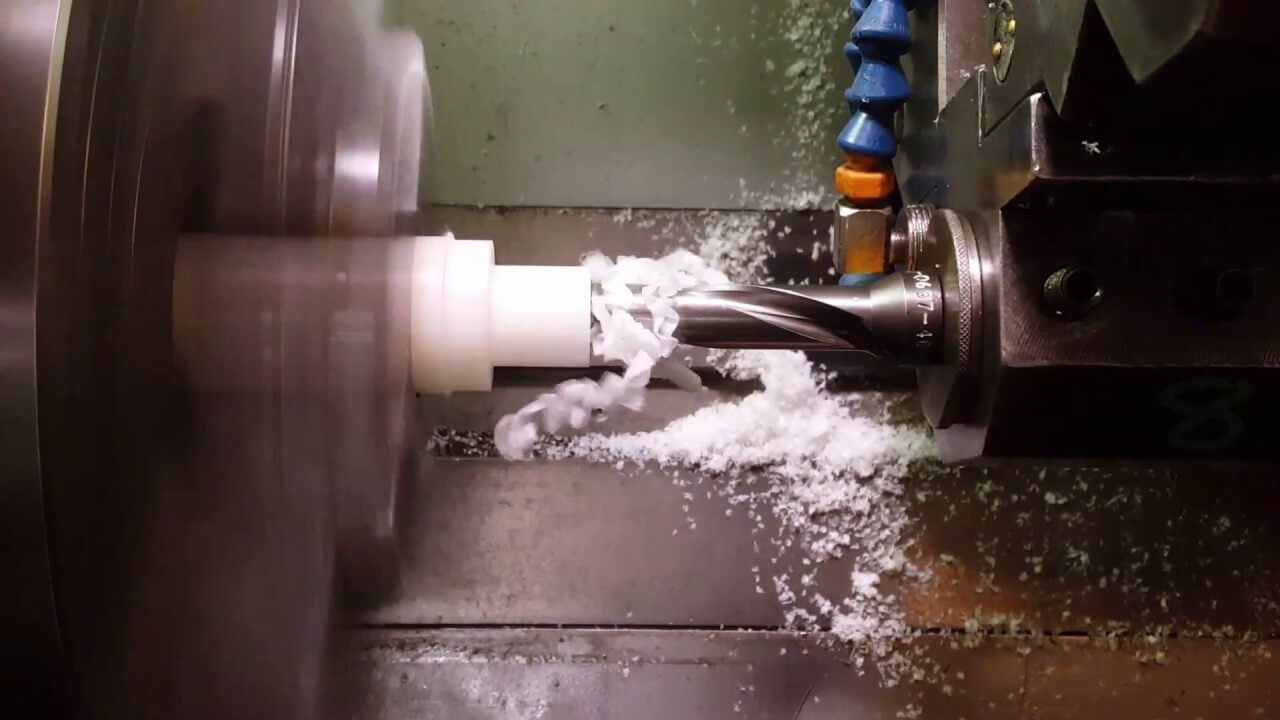
How We Machine Them
Turning is the natural route for bushings, rollers, sleeves and gears: 28 CNC lathes, four Swiss lathes to Ø1.5" bar for small precision components at volume, live-tool and Y-axis platforms for cross-features and cut teeth, and INTEGREX multi-tasking for one-hit mill-turn parts. Milling covers plates, fixtures and prismatic details across our vertical, horizontal and five-axis centers.
Acetal cuts beautifully — crisp chips, excellent finish, low cutting forces. Nylon is tougher and more prone to deflection on thin sections. Both want sharp tooling, moderate speeds and good chip evacuation, and both want annealed stock if the tolerance matters.
The Nylon Moisture Problem, Explained Properly
A nylon dimension is meaningless without a stated moisture condition. Your drawing needs to say whether tolerances apply dry-as-molded or conditioned at 50 percent relative humidity, and if it does not, we will ask before quoting.
Three Ways to Beat It
Condition the Stock
We bring stock to moisture equilibrium before machining, especially on thin-walled parts, so the part is measured in the state it will live in.
Specify Glass-Filled
30 percent glass-filled nylon absorbs substantially less moisture and holds size far better, at the cost of tool wear.
Switch to Acetal
When the part has to hold tolerance and toughness is negotiable, acetal removes the moisture problem entirely.
Cast nylon such as Nylatron or MC901 machines better than extruded 6/6 and comes in very large sections, but it absorbs moisture the same way. And moisture is not all bad: nylon gains toughness as it absorbs water even as it loses strength, so both belong in the design.
Finishing and Post-Processing
In-house at Steelcrest
- Annealing and stress relief of stock shapes to remove extrusion stress — the prerequisite for holding ±0.001" on acetal
- Saw cutting, deburring, laser etching, CMM inspection
- Assembly and integration into finished units
Managed through qualified partners
- Moisture conditioning of nylon stock before machining, particularly on thin-walled parts
- Dyeing of nylon components
Neither material anodises or plates without special preparation, and acetal does not bond with most adhesives — mechanical fastening or welding are the joining routes. Plan for that in the design.
Industries We Machine Acetal and Nylon For
Steelcrest Precision machines acetal and nylon 6/6 into bushings, gears, rollers, and wear components for material handling and e-commerce systems, consumer products, automotive, and agriculture and construction equipment.
.png?width=1920&height=603&name=e-commerce%20(2).png)
.png?width=1920&height=603&name=consumer-products%20(2).png)

.png?width=1920&height=603&name=construction%20(2).png)
Talk To Us About Your Delrin, Acetal & Nylon Parts.
Send the drawing and the quantity. We will come back with a real number, a real lead time, and — if there is a better material or condition for what the part has to do — we will tell you that too.
Frequently Asked Questions
Should I use Delrin or nylon?
Acetal or Delrin if the part has to hold tolerance — ±0.001" from annealed stock, with almost no moisture pickup. Nylon if the part has to survive impact and abrasion and the tolerance is loose. If you need both, 30 percent glass-filled nylon is usually the answer.
Why did my nylon part grow?
Moisture. Nylon 6/6 absorbs up to eight percent of its weight in water and grows roughly half a percent doing it — on a four-inch part that is 0.020". The fix is to state the moisture condition on the drawing, condition the stock before machining, or move to glass-filled nylon or acetal.
What is the difference between Delrin and acetal copolymer?
Delrin is the homopolymer, slightly stiffer and stronger, but it can exhibit centreline porosity in larger rod diameters. Acetal copolymer such as Celcon avoids that. On a part with a bore through the centre of a large-diameter rod, copolymer is usually the safer specification and we will flag it at quote.
Do you anneal plastic stock?
Yes. Dimensionally precise plastic parts can only be made from stress-annealed stock, so we anneal semi-finished shapes in-house where the tolerance requires it.
Can you cut gear teeth in plastic?
We machine gear blanks, splines and cut features on live-tool turning and milling platforms. For cut gear teeth specifically, confirm the tooth form and quality class with us at RFQ.