


Steelcrest Precision

Machined part pricing has no list because every part buys a different mix of five things: material, machine time, setups, tolerance, and inspection. Published industry guides put typical US shop rates between roughly $75 and $200 per hour, but the drivers below move a part's price far more than the rate does.
Ask the internet what CNC machining costs and you will get rate tables and overseas price comparisons, most of them published by platforms with something to sell you. Ask a shop and you will get the honest version: anyone who prices your part without seeing your drawing is guessing. This guide explains what the quote is actually made of, why the same geometry can cost $40 or $400 depending on choices you control, and how to lower the number without changing shops or compromising the part.
Because a machined part is not a product; it is a custom manufacturing project compressed into a part number. Two drawings with similar-looking parts can carry wildly different material, tolerance, finish, and inspection requirements, and each of those decisions changes which machines run, how fast they can run, and how much verification follows. A shop rate exists, but it is the least interesting number in the quote: a part that needs twice the machine time at the same rate costs twice as much, which is why the drivers below, not the hourly figure, are where buyers find money.
The practical consequence: the biggest savings happen before the RFQ goes out, in the design itself. Corner radii that match standard tooling instead of demanding a special cutter, drilled holes where function never needed a bored one, thread depths that do not ask a tap to do the impossible, and wall thicknesses a cutter can reach without chattering are the difference between a part that machines and a part that fights. None of that requires compromising what the part does; it requires asking, feature by feature, whether the geometry is doing work or just doing habit. Shops call this design for manufacturability, and the drawing review where it happens is free.
Material. The blank's price, how fast the material lets itself be cut, and how quickly it can be sourced. The same geometry in 304 stainless typically runs two to three times its 6061 aluminum equivalent. The full breakdown is in our material selection guide.
Machine time and complexity. The largest single driver on most parts. Deep pockets, thin walls, five-sided features, and hard materials all add minutes per piece, and minutes multiplied by quantity are the quote. Complexity you can design out is the purest cost reduction there is.
Setups and quantity. Programming, fixturing, and first-article verification are one-time costs that do not care whether you order one piece or a thousand. At low volumes they can account for a third to half of the per-unit price, which is why quantity is the most powerful lever on this list. More on the curve below.
Tolerance and finish. Industry cost studies show parts costing roughly four times their rough-tolerance equivalent at ±0.001 inch, because tighter bands add operations, slow cycles, and escalate inspection. Fine surface finishes work the same way. Our tolerance guide walks the whole ladder.
Inspection and documentation. Sampling versus 100 percent inspection, first articles, material certifications, and traceability requirements each add real work. They are worth every dollar when the application requires them, and pure cost when a flow-down gets applied to a part that never needed it.
Because the first order paid for everything that only happens once. Programming the part, building and proving the fixturing, dialing in the process, and verifying the first article are all front-loaded costs, and on a prototype or small batch they dominate the price. Published cost guides illustrate the curve with examples like a single prototype at $200 falling to roughly $40 per piece at a hundred units, and the shape holds across the industry even when the numbers differ: the work the first run bought stays bought. The buyer's move is to use the curve deliberately. Quote the quantities you actually consume annually, not just the pieces you need this month; ask for price breaks at multiple quantities so the curve is visible; and where demand is steady, structure blanket orders with releases, which buy the setup once and spread it across the year. The quantity structure on the PO is a price decision as real as any line on the drawing.
The curve also explains a switching cost buyers sometimes forget: the first order's investment, the proven program, the dialed-in fixturing, the process knowledge, the inspection plan, lives at the shop that built it. Move the part for a dime of piece price and the new shop rebuilds all of it into your first order there, which is one more reason the cheapest quote on a mature part is often not the cheapest decision. The same logic runs in reverse, too: a part that has been running somewhere for years is usually priced on old assumptions, and asking the incumbent for a fresh look at quantity structure can find money without moving anything.
For orientation only, published industry surveys and cost guides put common US ranges at roughly:
| Work type | Published industry range | What moves it |
|---|---|---|
| 3-axis milling | Roughly $40 to $120 per hour | Region, machine size, shop overhead |
| Turning | Roughly $35 to $110 per hour | Bar size, live tooling, complexity |
| 5-axis milling | Roughly $75 to $250 per hour | Simultaneous capability, fewer setups traded for higher rate |
| Grinding and EDM | Roughly $55 to $150 per hour | Tolerance band, hardness, finish requirement |
Read that table as background, not as a pricing tool. Steelcrest does not quote from a rate card, and neither does any serious shop: the price of your part comes from your drawing, your material, your tolerances, your quantity, and your requirements, assembled into a number a production team has agreed to stand behind. Rates explain why complex work costs more per hour. The five drivers explain why your part costs what it costs.
One counterintuitive note on that table: the highest hourly rate is frequently the cheapest way to make a part. A five-sided part that needs four setups on a 3-axis mill, each with its own fixturing, handling, and re-indexing error risk, often comes out faster, more accurate, and less expensive on a 5-axis machine at twice the hourly rate, because one setup replaced four. Buyers who screen shops by rate alone select for the wrong machine and pay for it in cycle time. The question that matters is never what the hour costs; it is how many hours, and how many setups, your part needs on the equipment quoting it.
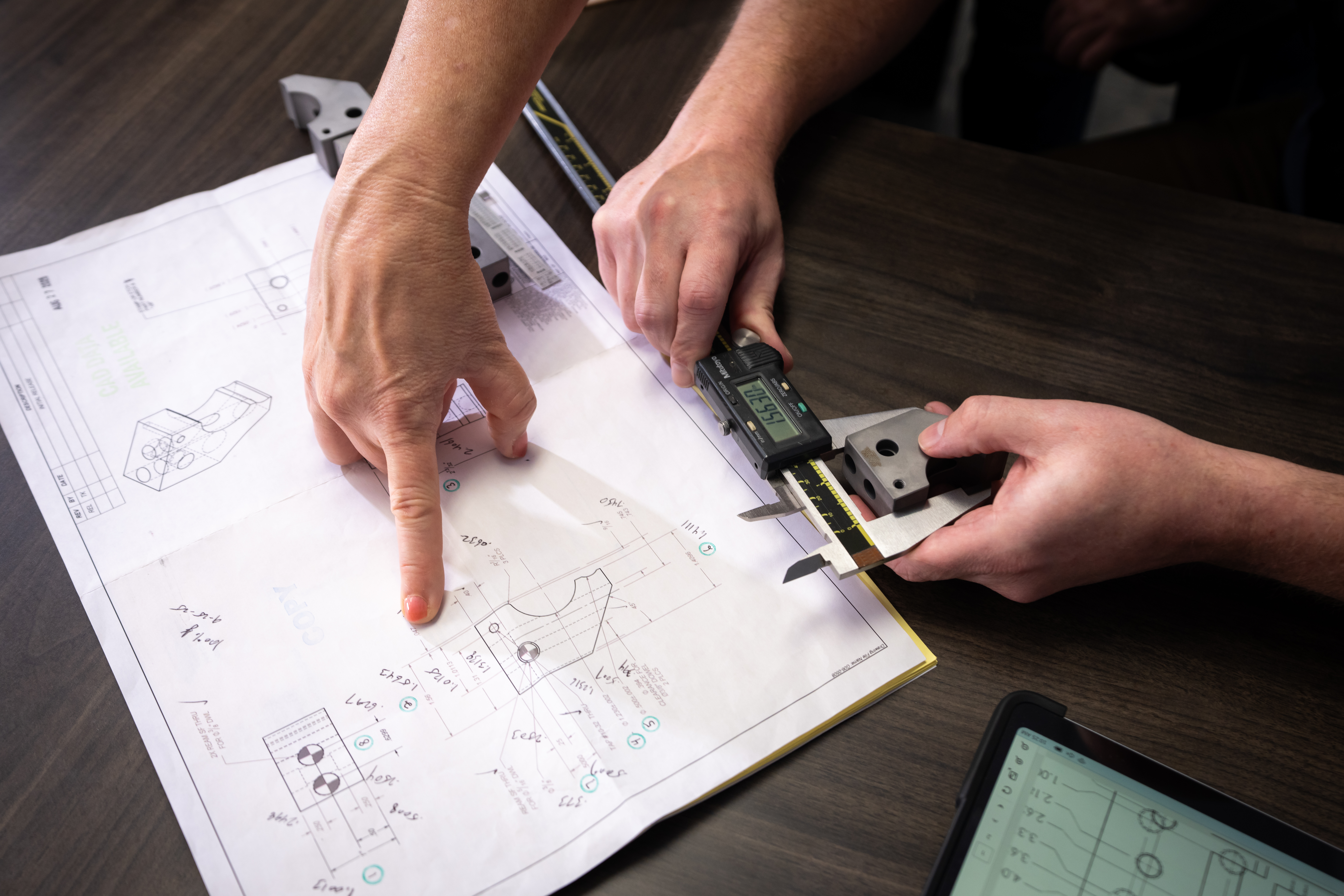
The quote is the drawing, priced
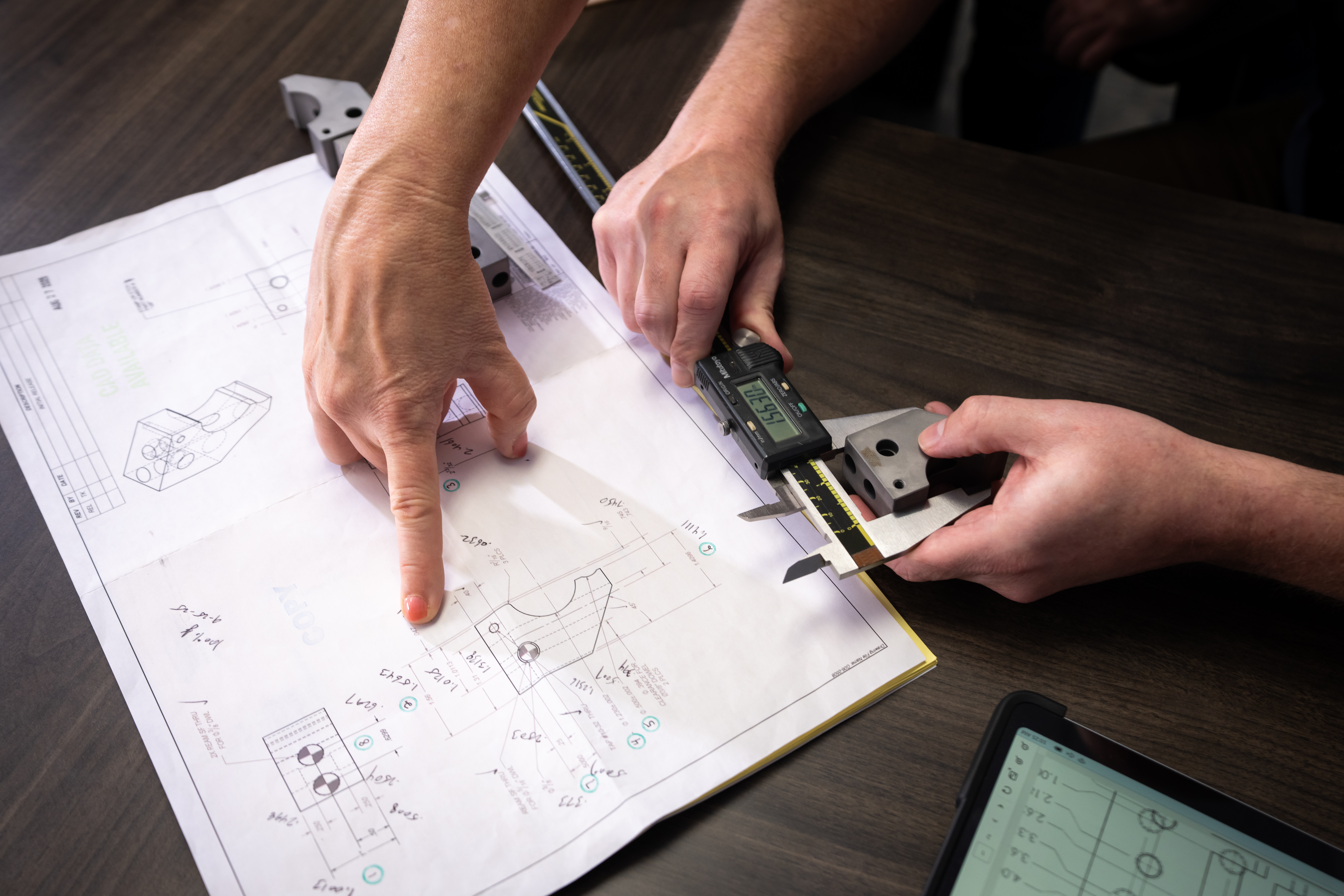
The cheapest sourcing event is the one where the part gets less expensive to make. Four levers, all in your control. Loosen what function does not need: a title-block default at the standard band with critical features called out individually removes cost from every order forever. Ask the material question: whether a grade exists that does the same job and machines faster, which is the highest-return question in a drawing review. Use the quantity curve deliberately, as above. And send a complete RFQ package, model, print, quantity, target date, and requirements together, because a complete package quotes faster, and the assumptions a shop writes to fill gaps are always written defensively, in the price. Our walkthrough of how an order moves from RFQ to finished part shows where each of those levers lands in the process.
Price is only one of three things a quote tells you, and the other two predict your experience better. A trustworthy quote states its assumptions in writing, the material condition, the tolerance interpretation, what is included and what is not, because unstated assumptions are where surprises live. And it carries a date that production actually agreed to, for the reasons our guide to the real cost of a missed delivery date lays out in full: a bad date costs more than a bad price. Read a suspiciously low number with that lens. It usually means a requirement was missed, an assumption was quietly made in the shop's favor, or a date was written to win rather than to keep, and all three cost more downstream than the discount saved up front.
Every quote here is built from the drawing by estimating, operations, and engineering in the same conversation, which is why the number arrives in 24 to 48 hours with its assumptions written on it and a date production has already agreed to hit. If a tolerance, a material, or a requirement is driving cost without doing work for the part, the quote says so, because flagging it costs us the conversation and saves you the money, order after order. And if we are not the right shop for the part, you get an honest no instead of a defensive number. That is the whole pricing philosophy: no games, no list, just your part, read carefully and priced to be stood behind.
Published industry guides put typical US shop rates between roughly $75 and $200 per hour, with simple production parts often landing in the $5 to $100 per piece range and prototypes far higher because setup dominates small quantities. The only accurate number for a specific part is a quote built from its drawing, material, tolerances, and quantity.
Machine time, which is set by part complexity and tolerance. Features that take longer to cut, deep pockets, thin walls, tight tolerances, hard materials, add minutes per piece, and minutes multiplied by quantity are most of the quote. Material cost is typically the second-largest driver.
A single part carries the entire one-time cost of programming, fixturing, and first-article verification by itself. Those setup costs are fixed regardless of quantity, so a lone prototype can cost several times the per-piece price of the same part in a production batch.
Per-piece price falls steeply as quantity rises because setup costs spread across more parts, material buys better in volume, and the process dials in. Industry examples show prototypes at several times the hundred-piece unit price. Blanket orders with releases extend the effect by buying the setup once against annual demand.
Tolerance only what each feature's function requires, ask whether a faster-machining material meets the same requirements, quote realistic annual quantities and use blanket orders where demand is steady, and send complete RFQ packages so the shop prices the part instead of its own defensive assumptions. A drawing review with your shop surfaces most of these savings for free.
Send the drawing, the material, the quantity, and the date. The number comes back in 24 to 48 hours with its assumptions in writing, and if we see cost on the drawing that is not doing work for the part, you will hear about that too.