



Steelcrest Precision

Dual sourcing gives a machined part a pre-qualified second supplier before a disruption, not after one. The strongest programs concentrate most parts with proven suppliers and dual-source the critical few: parts where a stop-ship, a shop closure, or a capacity crunch would stop your line. Qualification takes time; start before you need it.
This is not a switching-suppliers article. If your current source is failing you, our reshoring guide walks the four-step playbook for moving work safely. This article is about the opposite situation: your supplier is fine, and that is exactly why now is the time to build the backup. Dual sourcing is insurance you buy while the sun is shining, and in the current environment, more OEM buyers are deciding the premium is worth paying.
Three forces are converging on the same conclusion.
Disruption went mainstream. This year a pricing dispute between a major automaker and a key supplier escalated into a stop-ship that idled a vehicle plant, a reminder that even healthy commercial relationships can turn into line-down events.
The supplier base is shrinking and churning. A wave of owner retirements is closing long-running machine shops, often with little notice, while private equity consolidation means the shop you qualified five years ago may have new owners, new priorities, and new pricing next year.
Tariff and trade volatility keeps re-pricing offshore sources, pushing buyers to hold domestic capacity they can count on.
The lesson procurement teams are absorbing from all three: an alternate source has to be qualified before the event, because qualification is the one thing you cannot compress during one.
A backup that exists only as a bookmarked website is not a backup.
Not all of them, and pretending otherwise is how dual-sourcing programs die of overhead. Duplicating every supplier doubles tooling, qualification, and administration across your whole BOM for risk that mostly does not exist. The discipline is triage. A part earns a second source when it checks boxes like these:
A line-down consequence. If this part stops arriving, production stops. The cost of one down day usually dwarfs years of dual-sourcing overhead.
A single source by default. Custom-engineered, tight-tolerance, or process-intensive parts that only one supplier currently knows how to make, where the knowledge is the risk.
A concentrated or aging supplier. The shop is excellent but owner-run with no succession, recently acquired, at capacity, or carrying most of your critical parts by itself.
A long requalification path. Parts with first-article, customer-approval, or regulated-industry requirements, where starting from zero after a disruption means months, not weeks.
Tariff or geography exposure. Offshore-sourced parts where the landed cost or the logistics can change faster than you can react.
Everything that does not check those boxes stays consolidated with your proven suppliers, where volume keeps pricing sharp. The goal is not two of everything; it is zero single points of failure on the parts that can stop the line.
Honest accounting, because this is where programs get approved or quietly shelved. None of it is free, and a shop that tells you otherwise is not doing the math. Put the two columns side by side:
What the insurance costs
What it insures against
For parts that pass the triage above, the insurance is usually cheap at the price, which is why the pattern among experienced buyers is a split that keeps both suppliers genuinely in production.
PRIMARY SUPPLIER · 80%
20%
The common split: incumbent keeps the volume, the second source stays warm
The common model is a majority-minority split, often around 80/20: the incumbent keeps most of the volume and its economics, while the second source runs a real, recurring share. The minority share is not charity. It is what keeps the backup warm: current revision on file, tooling proven, operators familiar, and quality documentation up to date, so scaling from 20 percent to 100 percent in an emergency is a schedule change, not a project.
The alternative, qualifying a second source once and then never ordering, decays quietly. Revisions drift, tooling goes stale, and in regulated work a long enough production lapse can trigger requalification all over again. If the program matters enough to build, it matters enough to feed. Even a modest annual release keeps the insurance policy in force.
Treat onboarding a second source like onboarding a first one, with one advantage: you already know the part. Send the CAD model and the current-revision print together, the quality flow-downs, and the part's history, the tolerances that have caused trouble, the material lot quirks, the fits that matter. The more manufacturing knowledge transfers up front, the shorter the qualification run. Our buyer's guide covers how to evaluate the shop itself; whichever shop you choose, expect the first run to carry a first-article inspection, and expect a serious shop to plan for it on the quote rather than discover it at shipping.
Qualifying a Second Source for Machined Parts Ready, current, and in proportion
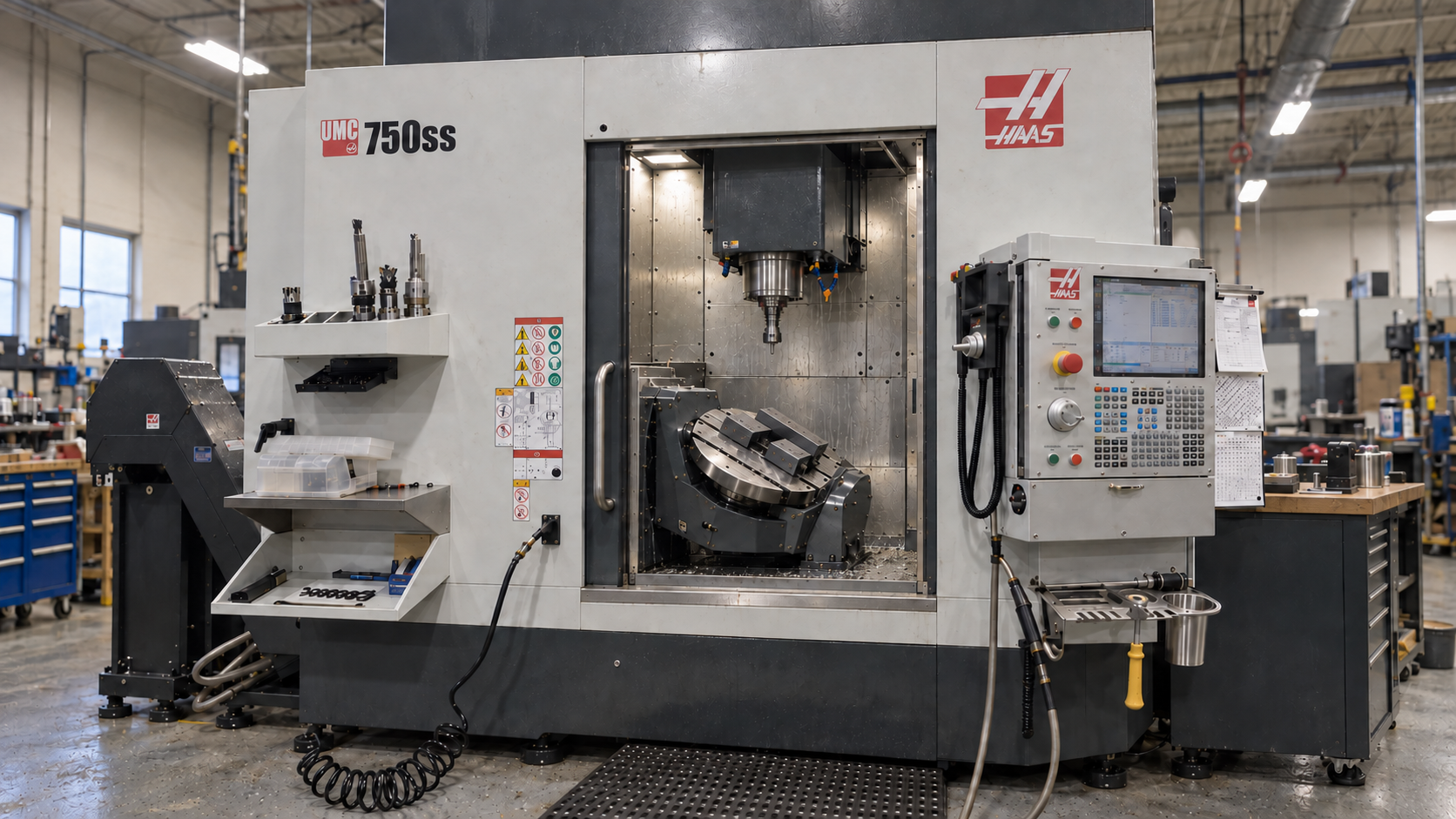
Second-source work is a role we are built for and take deliberately. More than 100 CNC machines across dedicated milling, turning, grinding, EDM, and saw departments mean genuine capacity and the machine redundancy to protect dates, which is the entire point of a backup. Quotes come back in 24 to 48 hours, domestic lead times run four to six weeks, and blanket release and stocking programs let a minority-share arrangement run on autopilot once qualified. Documentation discipline, ISO 9001:2015 certified with first-article inspection built into the process, means the qualification evidence your program needs ships with the parts. And because a second source should never create pressure on your incumbent relationship, we are comfortable being exactly what the program asks: ready, current, and in proportion.
Dual sourcing is qualifying and maintaining two suppliers for the same part, typically with a majority of volume at a primary supplier and a recurring minority share at a second source, so that a disruption at either one does not stop production.
Parts where a supply interruption stops your line, parts that are effectively single-sourced because only one shop knows how to make them, parts at suppliers with concentration or continuity risk, parts with long requalification paths, and parts exposed to tariff or logistics volatility. Most other parts are better consolidated with proven suppliers.
Expect duplicate tooling and fixturing where the process requires them, a qualification run with first-article inspection, modest split-volume pricing effects, and the administration of a second relationship. Against the cost of a single line-down day or an emergency requalification, the insurance is usually inexpensive for genuinely critical parts.
A common structure where the primary supplier runs about 80 percent of volume and the second source runs about 20 percent. The minority share keeps the backup current on revisions, tooling, and quality documentation, so it can absorb full volume on short notice if the primary is disrupted.
It depends on part complexity, tooling, and your approval requirements: the first run carries setup, programming, and first-article inspection, so plan in weeks to months, not days. That timeline is exactly why experienced buyers qualify the second source before a disruption instead of during one.
Build the Backup Before You Need It
Pick the one part on your critical list that worries you most, send the model, the print, and your quality requirements, and get a real quote and a real qualification plan on the calendar. If the day ever comes when you need the second source, the qualification will already be behind you.
REQUEST A QUOTE