


Steelcrest Precision

An R&D machining partner turns evolving designs into functional parts fast, then carries the winning design into production without a handoff. Look for quick quotes, engineer-to-engineer DFM feedback, tolerance depth across milling, turning, grinding, and EDM, NDA-backed IP protection, and the production capacity to scale the part you just proved.
R&D work breaks the rules production shops live by. The drawing is not final. The material might change. Quantity is three, then one, then twelve. What development teams need is a shop built for that ambiguity, with the equipment depth to still be the right shop when the design freezes and the volumes arrive. Here is what that partner looks like, and how to tell one from a shop that just says yes.
Production machining rewards repetition: stable drawings, proven routings, long runs. R&D is the opposite. Designs evolve between orders, tolerances are still being discovered, and the most valuable thing a shop can give you is not a low unit price but a fast, honest answer.
That mismatch shows up in predictable ways. A production-only shop quotes a one-off slowly because it interrupts the schedule. It machines exactly what the print says even when the print has a problem the machinist saw on day one. And when revision C lands two weeks after revision B, your job goes to the back of the queue. None of that is malice. It is a business model, and it is the wrong one for development work.
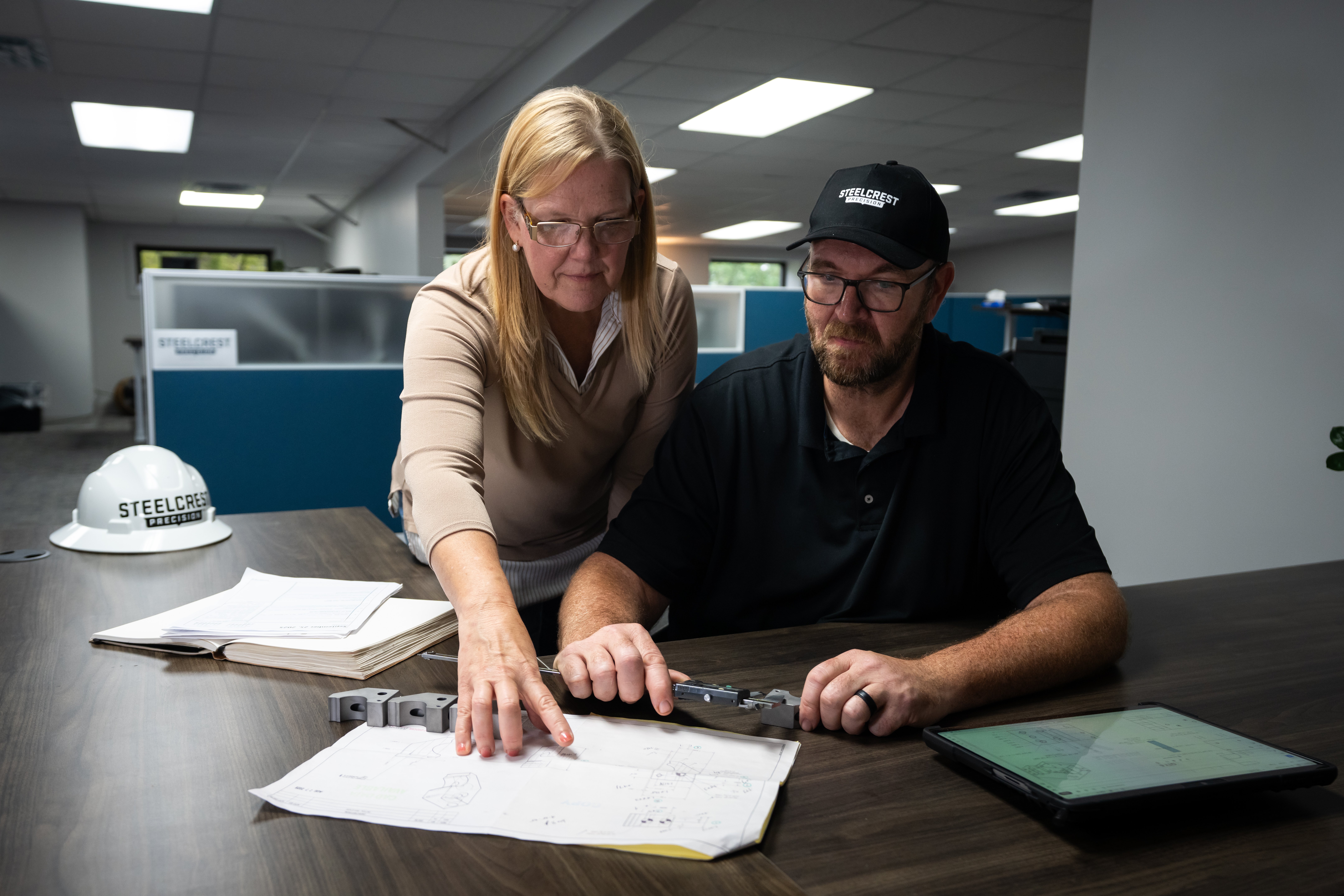
Steelcrest Precision started in 1983 doing build-to-print tooling, prototypes, and machined parts, and that DNA still runs the front of our shop: quotes in 24 to 48 hours, estimating and engineering in the same conversation, and a floor that treats a three-piece order as a real job, not an interruption.
Six things separate a genuine development partner from a vendor. Screen for all of them:
The prototype teaches the production run
The most expensive moment in product development is often the one nobody budgets: the handoff from the prototype shop to the production shop. New supplier, new quoting cycle, new tooling, new first articles, and a new team learning everything the first shop already knew about your part. Programs lose weeks there, and sometimes the design intent goes with them.
The one-roof model deletes that step. When prototyping and production live in the same building, the routing, fixturing, inspection plan, and hard-won machining knowledge from your development runs carry straight into the production order. The first article on the production run is a continuation, not a restart.
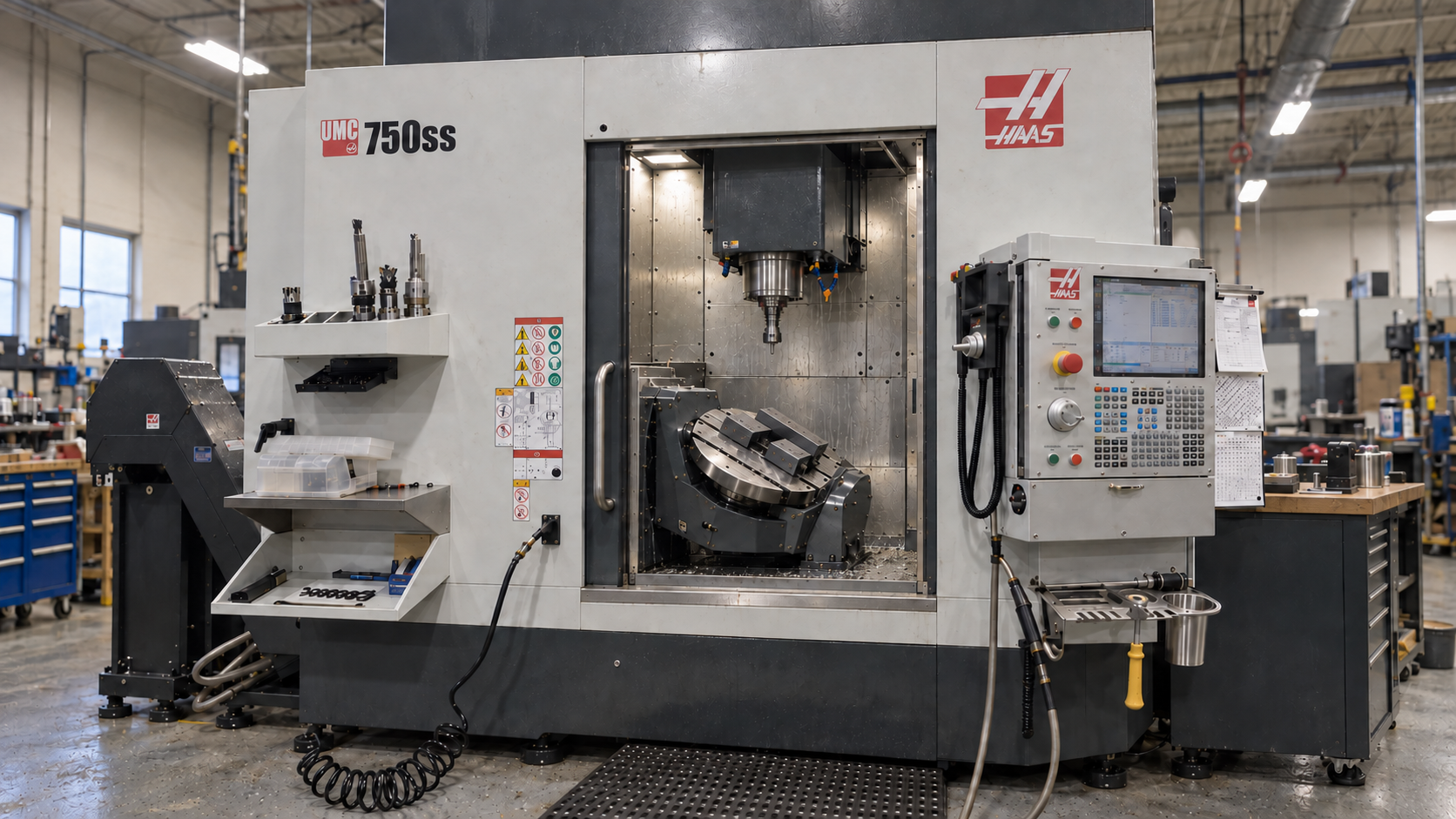
Scale is what makes the promise real. A development-friendly front end backed by 100-plus CNC machines across dedicated milling, turning, grinding, EDM, and saw departments means the shop that machined your third prototype iteration has the capacity to run your production volumes, and the redundancy to protect your dates while doing it. Our RFQ to finished part walkthrough shows exactly how a first order moves through the building.
Development work is proprietary by definition, so treat IP handling as a screening criterion, not a formality. Before any technical data moves, put an NDA in place: send yours and we will route it for signature, or we will provide our mutual NDA if you do not have one. Fully executed copies come back to you first. From there, your drawings and models are handled as controlled documents, used for your job and nothing else, and quality requirements you flow down are captured on the order from day one.
R&D does not always start from a clean CAD file. Sometimes it starts from a legacy component with no surviving print, an obsolete part whose supplier retired, or a competitor benchmark you need to understand. Reverse engineering closes that gap: working from the physical part, our team can recreate the model, the drawing, and a manufacturing plan, then put the recreated part through the same prototype-to-production path as a new design. If the part in your hand is the only documentation you have, that is enough to start.
R&D machining is precision machining in support of research and development: prototypes, test fixtures, proof-of-concept parts, and short runs of evolving designs. It differs from production machining in that drawings change frequently, quantities are low, and speed of iteration matters more than unit price.
Prototype machining optimizes for speed and learning: fast quotes, small quantities, and design feedback while the part is still changing. Production machining optimizes for repeatability and cost: stable drawings, proven routings, and consistent quality over volume. The best outcome is a shop that does both, so the knowledge from prototyping carries into production.
Quoting is the fast part: complete RFQ packages typically quote in 24 to 48 hours. Machining lead time depends on complexity, material availability, and current backlog, and an honest shop will give you a real date rather than a reflexive one. Sending a CAD model, material spec, quantity, and target date gets the fastest turnaround.
Reputable ones do, and it should happen before technical data changes hands. Steelcrest Precision will sign your NDA or provide a mutual NDA, with fully executed copies returned to you first.
Because the handoff between shops is where time, money, and design knowledge disappear. Staying under one roof carries the routing, fixturing, inspection plan, and machining lessons from development directly into production, eliminating requalification and shortening the ramp.
Pick the part your team is iterating on right now, or the legacy part with no drawing, and send it over. You will have a quote, and probably a few useful questions back, within 24 to 48 hours.
Send Your ProjectR&D Machining: From Prototype to Production