


Steelcrest Precision

If you build equipment in northwest Ohio, southeast Michigan, or northeast Indiana, you have probably already discovered that the machining supply base here is deeper than the region's population would suggest. What is less obvious is how to navigate it — which capabilities are genuinely available inside a one-hour drive, when being close to your supplier changes your outcome, and when it makes no difference at all.
This guide covers the region rather than the evaluation process. If you are working through how to vet a machine shop generally — quality systems, measurement capability, financial stability, the questions that separate a capable supplier from a cheap quote — that is a different question, and we wrote A Buyer's Guide: Choosing a Machine Shop to answer it. Read that one for the criteria. Read this one for the geography.
01 — The supply base
Regional machining capacity does not appear at random. It grows where the demand was, and northwest Ohio accumulated five overlapping waves of it.
Glass. Toledo is still called the Glass City for a reason. Container glass, flat glass, automotive glazing, and more recently solar glass have all been made here at scale for over a century. Glass manufacturing is unusually hard on tooling: molds, plungers, take-out equipment, and conveyor components run hot, run continuously, and wear. That produced a local machining base fluent in high-temperature alloys, mold work, and fast replacement-part turnaround — a competence that does not exist in most regions at this density.
Automotive. Assembly plants and the Tier 1 and Tier 2 suppliers around them cluster from Toledo north into southeast Michigan and west into Indiana. Automotive work trained the region in production volume, PPAP discipline, gauging, and cost-per-piece rigor.
Agriculture and construction equipment. Fulton, Henry, Williams, and Defiance counties sit in the middle of a farm economy that also builds equipment for it — feed systems, aerial lifts, tires and wheels, implement components. This work runs to larger part envelopes and heavier weldments than automotive, and it comes in mixed volumes rather than steady releases.
Food and beverage processing. Large processing and packaging operations run across the region, and processing equipment needs sanitary-design parts, stainless fabrication, and same-week replacement parts when a line goes down.
Aviation support and defense. This one surprises people. Northwest Ohio is not an aerospace hub in the sense that Wichita or southern California are — there is no airframe assembly here. What the region does have is a cluster of aviation ground support equipment manufacturers, aerospace tooling and test equipment work, and defense vehicle and robotics suppliers within an hour's drive. That work carries aerospace-grade documentation and traceability expectations without always carrying the flight-hardware certification requirements, and it has quietly trained a subset of shops here in exactly that discipline.
What this means for you
The regional supply base is broad rather than specialized. Shops here tend to handle mixed volumes, multiple materials, and multiple processes, because that is what the surrounding demand required. If you need a shop that will run one part number by the million, you may do better elsewhere. If you need a shop that will run forty part numbers in quantities of five to five hundred and keep them all straight, this region is unusually well suited to it.
02 — Proximity
Sometimes a great deal, and sometimes not at all. It is worth being precise about which situation you are in, because "local supplier" is often treated as a virtue in itself when the real question is whether proximity removes a specific cost or delay from your program.
First-article inspection and print disputes. When a first article comes back out of tolerance and the drawing is ambiguous, the fastest resolution is your engineer and their programmer looking at the same part. A one-hour drive makes that a same-day event. A two-day freight cycle each way makes it a two-week event, and every iteration costs another two weeks.
Tooling and fixture changes. Any part that needs a fixture built, revised, and re-proven benefits enormously from short cycles. This is the single most common place where distance turns a two-week problem into a two-month one.
Rework and salvage. When a part is close but not right, the decision between rework and scrap often depends on someone inspecting it quickly. Freight time makes salvage uneconomical on parts that could have been saved.
Prototype-to-production transitions. Programs that iterate — R&D builds, pre-production runs, design changes between builds — compound every round trip. Proximity is worth the most here and the least on mature parts.
Line-down replacement parts. If a machine is stopped, the only number that matters is hours. A shop 30 miles away that can pull a job forward and put a part on a truck the same afternoon is worth a premium that would look irrational on a spreadsheet.
Mature, stable, high-volume parts. A part that has run unchanged for three years on a monthly release does not care where it was made. Freight is a rounding error against piece price at volume.
Commodity parts to a standard. Fasteners, off-the-shelf-tolerance turned parts, anything you would buy to a catalog spec.
Parts requiring a process the region does not have. If a job needs a process no nearby shop runs, proximity is not a tiebreaker — capability is.
Wauseon sits at Exit 34 of the Ohio Turnpike (I-80/90), with US-20A and US-127 crossing nearby. That puts a large industrial base inside a short drive.
| From | Distance | Drive | |
|---|---|---|---|
| Napoleon, OH | 20 mi | 30 min | |
| Defiance, OH | 25 mi | 35 min | |
| Bryan, OH | 25 mi | 35 min | |
| Adrian, MI | 30 mi | 40 min | |
| Toledo, OH | 35 mi | 40 min | |
| Bowling Green, OH | 35 mi | 45 min | |
| Findlay, OH | 50 mi | 1 hr | |
| Fort Wayne, IN | 65 mi | 1 hr 15 min | |
| Lima, OH | 65 mi | 1 hr 15 min | |
| Detroit metro | 85 mi | 1 hr 30 min |
Distances are approximate and vary by origin within each city.
The useful threshold is roughly 90 minutes. Inside that, a same-day round trip with a meaningful shop-floor conversation in the middle is realistic. Beyond it, visits become planned events rather than routine ones, and the practical benefits of proximity fall off quickly.
03 — Capability map
An honest capability map matters more than a list of shops, because the question that actually decides your sourcing is whether your part can be made here at all.
If your part needs something on that third list, a regional shop may still be the right prime — many will manage the outside process for you — but you should ask directly whether it is being subcontracted, and to whom, rather than discovering it later.
04 — Aerospace & defense
Aerospace and defense sourcing does not work like commercial sourcing, and geography is rarely the first filter. Certification, traceability, and approved-supplier status come first. But there is a widespread and expensive misconception worth clearing up, because it causes buyers to over-restrict their supply base and shops to under-sell their capability.
| Requirement | What it covers | When it is mandatory |
|---|---|---|
| ISO 9001 | General quality management system | Baseline expectation for nearly all industrial work |
| AS9100 | ISO 9001 plus aviation, space and defense requirements — configuration management, risk management, counterfeit-part prevention, first-article inspection discipline | Typically required for flight-critical and flight hardware |
| ITAR registration | Authorization to handle defense articles and technical data on the U.S. Munitions List | Required for controlled defense work, independent of AS9100 |
| NADCAP | Accreditation for special processes — heat treating, NDT, coatings, welding | Required per-process, usually at the processor rather than the machining supplier |
A supplier can hold ISO 9001 and machine to AS9100-compliant processes without holding the AS9100 certificate. That distinction matters because a large share of aerospace and defense machining does not require the certificate at the machining supplier:
Where the certificate genuinely is the gate
Flight-critical rotating and structural components, anything with airworthiness implications, and any program where the customer's own AS9100 flow-down explicitly requires a certified supplier. If you are sourcing that work, ask for the certificate number and the registrar, verify it, and do not accept "compliant" as a substitute. A supplier who blurs that distinction has told you something important about how they handle requirements generally.
The practical advice: decide which of the four rows above your specific part actually requires before you filter your supplier list. Buyers routinely apply a blanket AS9100 filter to ground support equipment and tooling work, then wonder why their quote count is low and their prices are high. Conversely, buyers who accept "compliant" on flight hardware are taking a risk they usually have not priced.
05 — Due diligence
These are specific to sourcing regionally. For general vetting criteria, use the buyer's guide.
A regional shop's biggest structural advantage is eliminating handoffs. A part that gets turned here, milled there, ground somewhere else, and heat treated at a fourth location accumulates freight, queue time, and tolerance error at every transfer — and no single supplier owns the outcome. Ask which operations are in-house and which are farmed out. The answer tells you whether "local" is buying you anything.
Quote speed is a proxy for how a shop is organized. A commitment to quote within 48 hours means the estimating function is resourced. Ask what happens when the print raises a question — do they stop and call, or quote around the ambiguity and surface it after you have a PO?
Get a number, not an adjective. Four to six weeks is a normal standard for mixed-volume machining. Then ask what an expedite costs and how often they can actually do one. A shop with genuine capacity can pull a job forward; a shop running at capacity cannot, whatever it says.
This is the question that most often disqualifies a supplier for regional work. Regional programs are mixed-volume by nature — five pieces for a build, then two hundred for production, then eight for a service order. A shop with a meaningful MOQ will either refuse the small runs or price them punitively.
Tolerance capability is per-process, not per-shop, and this is where sloppy sourcing happens. Precision turning and grinding routinely reach the low ten-thousandths — ±0.0002 inch is achievable. General CNC milling is typically an order of magnitude looser, around ±0.001 inch, with multi-tasking platforms in between at ±0.0005 inch. A shop that quotes a single sitewide tolerance figure across turning, milling, and grinding is either not being careful or not being straight with you. Ask which machine will run your part and what that machine holds.
Finish requirements drive process selection more than most buyers expect. Turning and grinding reach substantially better finishes than milling — 8 Ra is achievable in turning, while side milling runs closer to 32 Ra and face milling closer to 63 Ra. If your part has a sealing surface or a sanitary requirement, the finish spec may determine whether it is turned, milled, or ground, which in turn determines who can make it.
Not "do you serve my industry" — that answer is always yes. Ask about the part family. A shop that has machined glass-handling tooling understands thermal cycling and wear. A shop that has made food-processing components understands sanitary geometry and finish. A shop that has supported ag equipment understands mixed volumes and larger weldments. Adjacent experience is the difference between a supplier who catches a problem in quoting and one who discovers it in production.
06 — Limits
Being honest about this is more useful than pretending otherwise.
Volume beyond what a job shop is built for. If you need millions of one part number annually, a dedicated high-volume producer will beat any regional job shop on piece price, and it will not be close.
Processes that genuinely are not here. Casting, forging, cleanroom medical assembly, ITAR-restricted work. Sourcing these locally means sourcing them through a broker, and you should know that is what is happening.
Programs where price is the only variable. If your part is fully mature, fully documented, and dimensionally forgiving, and your only remaining lever is cost per piece, geography is not the axis to optimize on.
Certification requirements that must be met today. If your part is flight-critical hardware requiring a certified AS9100 supplier, or medical device work requiring ISO 13485, verify the certificate before anything else — and see section 04 for which work actually triggers that requirement and which does not.
The reasonable pattern
For most equipment builders it is not all-local or all-distant. It is a regional shop for the work that iterates, changes, and needs responsiveness — prototypes, tooling, mixed volumes, service parts — and distant or specialized suppliers for mature high-volume programs and processes the region does not run.
About
Steelcrest Precision is a precision machining and fabrication supplier in Wauseon, Ohio, in Fulton County. We were established as an independent company in the 2025 reorganization of Wauseon Machine, which had been machining parts in this region for decades; the shop, the equipment, and the people carried over, and the team brings more than 570 years of combined machining experience.
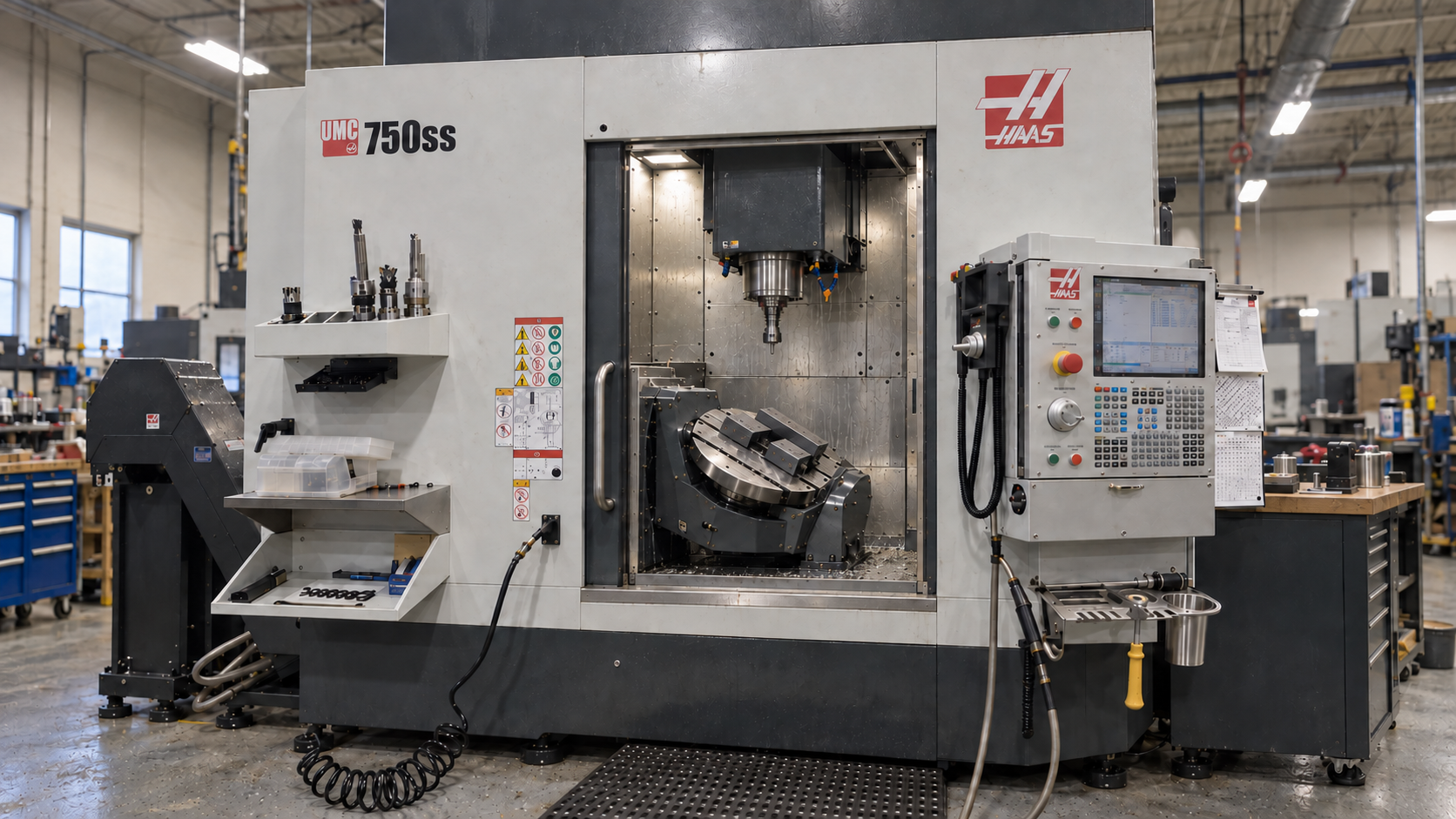
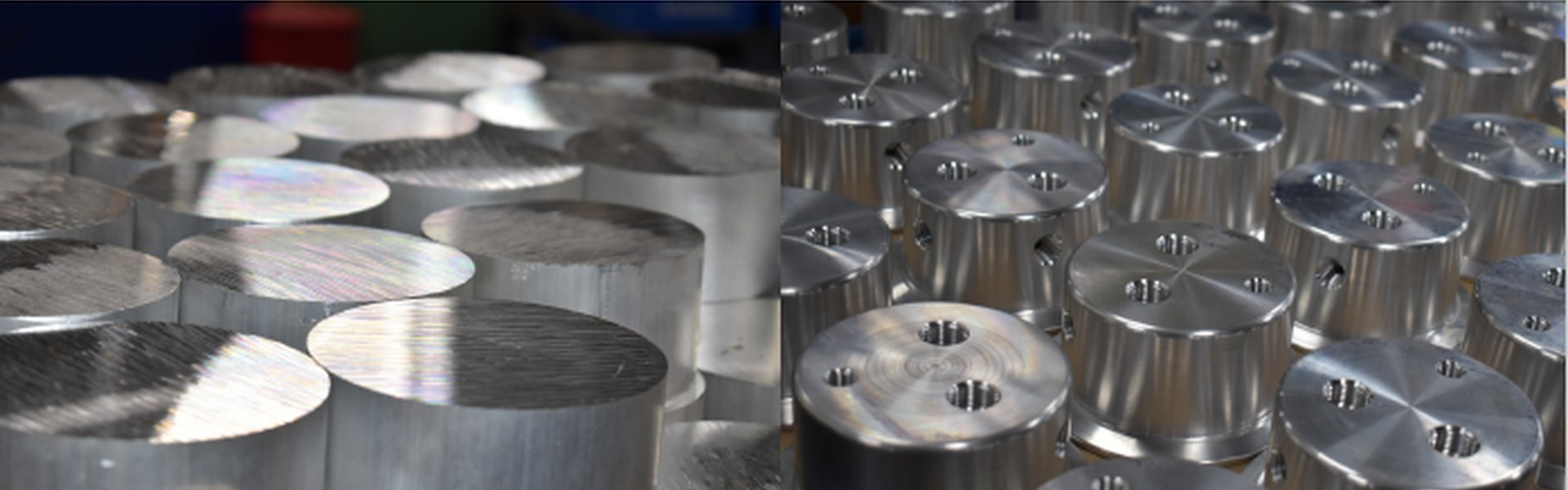
We machine stainless steels including 304, 17-4, and 420, pre-hardened alloy steels such as 4140, and exotic alloys including Inconel and titanium. Fabrication, assembly, and secondary services including heat treating, saw cutting, and laser etching are in the same building.
On the aerospace and defense side specifically: we currently machine ground support equipment, aerospace tooling and test equipment, and subtier components for aerospace primes, Tier 1 suppliers, and defense manufacturers — the categories described in section 04. We are pursuing full AS9100 certification as a deliberate buildout rather than a box-check, and we will tell you directly whether your particular part falls inside what we can support today or needs to wait for the certificate. We would rather lose a quote on that basis than take a job we should not have.
About four in ten of our jobs come from within roughly seventy miles of Wauseon, and about eight in ten come from the Midwest — but we also support national programs, and we would rather tell you that plainly than claim to be something we are not.